Category Archives: Garden

There is a road, no simple highway…

Ostara and the Moon of Mourning

Saturday gratefuls: Kate wanting to visit the fields of Heather around Inverness. SeoAh and her smile. The Grateful Dead shabbat last night. Ripple.* Mourning in the Mountains with CBE and CBE. Kate breathing freely, walking with purpose once again.

Sparks of Joy: Vaccines. Mobile Critter Care.

retired at last

There are ripples in the still waters of my soul. Kate. She lives there now for me, an eternal companion. Today and tomorrow. She reminds me of the love we shared, the way we were together, the way I am thanks to her. And I carry her forward in Malkut. Waiting someday to travel to the keter, the crown of creation’s endless motion, with her as a companion.

Irony. Having a sore in my mouth, above the left canine. Hurts to eat. What Kate experienced for at least three years. All the time. No wonder she became food aversive. Add nausea to that pain. Awful. The feeding tube gave her at least two more years of life even though it created problems as it solved them.

What will linger longest for me about her last hospital stay is sign language. Some of you may remember Kate learned sign language when she lost her voice not long after we married. While in bed, her speaking requiring extra breaths for a full sentence, we began signing I love you: little finger, index finger, and thumb extended. I would sign and place the hand with the sign on my heart.

While on the drive over to Evergreen Memorial to complete the paperwork for her cremation, I thought about family, our immediate family. The counted cross stitch she made, the one that took her three years and two continents to complete, is in Arts and Crafts style. It has mostly green vines on a beige background. Near the top are three words: Love is Enough.

I want this to be our family motto. I will have t-shirts made for each of us with her completed work printed on them. With a katydid. Kate had cloth labels made with a katydid and the words Katy did it.

The works of her hands cover so many beds, hang on so many walls, rest on various chairs and couches. Carry things from here to there. She loved sewing for specific people and she loved giving them what she had made.

She walks today on the most ancientrail of all: a road, no simple highway between the dawn and the dark of night. I know she travels it unafraid, curious. Open. Glad. Filled with Joy.

Ok, yes. My metaphysical honesty makes me add, how the hell do I know? I don’t know. But if there is a road, and if Kate is on it, her keen mind and open heart will serve her well.

I’m sleeping well. Eating ok with the exception of crowding food over to the right side of my mouth to avoid the sore. It will pass. Sadness and distraction still travel with me because I’m on a road, no simple highway, between life with Kate and life without her.

A lot of grieving happened as Kate’s condition worsened, as we both acknowledged it, said out loud where her journey would take her. As it has. I grieved her loss with her, saying what I would miss about her, how much I would miss her.

She reminded me that she was losing me, too. Oh, yeah.

Not sure how long this will go on. As long it must, I suppose.


*”There is a road, no simple highway
Between the dawn and the dark of night
And if you go no one may follow
That path is for your steps alone

Ripple in still water
When there is no pebble tossed
Nor wind to blow”

They Say It’s His Birthday!

Spring! and the Ovid Moon of Metamorphoses

Shoutout to birthday boy Publius Ovidius Naso, or Ovid as we know him in the English speaking west. He’d be two thousand and fifty-four today.

Saturday gratefuls: Safeway pickup. Kabob skewers. Kate’s fluid flowing. Psalms class finish. New class start April 9. Writing poetry. Colorado Mountain Sun. Ancient ones on Justice. Vaccines. April Fool’s Day: shot II for me.

Sparks of Joy: Unclogging Kate’s feeding tube and avoiding another ER adventure. Wu wei, the Way of my life.

March 1, meteorological spring. No romance in that one. March 20, today, 5:37 MST, the Vernal Equinox. Spring. Ostara. Bunnies and crosses and parting of seas, oh my! Lots of romance, lots of theological pulling and hauling. This religion defining moment: resurrection and another: the Exodus. I settle these days for the Sun and the Earth’s celestial equator. See this explainer if you need more. More or less equal hours of Sun and night.

Yes. We’ve moved from the transitional time of Imbolc to the birthing blooming buzzing time. Spring. No wonder the Anglo-Saxons, those Northern European ancestors of so many of us, chose a fertility goddess, Eostre, to celebrate. Estrogen. Ostara. Easter. Yes, the Catholics took her name, added it to the resurrection celebration, and, voila: Easter!

Jesus as Eostre. A dying and rising God like Tammuz, Adonis, Attis, Dionysus, Osiris, or Jesus seem like good company for a fertility goddess. Any gardener can testify to the thrill of planting dusty brown clumps of vegetative matter in the Fall of the year and in the Spring of the next year, the rapture of a moistened bed pierced by green shoots, then Tulips, Crocus, Grape Hyacinth, Iris, Lilies in colorful flower.

Isn’t resurrection a matter of taking a dead thing, or what appears to be a dead thing, putting it away, and having it rise out at the right time? If you listened to the Southern Gospel Revival’s rendition of “Ain’t No Grave” )two posts below this one), you heard the line, “Ain’t no grave, can keep my body down.” Further on, “When that trumpet sounds, I’m a risin’ from the ground.” Could be sung by every Tulip bulb I ever planted.

This is the right time to celebrate those things you may have planted a while back, projects or dreams that have needed some time in the grave or the soil or the unconscious.

It’s also the right time to look at the bed you’ve tended, the one in which you planted them, your life. There might be weeds, or, as I prefer, plants out of place. Note that this means you may have good habits or plans or projects that have become plants out of place in your life. You may have to remove them so your new projects and dreams will flourish.

Ask Eostre for help. You might find her in your anima, perhaps buried in your shadow. She’ll burst out, give things a boost up, if you let her. I’m sitting right now on Shadow Mountain, imagine what lies beneath.

Distaff Day

Winter and the Moon of the New Year

Christmastide, Day 10: St. Distaff’s Day

Monday gratefuls: CBE services online. Kate’s sisters. Bridgerton. Writers. Books. Ovid. Tolstoy. Ford. Cather. Oliver. Shelley. Whitman. Emerson. Camus. Berry. Electricity. Lights. Darkness. Stars. Ruth’s wisdom teeth. Out today. 16 days. Farewell, so long. Auf wiedersehen. Please be a stranger. Welcome, sanity.


Distaff day. Not sure about the St. That sounds like a Catholic appropriation to me. A quick search indicates that’s correct. There is no St. Distaff. The addition of St. to this more ancient day reveals patriarchal and misogynistic appropriation. Not to put too fine a point on it.


Partly work and partly play
Ye must on S. Distaff’s day:
From the plough soon free your team,
Then come home and fodder them.
If the maids a-spinning go,
Burn the flax and fire the tow;
Scorch their plackets, but beware
That ye singe no maidenhair.
Bring in pails of water, then,
Let the maids bewash the men.
Give S. Distaff all the right,
Then bid Christmas sport good-night;
And next morrow everyone
To his own vocation.

Robert Herrick, Hesperides


Written in the 17th century by poet and cleric, Robert Herrick, this poem gives you the essence of Distaff Day. On this day the Midwinter festival came to an end. Women returned to spinning and weaving. Hence, distaff day. The men, a few days later, would celebrate Plough Monday when they returned to the fields with their teams of oxen.

A return to ordinary time. To domestic and agricultural labors. But not without some play. On Distaff day the men would set fire to the flax or wool the women tied to their distaffs for spinning. The women would have buckets of water ready. To put out the wool and flax, yes, but also to dump on the rowdy young men. Not sure, but it seems neither gender was quite ready to give up the play of the festival time.

Plough Monday, the traditional start of agriculture in England, fell on the first Monday after the Epiphany. This year Plough Monday falls on January 11th. A plough might be pulled through the village by young men, one dressed as a Fool and another as a purser.

The purser would go from house to house collecting money. If the money received seemed adequate, the young men would plow an acre, then dance around it. If the villagers were miserly, they would plow up the street.

I’ve been readying my space for a return to ordinary time after Christmastide. Each morning I’ve taken down a bit of the decorating I did. This morning I removed two wooden bowls in which I’d placed Christmas ornaments. On other days I’ve returned Santa globes to their shelves, folded up Christmas cloth and packed it away.

Tomorrow: the Eve of the Epiphany

Evergreen, Pine, and Conifer

Winter and the Moon of the New Year

Christmastide, Day 9: Evergreen Day

Sunday gratefuls: Coffee. Cold coffee. The Denver Post. All print newspapers still at it. An informed citizenry. Trump, for exposing our weakness. 17 days. Buh, bye orange one. 2021. 2020 in the rear view.  Tara. Marilyn. Rabbi Jamie. Lobster and ribeye.

Vega in the snow

Once again. Pine, Conifer, Evergreen. This is our day in Christmastide. This day and the Snow day have no festivals associated with them, so we celebrate aspects of midwinter that bring us joy.

Matthews cites an interesting Cherokee story about the origin of the evergreen. The Great Spirit created plants and wanted to give them each a special gift, but could not decide which gift would go to which plants.

Second and third year cones. Cones have a lot of resin.

Among the trees, the Great Spirit decided on a contest. He asked all of the trees to keep watch over creation for seven days. After the first night, all the trees remained awake, excited at the opportunity. On the second night some fell asleep, but woke right back up.

As the nights went on, most of the trees began to fall asleep, unable to stay alert for so long. By the seventh day, all but the pine, the cedar, the spruce, the holly, and the laurel had fallen asleep.

“To you,” the Great Spirit said, “I shall give the gift of remaining green forever. You shall guard the forest even in the winter when all your brothers and sisters are sleeping.” And so they do to this day.

At our elevation the Lodgepole guard the Aspen whose golden leaves in the fall proceed their winter sleep. At lower elevations the Ponderosa, the Spruce stand guard. At the treeline ancient Bristlecone Pines patrol. In other parts of Colorado the Douglas Fir, the Engleman Spruce, the Pinon Pine, the Rocky Mountain Juniper, and the White Fir watch. The Great Spirit reminds us each Winter of the Evergreens special gift.
Here is a special Solstice salutation from Italy’s sixteenth century:


I salute you!

There is nothing I can give you which

You have not.

But there is much, that while I cannot give,

You can take.

No heaven can come to us, unless our hearts find

Rest in it today.

Take Heaven!

No peace lies in the future which is not

Hidden in this present instant.

Take Peace!

The gloom of the world is but a shadow.

Behind it, within our reach, is joy.

Take joy!

And so at this Christmastime, I greet you,

With the prayer that for you, now and forever,

The day breaks, and the shadows flee away!

Matthews, p. 200

Green


Winter and the Moon of the (highly anticipated) New Year

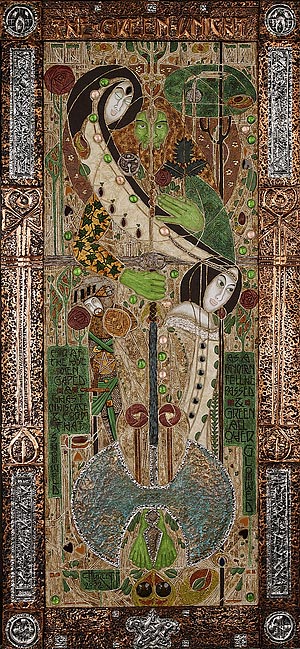
Tuesday gratefuls: The great conjunction of Jupiter-Saturn. Bertilak de Hautdesert. Gawain. Morgan Le Fay.  Arthur. The Celts. Germans. Swiss. English. Irish. Joseph’s new job. Hawai’i. Maps. Friends.


Sir Gawain and the Green Knight summary.* This long poem is part of the Arthurian tales, perhaps the best known outside of Malory’s Le Morte D’Arthur.

The Green Knight is the most important figure in the poem for our Solstice purposes. Sir Gawain takes on the heavy burden of showing the contradictions between courtly love and chivalry. His role is less significant for Solstice thoughts.

Here a few lines from the poem itself.

Great wonder of the knight
Folk had in hall, I ween,
   Full fierce he was to sight,
And over all bright green.
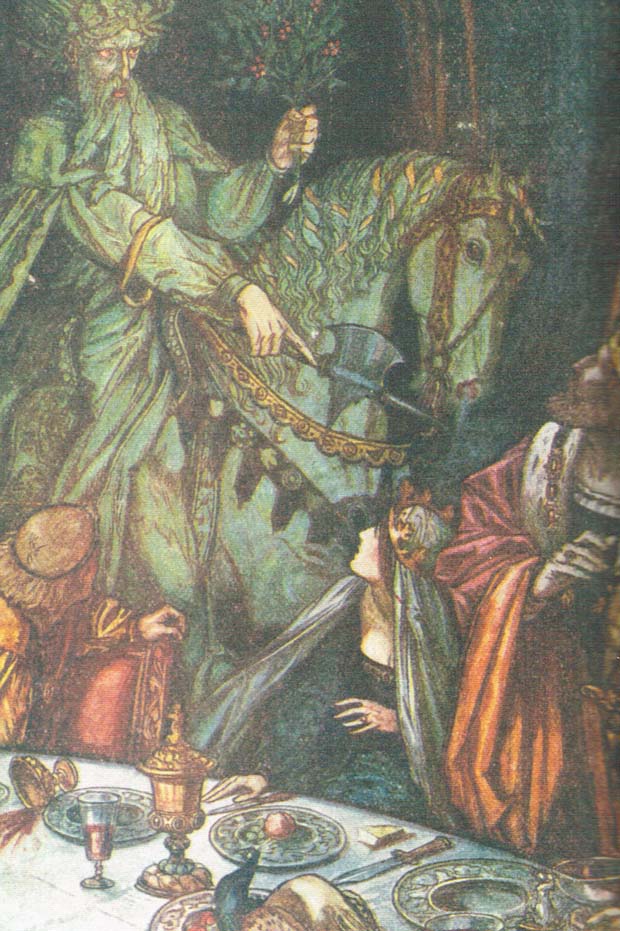
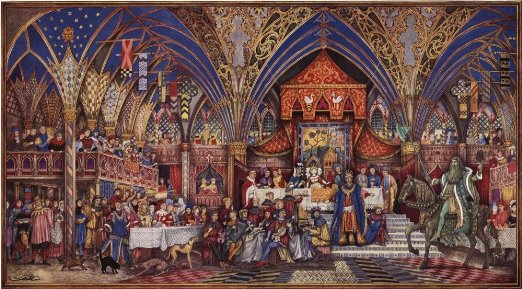
the hair of the horse’s head was of green, and his fair, flowing locks clung about his shoulders; and a great beard like a bush hung over his breast, and with his noble hair was cut evenly all round above his elbows, and the lower part of his sleeves was fastened like a king’s mantle. The horse’s mane was crisped and gemmed with many a knot, and folded in with gold thread about the fair green with ever a fillet of hair and one of gold, and his tail and head were intertwisted with gold in the same manner, and bound with a band of bright green, and decked with costly stones and tied with a tight knot above; and about them were ringing many full bright bells of burnished gold. Such a horse or his rider were never seen in that hall before…” wayback machine

He and the horse he rode in on. Green. Green. Green.

At Camelot the great New Year’s feast only awaits the exchanging of gifts to begin. The knights of the round table, Arthur, and Guinevere sit at long trencher tables, chatting and drinking. Their anticipation fades when a commotion erupts. A knight on horseback has ridden into the hall on his horse.

Arthur, not wanting Camelot to look cowardly, agrees to the Green Knight’s challenge after silence in the hall. Cut off his head tonight. In a year and a day find him and offer your neck in return.

Sir Gawain, not wanting Arthur to put his kingship at stake, takes his place. Off comes the Green Knight’s head. It rolls toward the head table and after a bit of searching the green, headless body finds it, and jumps gracefully back on his saddle.

On New Year’s day a year hence Gawain, after a long search starting on All Saint’s Day, finds the Green Chapel. I am known as the Green Chapel Knight, he told Gawain.

The Green Chapel though is no church building. It’s a green mound with openings, like a burial mound. The Green Knight appears.

After three swings, two missed, and one knick on the neck, the Green Knight declares Gawain’s pledge satisfied.

I see two related, but different, relationships to the Winter Solstice in this story. The first, perhaps obvious, perhaps not, concerns the turning of the Great Wheel.

The Green Knight comes to the festive hall on New Year’s eve, not long after the Solstice. The world is still cold. The sun low. Plant life browned and enervated. Chopping off the head of the Green Knight corresponds to the harvest. Even after losing his head, his body, his roots, can find it. He lives yet. Just as plants whose bowed stalks and brown leaves live on underground, ready with stored food for the coming of spring.

All the eating, even the feasting, of the fallow time cannot kill the vegetative life represented by the Green Knight. On the Solstice we stay in the depths, in the darkness, but we also know that on the coming night the light will begin to overtake it. Slowly. Gradually. Until all the Green Heads previously fallen pick themselves up again.

The second correspondence concerns Morgan Le Fay, the withered woman contrasted to the fresh young wife of Bertilak de Hautdesert. A witch and half brother of Arthur, it is Morgan Le Fay who turns Bertilak de Hautdesert into the Green Knight.

Magic. Earth Magic. The green covered burial mound is a chapel. The place of Morgan Le Fay, and the Green Knight may represent the older, nature focused magic, a magic that honored the chaotic reality of the natural world. A magic that confronts the civilized world of revels and knights and governments and agriculture. The organized world. Which can only understand death as finality, not as part of an ongoing cycle.

Christianity adopted a linear view of time. You can see it in a world ending second coming somewhere in the distant future. You can see it in the ominous nature of death. A time of testing, of being sorted, wheat from chaff. Fearing death makes sense if eternal judgment awaits.

Earth magic and the vegetative power of renewal that the Green Knight displays remains in the cyclical world of the Great Wheel. Death. Then, life. Life. Then, death. Decomposition and decay as a good, a way of transforming death into a process, a part of the ongoingness of the Great Wheel.

In both of these interpretations a more ancient, wilder world stands against human conceit. Buildings. Honor. Kings. Not necessarily to displace them, but rather to disrupt them. To remind them of the context of their lives.

Whatever layers we create that push away from the natural world: skyscrapers, airplanes, medicine, family and corporate farms, highways and cars, the natural world is always foundational. Inescapable. The necessary in a contingent world.

Maybe this New Year’s, at a feast near you, a Green Knight will ride in on his Green Horse asking you to cut off his head. What will you do?


*The Green Knight came into Arthur’s hall and asked any one of his knights to trade blows.

Sir Gawain accepted this challenge and he was allowed to strike first. He cut off the Green Knight’s head. The latter calmly picked it up and told Gawain to meet him on New Year’s Morning for his turn.

On his way to this meeting, Gawain lodged with a lord and each agreed to give the other what he had obtained during each day of Gawain’s stay. On the first day, when the lord was out hunting, Gawain received a kiss from his wife which was duly passed on. On the second day, he received a brace of kisses which were also passed on. On the third day he was given three kisses and some green lace which would magically protect him, but only the three kisses were passed on.

Having left the lord’s residence, Gawain arrived at the Green Chapel where he was to meet the Green Knight. He knelt for the blow. The Green Knight aimed three blows at Gawain, but the first two did not make contact and the third but lightly cut his neck.

The Green Knight turned out to be the lord with whom he had been staying and he said he would not have cut Gawain at all had the latter told him about the lace. The Green Knight was called Bertilak and he lived at Castle Hutton.

Nothing is lost.

Fall and the RBG Moon

Wednesday gratefuls: Cheaters. Again. Stephen King. The Institute. Dr. Gustave. Makeshift eye protector. PSA’s forever. The Wind. Golden Aspen. Blue Sky. Black Mountain. The loft. My library. This computer. Amber. Kate. Her Jevity.

The spirit of Fall has come into me, rests with me. The Trees of my inner Mountain have changed color, taken gusts of wind, and lost most of their leaves. The bare, fallow time Soul needs this transparency for its work.

Perhaps each fall I grieve the loss of those leaves, wish for a while longer with their food making, their feeding. Mom’s death in October, the 25th Mary writes, came amongst this seasonal loss. Added to it. The feelings around her death seem to reemerge eachFall, making my mood sad, reflective, inward. Melancholic.

Seasonal synchronicities reach deep, help us experience the Great Wheel as a reality in our life. As Mom’s death created this strong Fall resonance for me, I can walk my ancientrail of grief and death as Trees lose their leaves, Grasses brown, Meadows turn gold.

The experience though has more sides. The seasons are never just this or that. It is the Elk rut. The Mule Deer rut. The Black Bear’s final eating, hyperphagia, before hibernation. Roots store the sugars and proteins from a Summer’s sun and rain. The Mycological world begins absorbing and repurposing the fallen Leaves, the dead Animals, increasing the depth of duff and topsoil.

Life literally in the midst of death. Melancholy might be the Mycology of the soul. It grabs onto our fallen persons. The withered dream. The gathering dark. Changes them. Makes from them compost for the growth we need. Nothing is lost. Nothing.

Springtime of the Soul

Fall and the RBG Moon

Wednesday gratefuls: Thoracentesis. Valet who got our car from a distant garage. The imaging employee who found an unused machine for Kate’s catscan. Phase two of the three stage plan done. Remembering to take out the blue foam. Clear vision. Michaelmas yesterday. Cool morning.

Michaelmas. The Saint’s Day of the Archangel Michael, he of Lucifer ejecting mythic fame. God’s great warrior. Also the name of the first term in British colleges and universities.

But best of all, the springtime of the soul. Rudolf Steiner. The growing season has finished. The external world had its glorious moment at the Fall Equinox, the celebration of the harvest. The body will be fed.

We turn our attention inward after Michaelmas. The nights grow longer, the angle of the sun shortens, and the days grow cold. Courage and sadness. A touch of melancholy encouraged.

When we drove down the hill yesterday, golden leaved Aspens had burst out among the Lodgepole Pine green. Framed by a typical clear blue Colorado sky the beauty made me gasp.

The beauty, the chill in the air. We know its brevity, like the beauty of the young. Those Aspen speak from the sides of Black Mountain, Conifer Mountain, Shadow Mountain. We are done now. Good bye. See you on the flip side. Their golden glamor a farewell to summer.

We know it. Many falls. The outrageous, over the top color of a Midwestern fall. The remnant of the Big Forest, the one that stretched from the east Coast to the Plains. Before the modern era a squirrel could travel tree to tree from the Atlantic to the Great Plains without ever touching the ground. So much melancholy in those colors, the abstract landscapes of a vivisectioned ecosystem.

Piles of Leaves in the yard, on the Forest floor. Running, jumping, landing in the piles. Dogs racing into them, through them. Do you remember, as I do, burning Leaves in the street? An acrid smell combining with earthy wetness. A strong seasonal memory.

One day soon Winds driven by the Cold slumping down from the Arctic will strip them all, Maple, Oak, Ironwood, Elm, Ash, Locust, Hickory, Sycamore, dislodge their Leaves and the tree naked against the coming winter. The Aspen gold rush will disappear and only the ghostly gray-white of their Trunks and Branches will remain.

A woman I learned ritual craft from thought this denuding of the deciduous Trees might explain Samain and the Celtic belief that the veil thinned between this world and the next during the transition.

Kate’s sister Sarah married Jeremiah Miller. A painter. Before I met her, Kate bought two of his very large paintings. One hangs in our bedroom. In it the Sky is a gunmetal blue and its complement of cumulus Clouds show as reflections in a Pond. Both Sky and Pond show through a Forest of bare Trunks and Branches, a before Winter comes scene we see all year.

This turn of the Great Wheel follows the gradual waning of the Light until the longest Night, the Winter Solstice. What better time for introspection, for the Soul to rise?

May this season of the Soul’s Springtime give you what you need for the next months and years of your journey, your ancientrail.

Gardner Me

Fall and the RBG Moon

Kiss the Ground. Netflix. Not a huge fan of documentaries. Not sure why. I love fiction, not non-fiction books though I read them from time to time.

But this one. Recommended by long time friend Tom Crane. Didn’t say much new, maybe nothing for me, but it pulled my heart. Reminded me of who I’ve been. Who I’ve left behind.

Gardner me. That guy that used to spend hours planting flowers, amending soil, weeding the onions and the beans. Cutting raspberry canes back for the winter. Thinning the woods. Thinning the carrots and the beets. Lugging bags of compost. Bales of marsh hay. Planning flower beds so there would be something blooming during the entire growing season. Hunting for heirloom seeds.

I had plans. I read books about adapting gardening techniques in xericulture. Thought about this idea and that. Read a lot before our move. But, then. Prostate cancer and a cascade of other distractions. Divorce. Arthritis. Kate’s troubles.

The whole horticulture act slipped into yesterday. And I miss it. Even the cussing at the critters. A notable reminder. Heirloom Tomatoes. Oh, my god. I buy them when they’re good. Five bucks a pound. I eat them like the fruit they are as a fruit. The taste. So good. No comparison to those raised for mechanical harvesting. Not even the same thing, imho.

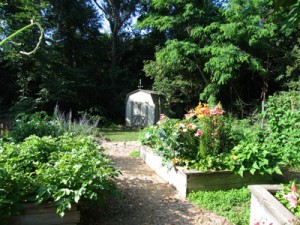
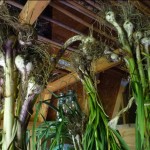
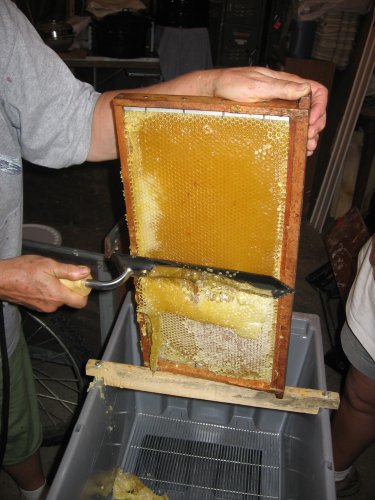
Our carrots and beets and leeks and garlic and beans. Our honeycrisp apples. Granny. Plums. Cherries. The onions drying on the old screen door in the shed Jon built. A basement pantry filled with canned vegetables, canned fruit. Jars of honey from Artemis Honey.

A greenhouse. That’s the only way I could return to gardening. I’m no longer strong enough for the kind of gardening we did in Andover, Minnesota. I’d need plants on a bench about hip height. But I’m seriously considering it. The dogs. Yes. Kate. Yes. But, plants, too. Our own food on our table. Nurturing plants. I’m sad I left it behind.

We’ll see.

Greenman

Lughnasa and the Lughnasa Moon

Tuesday grateful: The Lughnasa moon just setting below Black Mountain. That one violet volunteering near our front steps. The daisies. The faint whoosh of folks going to work. Ruth. Her eagerness to see us. Their garden and her joy in it. Seeing Patty yesterday. Banking. Socrates, the teller.

Gardening. At the end of my time on the Ancient Ones zoom, I surprised myself by summing up my life as having one regret. Gardening. That we hadn’t pursued it here on Shadow Mountain. I miss, I said, growing our own food. Working with soil and plants. I do. Miss it.

Once Kate and I moved to Andover a transition began for me from city boy to horticulturalist. I wouldn’t have predicted that necessarily. We’d done some perennials at our home on Edgcumbe road. Starting with the small bed I planted in the front yard, finishing during the great Halloween blizzard of October 31st, 1991. Daffodils and Iris, if I recall correctly.

It’s true I had a big garden back in 1974 on the Peaceable Kingdom, my failed attempt, with Judy, to develop a spot for the movement to have respite care. My only Psilocybin journey happened there. I watched our Potato plants growing. But the Peaceable Kingdom did not last and neither did gardening.

A bit of gardening at the first house, the one on 41st Avenue, but Slugs took over. There was no gardening at home in Alexandria. A few Flowers maybe, but nothing to remember.

Andover, though. When we got there, the front yard was bare, as was a sloped area behind the house in the back. About an acre of Woods were doing fine, as undisturbed Woods will do. In between was a large patch of weedy, scrubby Grass with a large grove of Black Locust. They didn’t look good, some of them were dead. BTW: many of the Weeds were actually Hemp plants seeded during a World War II field planted in it.

We hired a landscape architect who helped us with the bare Land. I wanted to sow a Prairie on all of it. Kate said no, we could never sell it. We settled on two large areas of Prairie with sod and some new Trees in between them, directly in front of the house. On the sloping area behind the house we decided to do a terraced garden. Irrigation went in with all of it.

In the beginning I wanted to do only perennials. I imagined our house overflowing with fresh cut flowers throughout the growing season. I had a lot to learn. Having flowers blooming from spring into fall requires so many skills.

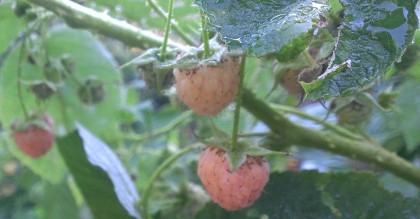
I did not want to do annuals. And, I didn’t. Along the way I learned about soil amendments, spading forks and gardening spades, trowels, and hori-hori. Killed a lot of plants. Cussed at Rose Chafers, Japanese Beetles, Colorado Beetles. Along the way I fell in love with the families Lily and Iris and crocus. Learned the amazing recovery powers of Hosta.

The Black Locust and their small swords taught me caution and how to use a chain saw, a commercial grade chipper, a Peavey, a Swede saw. Hired stump grinders. I cleared, with Jon’s help, enough area that we could imagine a vegetable garden. Jon built us raised beds from the start, anticipating the day when bending over would not be easy. He made some in whimsical shapes, others square, some rectangular. I filled them with top soil and compost.

We had various compost piles, none of which worked very well. We built one that used split rail fencing and a large metal gate to keep the dogs out. Tully, one of our Wolfhounds, kept finding her way in. But she couldn’t get back out. Strange.

Speaking of Wolfhounds. Jon built a fence around the raised beds to keep them out. They loved to dig in soft garden soil.

More on this later. This has gotten long.

Head, Heart, Hands and Health

Lughnasa and the Lughnasa Moon

Sunday gratefuls: The framers. Jon’s print. Ode’s. Ruth’s painting. Kate’s heirloom needlepoint: Love is Enough. All beautiful. Art by friend and family. Pho. Singapore noodles. That woman and her kid who needed money. Ruby and her air conditioning. Driving through Evergreen with the window down and the AC on. Allergies. Sympathy for my father. Blue skies, cool nights. No wildfire so far. Lughnasa

Lughnasa in the mountains. Lughnasa is a first fruits harvest festival. In ancient Celtic life it would have meant, like all the major holidays do, a market week. Games, trading, drinking and feasting, contests. State fairs and county fairs are Lughnasa influenced. They tend to fall between August 1st, Lughnasa and the autumnal equinox, or Mabon.

The Madison County 4-H Fair, which was held in Alexandria, my hometown, rather than the county seat of Anderson, Indiana, is a good example. I don’t recall, or maybe just don’t know, the reason Alexandria’s Beulah Park got the honor, but it was great for us as kids.

A carny setup strings of lights, cotton candy machines and hot dog stands, rides, and games. We would go early, watch them setup. Mom holding me on her shoulder, a blue blanket wrapped around me, a string of lights above my head is my first memory. A faint chill shuddered through me. I’ve always believed that was the first sign of my polio.

Local men erected tents with thick stakes and strong rope. Vendors of all sorts came to the fair. My favorite one was the dairy that passed out dixie cups of chilled buttermilk. I’d sprinkle mine with salt and pepper, going back as often as they’d allow it.

Car dealers brought out new model cars. I saw my first 1957 Chevy at the Madison County Fair. Farm equipment dealers brought tractors, hay balers, wagons. Those big yellow and green John Deeres. The red Massey-Fergusons. Tires taller than all of us kids with deep tread.

There were entertainers: magicians, singers, choirs, local celebrities. A queen contest. But the most important part of the fair, the Madison County 4-H fair, were the 4-H exhibits and shows. Some of you city folks may not know about 4-H: Head, Heart, Hands and Health.

4‑H Pledge

I pledge my head to clearer thinking,
My heart to greater loyalty,
My hands to larger service,
and my health to better living,
for my club, my community, my country, and my world.

This was small town America, rural America at its best. That pledge works. Can you imagine djt taking the pledge, for example?

4-H, the county extension office, and the cooperative extension offices from public land grant universities made room for kids with sheep, pigs, cows, rabbits, chickens, ducks, geese, horses. The kids came with their animals, often slept in their stalls during the fair. They made room for kids who cooked, baked, painted, did seed art, crafts like crocheting. County extension offices sponsored contests for wood-working, pie baking, honey making, quilting. County 4-H’ers could win blue ribbons, go on to the State Fair in Indianapolis.

Walking through the stalls with Holsteins, Guernseys, Jerseys, Angus, Hereford, and smelling farm smells, the ordure mixed with hay and urine. Seeing the biggest Boar lounging in his pen, his testicles usually visible and the scene of much laughing and pointing. The fancy Pigeons and high-strung Banty roosters. Rabbits with their long ears and velvety fur.

The buildings held jars of pickles, honey, jam. There were live Bees, honeycomb, and jars of amber honey ready to be judged. Decorated cakes. Plates of cookies. Bird houses and hobby horses, hand made. Quilts. And much more.

We knew where food comes from. Our friends and family grew it in their fields, raised it in their barns and pens. This was, and is, a celebration of Mother Earth.

The 2020 Madison County 4-H Fair was canceled due to the pandemic. But it will be back, spreading the country gospel of head, hearts, hands, and health. What we need right now.