The Cold Month

Winter                                                                       Waxing Moon of the Cold Month

Sunlight has begun to grow, but as is often the case here in January, the snow keeps the air near the ground cold and the amount of light increase will not begin to warm us until February, though by then the train will have left the station for winter.   It’s days then will, again, be numbered by rising temperatures, melting ice and corners in the city where cars on intersecting streets can be seen again.  But not now, not January.  This is the Cold Month.

Kate’s next to last day at full time work.  Her friends at work will take her out to Applebee’s tomorrow night after the shift ends at the Urgent Care.  Afterward she will come home and we’ll sit together a bit, listening to music or watching a recorded TV program, the last time we’ll play out this late night ritual save for the occasional, 4 0r 5, nights she’ll work a month for the next couple of years.

Vega and Rigel will go to Armstrong kennels for the first time since they came to live here.  They’re pretty flexible dogs so I’m sure they’ll have a good time.  All of our dogs have liked it there.  Emma, our eldest whippet who died last year, loved the kennel, eagerly whining and straining to get inside.

My friend’s wife has chosen a hormonal treatment for her adenocarcinoma.  They’ll go with that and see what results they get, if the tumors shrink.  Again, if you have a quiet moment and can remember her and her family, they would appreciate it.

Gut Check

Winter                                                                    New Moon of the Cold Month

Last Monday night I ate dinner with my friends, six of them, at a restaurant, the Bukhara, which carries on the Mughal influenced culinary tradition of Northern India.  On the way home I got a gut check on my world view.  There was a light snow, the temperature hung at zero and the lights of other cars and trucks reflected off melted water on the highway as I headed toward Coon Rapids.

Near the intersection of 494 and Rockford Road some part of me, a deep part, reached up and said, your friend’s wife may die.  That part went on, speaking in images and feelings as the deepest parts of us do.  The reflected highway, a skidding truck, my death.  What then, Charlie, it asked?  What then?  Another aspect of my Self, perhaps even the same part asking the question, raised up an image from an old movie about Rome, The Fall of The Roman Empire.  Why?  What?  Oh.  Alec Guiness.  Marcus Aurelius.  A principled man, a Caesar, a Stoic.  The author of the Meditations.

How did this relate?  The epitaph.  Reported as the most popular of ancient Rome:  I was not.  I was.  I am not.  I don’t care.  Stoicism and a principled approach to this life.  Cast aside the final, eternal question.  Unanswerable.  Unknown.  Most likely unknowable.  Still act.  Still live.  Still care.

The windshield washers snicked, dirty water thrown up by vehicles in front of me cleared and I was back on the highway, headed toward 694.  And I knew.  Yes.  The deepest part of me knew, too.  Yes.  This life.  For all I’ve got.  This one.

The Funny Season

Winter                                                              New Moon of the Cold Month

The funny season is off and running.  Expect next week:  introduction of a repeal the nuclear moratorium bill in the House.  Later, the same for the coal moratorium.  A lobbyist I talked to today spoke of sticking his head in a new legislator’s office, “He was sitting behind his desk.  Not a piece of paper on it.”  That will change, but it gives you an idea of how new many of this year’s legislators are.

Much will be said and written over the next few months, but here’s a key thing to look for:  the stability and cohesiveness of the DFL caucus in both houses of the legislature.

I feel privileged, at this age, to be in the thick of this stuff on behalf of our great outdoors, our lakes, rivers and streams, our ongoing commitment to natural heritage all Minnesotans know and love.  This morning a chance that old work, community based economic development, might be relevant to this ongoing struggle emerged.  I hope so.  We lose so many votes over the perceived contradiction between jobs and protection of our natural heritage for our kids.  This is a false choice, but we need to be more proactive in showing that it is.  We need to become leaders in community based, eco-friendly economic development.

A busy, political day.  Satisfying.

Wanderers

Winter                                                                  New Moon of the Cold Month

My brother, Mark, is a traveler, a wanderer, a planet.  He can’t sit still, a powerful urge to move comes over him, an urge with plenty of family reinforcement.  Dad took to the road all the time, as often as he could, as long as he could, even if it was to run down the story of a river that went underground only to pop up somewhere else.  He hunted down the ordinary extraordinary.  Mark takes the sensibility a step further.

He has crossed Russia on the trans-siberian railway, picked olives in Turkey and worked on a kibbutz in Israel.  When he finally hit Southeast Asia, over twenty years ago, something clicked.  This was a place he could use as a base.  And he does.  Teaching English in Bangkok, but setting out for journeys into Cambodia, Laos, Vietnam.  He reminds me of the writers who took off on tramp steamers to see the world.  Now, he’s antsy again, wanting to move, needing to move.  Who knows where he’ll go next?  He doesn’t.

Mary, my sister, travels a lot, too:  Tibet, India, Dubai, the Caribbean, England, Greece, Malaysia, Indonesia.  She, too, has a base in Southeast Asia, Singapore, or Asia Lite as she likes to call it.  She teaches, too, at the National Institute of Education, Singapore.

They both have lives that are very exotic compared to Andover, Minnesota.  I’m glad to have their vicarious adventures in my life.

Keep That Gray Matter Working

Winter                                                            New Moon of the Cold Month

Geez.  I felt affirmed by this paragraph in a longer article by Oliver Sacks.

Whether it is by learning a new language, traveling to a new place, developing a passion for beekeeping or simply thinking about an old problem in a new way, all of us can find ways to stimulate our brains to grow, in the coming year and those to follow. Just as physical activity is essential to maintaining a healthy body, challenging one’s brain, keeping it active, engaged, flexible and playful, is not only fun. It is essential to cognitive fitness.

Oliver Sacks is the author of “The Mind’s Eye.”

Pain

Winter                                                                 Waning Moon of the Winter Solstice

When a friend is in pain, the pain travels.  In its journey from one friend to another, the pain may not lessen, but its burden may grow lighter.  Such a journey is underway now with a friend whose wife has received distressing news, the kind of news we know about yet still hope will never be heard among the people we know and love.  Cancer.  It has such a brutal, dangerous, threatening aura.  Black.  Shot through with jagged points.  Hearing the word in the mouth of a friend sets the inner self back.  Creates a sense of fear and loss, loss even before any loss, a type of loss that may be the final stage of innocence, the end game of our immortality.

Then there is turning to face the truth, to talk to the doctors, to sort out the words, the feelings, the possibilities, the dangers.  And choosing, choosing about matters of life and death. Decisions no amount of prayer or meditation or forethought prepare us for, decisions about our own life, its length, its end.  Or, worse, the life of a loved one.  Hope?  Of course, hope always has a role, a horse in the race.  But there are other horses, too.

My heart has been heavy ever since I learned this news, an existential dread, the kind always there, under the surface, the knowing, the knowing about predatory nature.  Yes, she is our mother; yes, in all ways, yes; but, like Coatlicue of whom I wrote a few days ago, she not only gives life, but she takes it back.

Cancer is not evil.  It has no intention.  It is.  It is a force majeur, an act of blind fate.  And yet.  We can, sometimes, turn it back.  Cancer’s aura has gotten a bit dimmer of late, a degree of lethal certainty has leaked away as drugs and drug regimens, research and surgery have chipped away at its powers.

So, I invite you to do the kind of thing in which you believe for my friend’s wife.  A kind and generous universe will know how to direct your message.  We all need love, love from places we know and places we don’t.

The Last Week

Winter                                                          Waning Moon of the Winter Solstice

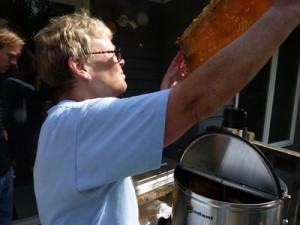
Kate’s last week of work began with a 7:30 am drive to the gastroenterologist.  Good news from the colonoscopy.  So, she enters her last week of work and the first year of her 400_honey-extraction_0239retirement with good news on the intestinal tract.  She also three crowns going in a couple of weeks from now, new glasses (several) and the new hip (August) and the l-4 l-5 fusion last March.  She’s ready to hit the new year sewing and cooking and visiting the grandkids, all parts intact and functioning, more or less.  A big shout out to Kate as she starts her last week of full time work.

1967

Winter                                                                 Waning Moon of the Winter Solstice

1967.  Anastasia Pydych, a docent friend, has done a movie on 1968 which has a relevance to her father that I can’t recall right now.  A friend of hers, a writer for Rolling Stone, has a book underway about 1967.

When told her I was a sophomore in college that year, she said, “Oh, that’s perfect.  That would have been the perfect time.”  It reminded me of a comment made by one of the interviewees for the Sierra Club policy position, “I wish it could be like in the 70’s, when people had passion.”

We didn’t know it was historic, that year, we were living it.  It was a confusing, wonderful, chaotic, astonishingly hopeful, colorful, drugfull, penetrating, unafraid time.  Long ago, I don’t recall where now, I read that the 60’s happened because there was so many young adults than mature adults, that we, in effect, socialized ourselves.  That still seems like the most cogent explanation I’ve heard for the extraordinary sense of freedom and possibility that swept through my corner of the world, central Indiana.  As people passed through town, Muncie, and as some of us hitchiked around and saw other campuses in other states, we knew personally that it was not just us.  A crazy, heady wind had begun to blow, and the times, as Dylan said, were obviously changin’.

It was in ’67 when the draft became a big issue, right across the country.  And, yes, there is an obvious class bias involved in draft deferments, since those of us in college could get one and those who weren’t couldn’t.  Yes, again, there were many baby boomers, probably most, whose lives went on as they would have anyhow, taking a factory job, going into the military, learning a trade, trying out different jobs, getting married, settling down and raising kids.

That wasn’t the way it felt at the time, however.  In those years we believed, as I still believe, that US adventurism and a naive anti-Communism had caused us to insert ourselves in a civil war centuries old, a war in which we had no self-interest and chose our allies only because they identified themselves as the anti-communists.   Most of us men in college then, at least those of us on the left, saw the draft as a form of indentured servitude, only with a cruel twist, in this case the slaves had to die or kill.  Not a great choice.  Many of us, like me, were selective objectors, that is we opposed the Vietnam War as a stupid meat-grinder conceived in Washington and held in place by machismo gone wild, but we were not conscientious objectors, that is, we did not object to all wars.

That sense of being at odds with the ultimate power of the land, the Federal Government, was a powerful glue.  It stuck us together.  We were more disparate than unitary in our objections to the draft, but we were at one in our objection to the war.

This sense of overagainstness,  a feeling bordering on outlaw, made us courageous and reckless.  It made the days, the hours, we lived focus on experimentation, on analysis, on argument, on planning, yes, but also on relationships, parties, drugs and acid rock.  If the man didn’t understand us, we’d understand ourselves.  And boy we worked at it.

If you’re going to San Francisco…  I missed the Summer of Love and Woodstock, though I did make it to two hot years of the Cincinnati Jazz Festival.  I wish I could get the words to say how it felt then.  We felt free, even called, to challenge anything and everything:  our parents, their values, college administrations and their ridiculous in loco parentis, the draft boards, day-to-day reality, sexual limits, congress, the President, the military.  All of it, each day, every minute.  The times were so intense, so charged, so electric.

Well, here’s the thing.  Kate has a colonoscopy in the morning and I have to drive her.  I’m drawing Social Security and so is she.  This next week is her last week of full time work.  1967 is a long time ago is what I’m saying.  But, boy am I glad I was part of it.  It was quite a ride.
Dream a Little Dream of

Winter                                                             Waning Moon of the Winter Solstice

Inception.  Kate and I watched this last night here at Artemis Cinema.  Kate, who doesn’t tolerate much fiddle-faddle when it comes to movies, said early and often that it wasn’t clear.  Later on, perhaps around the time they’re navigating a well-defended ego, complete with snow camouflaged Hummers with tank tracks in place of tires, snow mobiles and white clad gunmen protecting a concrete gray fortress, we both decided that we had something of a grip on things.

A Russian nesting doll movie with plotlines and concepts connected but difficult to unravel, determining what was real or not became a challenge.  Which was, I suppose, the whole point.  Mol, Decaprio’s wife, kills herself because he convinced her the world they shared inside a dream was not real.  She carries with her, back into waking life, the idea that the world she is in is a dream, an illusion, and that killing herself will cause her to wake up and be with her real husband and her real kids.

This is, of course, a neat cinematic version of solipsism turned inside out.  A solipsistic thinker believes the world to be a creation of their own imagination.  In this case the solipsist believes the world cannot be her creation and therefore must not be real.

This is a movie more about epistemology, how do we know what we know, than it is about psychology or ontology.  In the end we’re left hanging, not sure whether the world Decaprio’s character has returned to is in fact the real world or only a figment of a dream, “A slight disorder of the stomach… You may be an undigested bit of beef, a blot of mustard, a crumb of cheese, a fragment of an underdone potato. There’s more of gravy than of grave about you, whatever you are!” Scrooge faced the same epistemological problem with a strong dose of skepticism.

We’ll watch inception again.  See how it fares on a second pass.

Warp and Weft

Winter                                                                            Waning Moon of the Winter Solstice

Other blogs seem to have a slant, a bias, a thing.  I suppose I do too in a general way, the idea of ancientrails, the Great Wheel, the garden, a po-mo pagan sensibility, but what I’m doing is more like an online journal.  On a bookshelf I have two rows of journals kept in various forms since 1971, many erratic in the entries, then, as life moved on, I became more regular.  At one point I had several journals.  A diary like one in which I wrote short entries about my day, a spiritual journey one in which I recorded my experiences of meditation, lection divina, contemplative prayer, scripture study, another in which I took reading notes while I studied Islam, the year after 9/11, several more with reading notes from a year + when I gave up writing and took to reading the classics:  Divine Comedy, Faust, Metamorphosis, works of that nature.  During the year I studied Islam I read the Koran twice, once just to see what it said and another time during the month of Ramadan as I fasted and read enough to finish the entire Koran in thirty days, as many Muslims do.  Yet other blank books contain notes on art history, taken over many years of continuing education at the MIA, ideas for novels, short stories, about writing.

Writing is the thread, the weft I have chosen to weave the tapestry of my life.  The warp threads, stronger by far, developed in body and mind, feelings and thoughts as this Self has moved through life since birth.  The stuff of my daily existence has been the weft when shuttled through with the language I learned at my mother’s knee and my father’s typewriter.

So, this blog is just another pattern,  a particular tartan for this phase of my life.  It may pass away at some point, I certainly will, but, as I wrote the other day, the Web may have granted us bloggers a type of immortality.

When Kate I and were on our honeymoon, in late March or early April of 1990, the last phase of our trip which started a block from the Spanish Steps in Rome, we took the train from Edinburgh to Inverness.  Inverness is the capitol of Celtic Scotland, the northern reaches of the Picts.  The river Ness, from the storied Loch Ness, runs right through town.  On a stroll one afternoon, Kate and I made our way to a tartan mill, a place where tourists could go in and watch tartans being woven.

That day, the master weaver changed over from one tartan to another.  What this involved has stuck me indelibly since then.  The master weaver carries in his head the particular combination of colors, of large spools of yarn, that make, say, the tartan of the clan Sinclair.  He achieves that  particular combination of colors and patterns not by computer, not by telling weavers what to do, but by placing, on a huge rack of iron hooks, individual spools of yarn.  The number of hooks across the top of the hook rack, maybe 25 or 25, below each hook came at least 20 more, maybe 25 more hooks creating a large frame of individual hooks slanted up.  By his placement of the spools the master weaver achieved his design for the yarn from these spools fed precisely into the looms which clicked and clacked behind them.

Later than night, after we had finished our meal at the Station Hotel, Kate and I walked along the river Ness, tendrils of mist floating up from it, weaving themselves forever into our memory.