Garden Diary: Beginning of the Soil Drenches and Foliar Sprays

Summer                                                            New (First Harvest) Moon

When we installed the landscaping, we asked for low maintenance.  I still remember the skeptical look on Merle’s face.  “Well, I can make it lower maintenance, but there’s no such thing as no maintenance.”  In those first years I deadheaded, sprayed Miracle Gro, pruned the roses and planted a few bulbs.
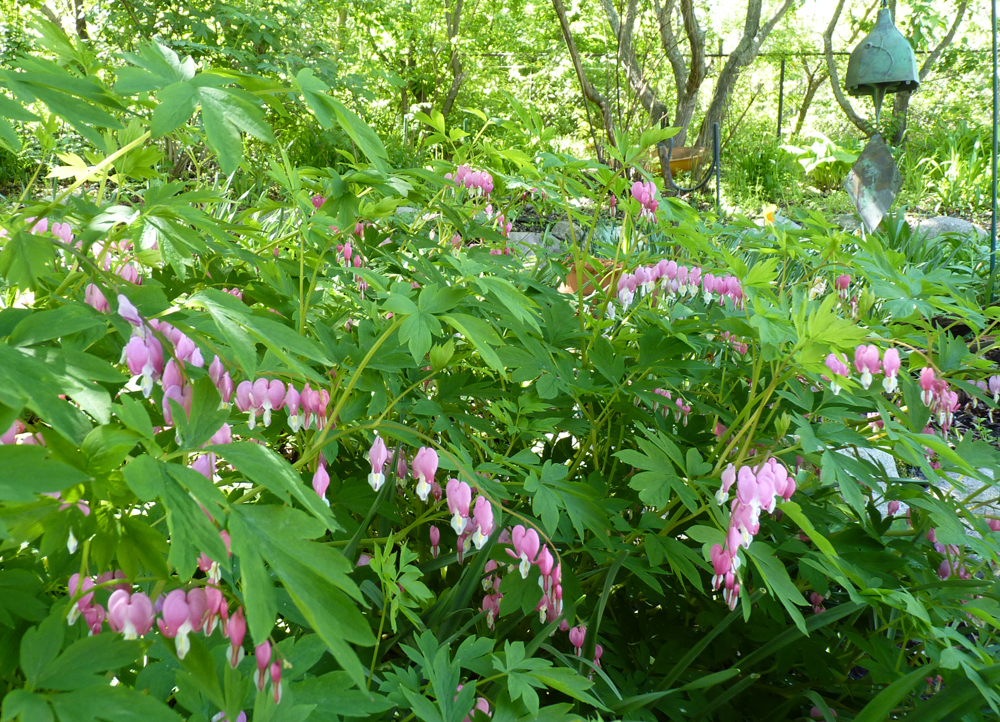
Gradually, the land drew me in and I got more interested in perennials of all kinds bulbs, corms, tubers and root stock.  Fall became (and remains) a ritual of planting perennials, most often bulbs.  Fall finds me on a kneeler, making my prayer not to the Virgin Mary but to the decidedly unvirgin earth.  Receive these my gifts and nourish them.  And yes, I agree to help raise them.

Kate always planted a few vegetables but at some point we merged interests and expanded our vegetable garden.  That was when organic gardening, permaculture and now biodynamics began to interest us.  We futz around using some organic ideas like compost and integrated pest management, some permaculture design with plant guilds and productive spaces closest to the building that supports them and now some biodynamics (or whatever the right term is).
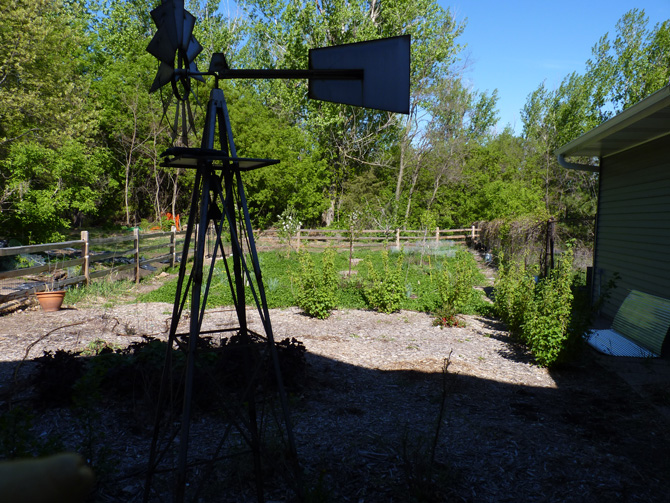
As I understand it, biodynamics works to produce the highest nutrient value in food by moving the soil towards sustainable fertility. This requires applications of various kinds of chemicals, yes, but in such a way as to increase the soil’s capacity to grow healthy, nutritious food and to do that in a way that maintains the soil’s fertility from year to year.

This is very different from modern ag which has a take it out and put it back approach to soil nutrients.  In that approach modern ag focuses on nutrients that produce crops good for harvest and the farmer and food company’s economics, not the end consumer’s dietary needs.  Biodynamics works at a subtler level, looking at the whole package of rare earths and other minerals necessary for healthy plants and the kind of soil conditions that optimize the plants capacity to access them.

Today I did a nutrient drench called Perk-Up.  A nutrient drench goes onto the soil and encourages optimal soil conditions, a large proportion is liquified fish oil and protein.  I also sprayed on the leaves and stalks of all the reproductively focused vegetables a product called brix blaster which encourages the plants to focus their energy on producing flowers and fruit.
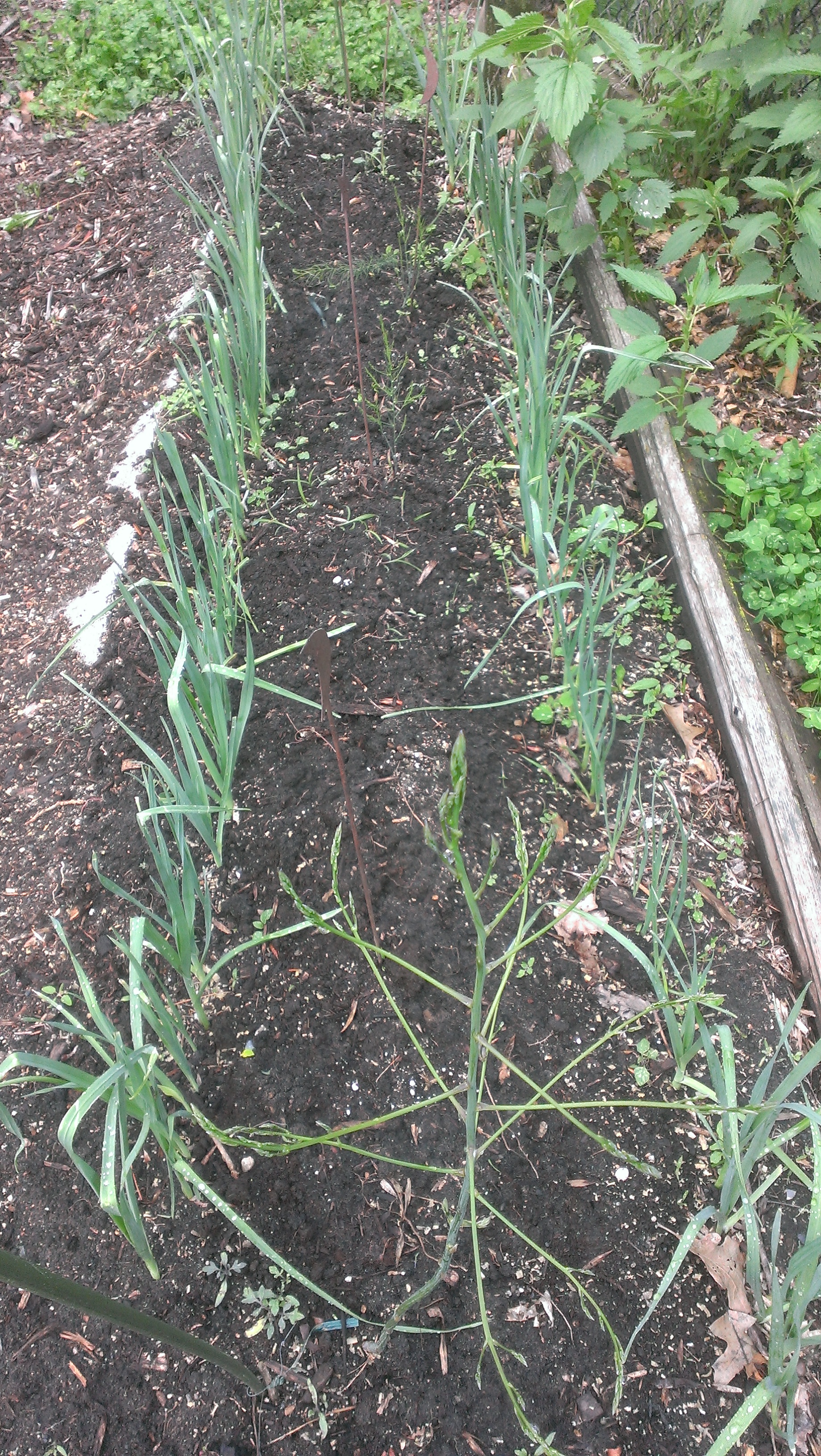
The whole vegetable garden got Perk-up.  The reproductive vegetables in our garden are:  tomatillos, tomatoes, eggplant, peppers, sugar snap peas, cucumbers and, for some reason, carrots plus all the fruits.  I only sprayed the vegetables since the strawberries have just finished bearing and I haven’t decided whether or not to spray the orchard this year.  Since I made up more than I needed, I also sprayed all the lilies which are heading into their prime blooming weeks just now, plus a few other miscellaneous flowers blooming or about to bloom.

Tomorrow I will spray another product that encourages vegetative growth on the appropriate vegetables:  kale, onions, chard, beets, garlic and leeks.

This year my overall goal has been to jump up a level in the production of vegetables, increasing both quantity and quality without increasing the area planted.  Next year I’ll continue what I already think is a successful program for them and expand to the fruits and, maybe, at least some of the flowers.

As I’ve said elsewhere, horticulture is a language and it takes time to learn.  The plants and the soil speak to me all the time.  I’ve had to immerse myself in a lot of different disciplines to learn their language.  I’m not a native speaker, nor am I completely fluent but I’m well past the beginner stage.


Third Phase Work: Wit

Summer                                                            New (First Harvest) Moon

An HBO movie that went DVD on Sept. 11, 2001, Wit, directed by Mike Nichols, is many things.  It is first a fine drama showcasing the talents of Emma Thompson and Audra McDonald with a very touching and important moment featuring Eileen Watkins.  Wit is the story of a middle aged (48) professor of English literature, Thompson, and an expert in the metaphysical poetry of John Donne, diagnosed with stage 4 metastatic ovarian cancer.

The storyline takes her from the moment of the diagnosis through all her 8 cycles of full dose chemotherapy to death.  She only has one visitor, Watkins, her Ph.D. advisor, who is with her when she dies.

There is a fine and I suspect very tight interplay between the poetry of John Donne, especially his well known work, Death Be Not Proud, and the dramatic arc of the movie.  There is also a damning portrait of professionals so focused on their work, saving humans, that they can’t see the humans in front of them:  Thompson’s two oncologists and, ironically, Thompson herself.  Another storyline depicts with damning specificity the increasing powerlessness and dehumanizing of hospital patients.

(Marble funeral effigy of John Donne, 1631,
at St. Paul’s Cathedral, London, where he
is buried)

The poignant, and they are heart wrenching, moments come in the interaction between Audra McDonald, an oncology nurse, and Thompson.  It is not maudlin even in its build up, but the nurse sees Thompson, listens to her, empathizes with her, touches her compassionately and finally initiates a conversation about whether she wants to be a DNR, that is, do not resuscitate.

This is third phase work, viewing this movie.  Relative to the theme that I’ve given for my Woolly meeting on July 15th, home and what does that mean to you, it shows the hospital as the anti-home:  a place cleansed of personal belongings, choice, simple comforts like, as Thompson says at one point, “…shoes.”

However it may come to us, “gluttonous death” (a Donne phrase) will come and I hope that it can come for each of us surrounded by loved ones, in a place we choose to be.

Done

Summer                                                                    Solstice Moon

One of those get things done days.  They always seem good to have to have had, but to me, they distract from the work.  You know, little things.  Business meeting in the morning.  We have had a good year financially so far, even though we experienced some strain early on with three large vet. bills.

I researched bird netting for our orchard.  And decided, I think, to ride out this year and see how much predation we have from birds.  Might decide to cover one tree as an experiment.  The stuff’s not cheap, clumsy and not durable.

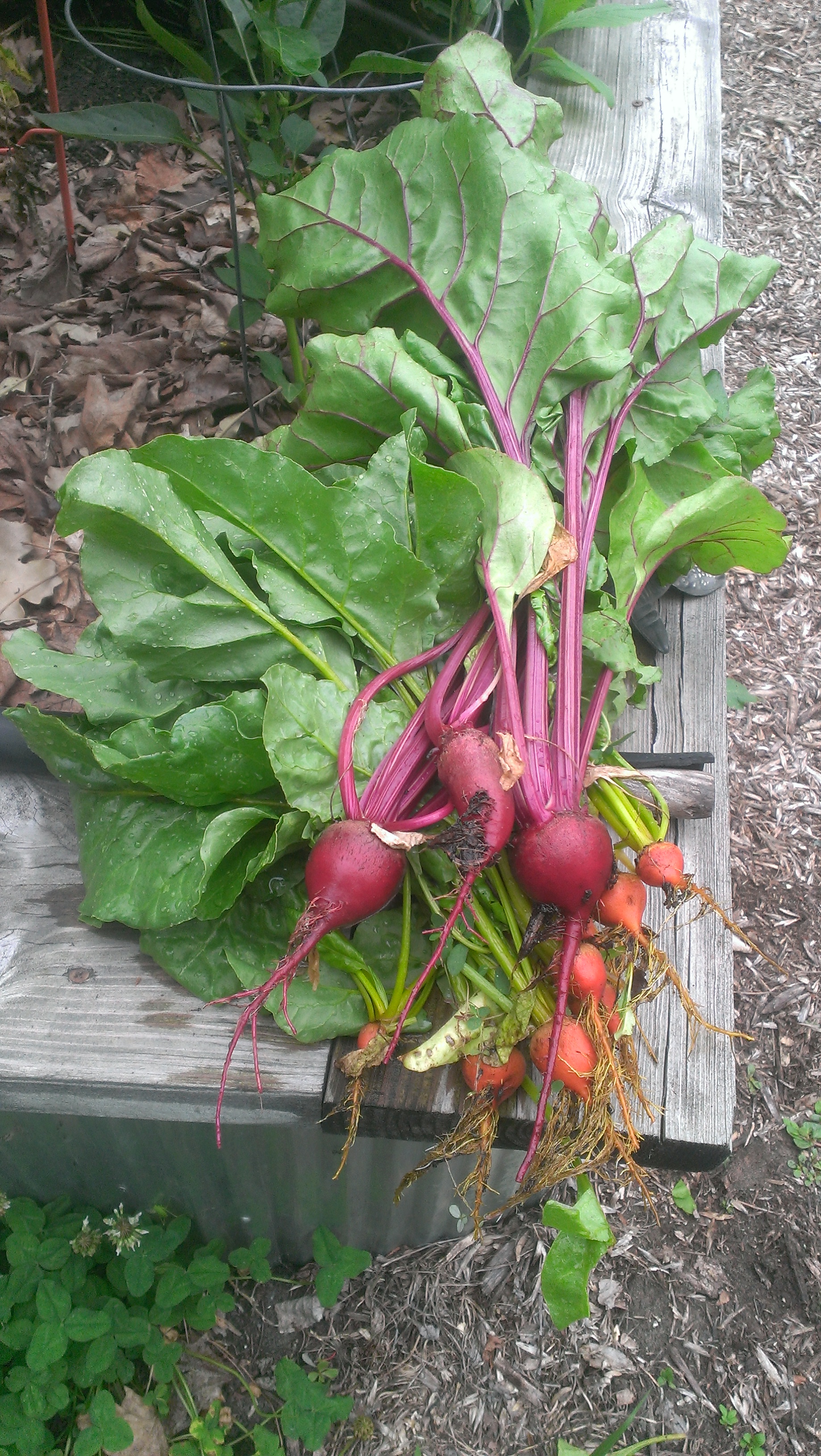
Did the carrots and the beets planting in the am, plus the chard and kale harvest.  Wandered around on the internet trying to find a gift for Jon and Jen’s 9th anniversary.  9th!  Finally found the French restaurant they used for the groom’s dinner.  Gift card.

None of this stuff takes a lot of time by itself, but clump them together and a day’s gone by.

Still picking up quotes…

The more powerful and original a mind, the more it will incline towards the religion of solitude.

-Aldous Huxley, novelist (1894-1963)

“Art is a jealous mistress.”
R.W. Emerson
“A sage is the instructor of a hundred ages.”
R.W. Emerson
“I’d say go to hell, but I never want to see you again.”
Sylvia Plat
“The rose is a rose,
And was always a rose.
But the theory now goes
That the apple’s a rose.”
Robert Frost
“It would be possible to describe everything scientifically, but it would make no sense; it would be without meaning, as if you described a Beethoven symphony as a variation of wave pressure.”
Albert Einstein
“An eye can threaten like a loaded and levelled gun, or can insult like hissing or kicking; or, in its altered mood, by beams of kindness, it can make the heart dance with joy.”
R.W. Emerson
“A man should learn to detect and watch that gleam of light which flashes across his mind from within.”
R.W. Emerson
“If you truly love Nature, you will find beauty everywhere.”
Vincent Van Gogh
“Why do we love the sea?
It is because it has some potent power to make us think things we like to think.”
Robert Henri
“And yet I demand
that your heart survive
on its own,
belonging only to itself,
whole, entirely whole,
and workable
in its dark cavern under your ribs.”
Anne Sexton – The Complete Poems
“At least half of your mind is always thinking, I’ll be leaving; this won’t last. It’s a good Buddhist attitude. It prepares you for life as a Buddhist. If I were a Buddhist, this would be a great help. As it is, I’m just sad.”
“Perhaps this is what it means to go mad: to be emptied and to be aware of the emptiness.”
“Freedom is nothing but a chance to be better.”
Albert Camus

Mr. Toad and the Rubber Pond

Summer                                                                         Solstice Moon

Fall beets and carrots in the ground.  Mid-summer chard and kale harvested along with some beets.  The nectar flow is on for the bees, the harvest flow has begun for the kitchen.  It’s steady now until we close down the garden.

Outside we have a wide rubber bucket we use for outdoor water for the dogs in the summer.  At least that’s our intended use of it.  Both Gertie and Vega prefer to see it as a doggy bath cum air conditioner.  So, we fill it up.  They empty it according to Archimedes and his bathtub.

Today, when I went to fill it up once again, I noticed a toad in the water. He’d jumped into the pond, but it’s nearly straight up and down sides were far too high for him to climb out.  I gave him the ride of his life, slowly lifting the water level until he scrambled up on the edge.  After achieving his goal, he sat there, surveying, no doubt wondering what caused the water level in this pond to change so quickly.


Working At Home

Summer                                                                      Solstice Moon

The revision of Missing has picked up some momentum.  The Loft class canceled and I’m not doing Latin in the late afternoon, so I can capture all that time.  Staying in the flow with it helps a lot, too, as does having gotten into the second half of the manuscript.  I have a clear vision now of what I want to change and how to guide the narrative, so it’s easier than at first where I decided on material to cut out, changes in certain characters and storylines.

Today is the beginning of the second phase of the gardening season, fall planting.  I’ll put in kale, chard, carrots and beets which we’ll harvest in September.   This has been a satisfying season already and appears likely to continue.  Foliar sprays and drenches tomorrow.

Among the Buckthorn

Summer                                            Solstice Moon

Cleared buckthorn, again, from the area around the grandkid’s playhouse and the fire pit, leaving in serviceberry and small ash trees. Rejuvenating the understory is difficult to impossible with buckthorn present since it chokes out most things shrub size and below.  In certain areas of our woods it’s a remediable problem, those areas not on the boundaries with the neighbors.

Sitting outside now in the evening, watching the fire, has me more tuned up to work in the woods, since up to this point the woods have been an amenity, but not a place where we spent much time or energy.  This kind of work is hard labor, perfect as an alternative to the computer, the mind, the writing.

A local guy, biologist Mark Davis of Macalester College, has a different take on invasive species like buckthorn:

“Davis…believes it’s time to raise the white flag against non-native species. Most non-native species, he said, are harmless—or even helpful.

In a letter published in the journal Nature this past June, Davis and 18 other ecologists argued that these destructive invasive species—or those non-native species that cause ecological or economic harm—are only a tiny subset of non-native species, and that this tiny fraction has basically given all new arrivals a bad name.”

As may be.  As may be.  But I still don’t like the way buckthorn crowds out the serviceberry, ninebark, dogwood, columbine, trillium and jack-in-the-pulpit.  Somehow it doesn’t seem to deter the poison ivy.  If it did, well…

The Beginning of the End of Summer

Summer                                                             Solstice Moon

July 4th is the midpoint of summer for me.  It’s not in terms of the calendar or meteorology, but in my visceral sense of times ongoingness, the one that tells me when I am, I now am between the 4th and Labor Day.  I suppose that harkens back to school days when there would be the 4th of July parade, then Labor Day marked the beginning of school.  What remains is a vestigial feeling that the next big thing to happen is the ringing of school bells.

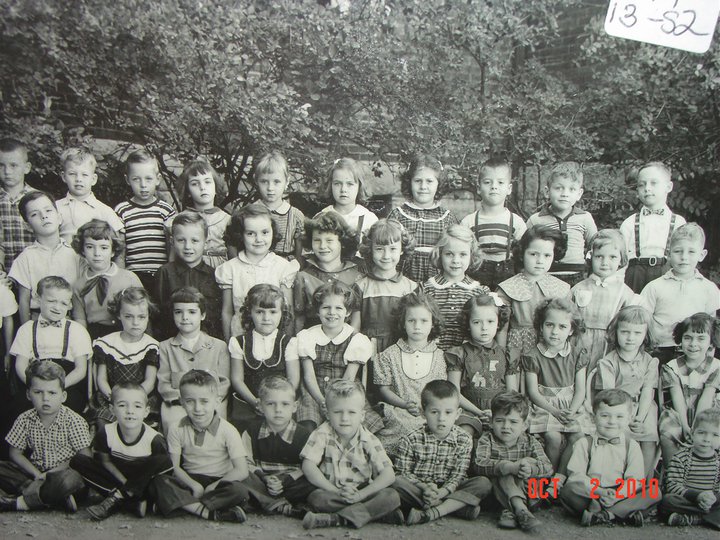
(that’s me, second from the left on the first row)

The school bell has long ago faded and even the summer pace of work is gone, for me now almost 25 years.  Yet that sense that summer has reached its climax and now speeds its way toward the denouement still sends its signals.  The garden does pick up speed now with plants maturing, more and more vegetables ripening, fruit, too.  The arc of the garden though does not know Labor Day, does not have a building and a bell in its lexicon.  It knows the growing season, the gradual warming, then cooling of the daytime and nighttime temperatures.

With Latin on hold I’ve begun to work outside a bit more regularly since I no longer feel as crunched for time in the mornings.  That means I can participate more fully in the garden’s life.  Many garden plants, especially vegetables, run through their entire life cycle during the growing season, going from seed to stalk to leaves to fruit, then senescence.  The school year that I inherited was one sensitive to this rhythm.  It allowed the kids to come home from school during the months their labor was crucial on the farm, during the height of the growing season.  The need for that passed long ago as the number of family farms has steadily declined.

Yet like my inner sense of time the school system continues on, its memory of the days of the family farm institutionally intact.


Just the Two of Us. Watching the Fire

Summer                                                                  Solstice Moon

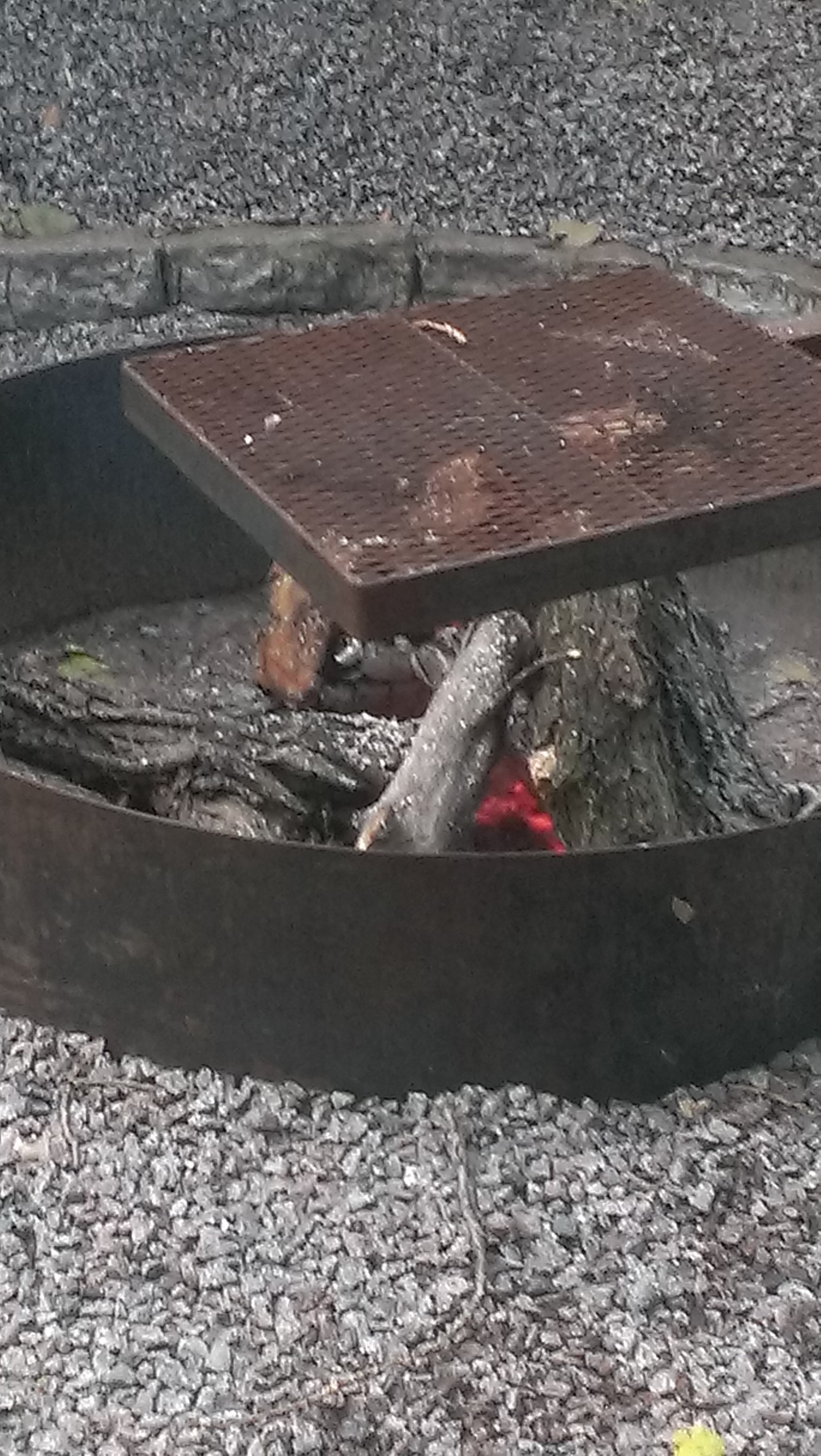
Well.  We had a whiz bang 4th here at Artemis Hives and Gardens.  The two of us sat out by the fire, which roared for awhile, ironically on the same day that our neighbor had the fire trucks out for what appears to have been a kitchen fire.

We roasted wienies, had deli salads and a Katy Did It corn relish that goes very well with hot dogs.

Kate bought some super sparklers and couple of fountains.  She set them off.  That was about it.

The fire pit with its iron fire ring reminds me of a state forest campsite and the woods that surround it add to the illusion.  It’s like going away for a fire then being able to sleep in our own bed.  Ideal.

Theater

Summer                                                           Solstice Moon

Though slow to get there, we’ve now seen shows in the Wuertle thrust, Dowling studio and McGuire proscenium platforms at the new(er) Guthrie.  The Wuertle, of course, conserves the old Guthrie’s radical proscenium thrust stage which pushes the performing space out into the audience. (see picture)  This design the Guthrie shared with Tyron Guthrie’s other major theatrical location, Stratford, Ontario’s Festival Theatre.  It was, and is, a compromise between theatre in the round and the traditional proscenium stage, like the Guthrie’s McGuire.

The Dowling studio recapitulates the old lab theatre over on 1st avenue in the Warehouse district.  Even more so than the old lab and the thrust stage it puts performer(s) and audience in a very intimate space.  We saw the Iliad in the studio last month, a one person performance by Stephen Yoakam.

The proscenium presents a play up and far away from the audience, performances with a barrier to the audience, the “fourth wall.”  Each platform has its virtues and its drawbacks. The thrust and the lab try to break the fourth wall by enclosing the stage itself by seating, trying to place the audience almost in the action of the play.  And, if you attended any theater at the old Guthrie by the Walker Art Center, you may remember actors rushing up the aisles to get on stage, or actors at times stumbling off stage and apparently into the audience.

Live theater and live music share the ephemeral nature of their productions.  Finished, there is nothing that remains but a script or a score, neither alive as the performance just was.  Yet live music can now be reproduced in 5 or 7 speaker stereo in your home to a remarkable level of fidelity.  You cannot see the performers, no, nor can you hear some of the subtle harmonics (or so they tell me, but with only one good ear, I can no longer tell), but the experience is very close.

Not so with live theatre.  A play on television or filmed as a movie is a dead thing, a different event altogether from sitting with the actors, breathing the air they breathe and watching them, flesh and blood, as they transform themselves into something or someone else.