Category Archives: Reimagine. Reconstruct. Reenchant.

Winter and the Future Moon

Friday gratefuls: Quest labs. Einstein Bagels. Tony’s Market. Walgreens. The Shell station carwash. Ruby, the new Rav4 and its heated seats. The cattle that gave their lives for the meat at Tony’s. Kate’s good seal on her feeding tube last night. Jon and the grandkids coming up for a brisket meal after skiing.

Went to Quest labs yesterday, order in hand for the sensitive PSA test that will tell how well the lupron has worked. As I walked into the lab, everything seemed ordinary, the parking spot behind the Audi, the automatic doors that slid open, the stairs up to the lab. The friendly young lady with the needle.

And, of course, it all was ordinary. Except. This was about cancer. Mine. I’ve become familiar with the dissonance between the ordinariness of these visits and my stake in their outcome. It produces an out of body feeling, not anything dramatic, but a sense that this is happening to someone else. Not true, however.

Will find out soon. My next lupron injection is on January 6th. Great fun. One more in the glutes.

While out I bought bagels, a couple of ribeyes for a New Year’s surf and turf meal, some adhesive bandages, and got the car washed. Just more errands. More ordinary.

Signed up for another kabbalah class, this one using Art Green’s Radical Judaism. Art is a mentor of Jamie’s, still alive in his eighties. His book appeals to me. My own thinking has gone along similar lines though Art’s done a systematic job. Not my style. I lived out my changed attitude toward religion and tradition, writing about it only in shorter pieces. Looking forward to this.

Thought readers of this blog might appreciate these:

The Eleven Awareness Practices of Kabbalah Experience


  1. Pay attention to what shows up as a reflection of what you still need to learn and grow into.
  2. Be present to the moment. This includes fully processing emotions that come from the past and how plans for the future impact your present living.
  3. Accept reality as it is. Live with a deep sense of gratitude. Seek and offer forgiveness in your everyday experiences.
  4. Live by setting intention. Be open to possibility—one door closing opens another. Measure success by effort not by outcome.
  5. Hold opposites and recognize that those qualities you may judge in others are mirrored in you. Seek common ground with others.
    6. Set limits to access greater intimacy and focus in your relationships.
    7. Expand your concern and love for the “other”.
    8. Recognize the multiplicity of masks you wear (so they don’t wear you).
    9. Perceive and understand the metaphors that underlie your life choices.
    10. Witness the masks and metaphors and enter a state of no-thingness.
    11. Flow in the paradox of being and non-being in every moment.

Merry, Merry Meet

Winter and the Gratitude Moon, waning sliver

Christmas gratefuls: the silence on Black Mountain Drive. Black Mountain itself. The stars above Black Mountain. Shadow Mountain. Our home. This loft, a gift from my Kate, now five years ago, and still wonderful. Kate and her increased health. The sacred side of Christmas. The pagan (also sacred) side of Christmas.

When I went out for the paper this morning, it was dead quiet. No dogs barking. No cars or trucks on the road. No mechanical noises. The sky was the deep black of the cosmic wilderness, lit only by bright lights: planets, stars, galaxies. Silent night, holy night.

Those shepherds out there tending their flock, sheep shuffling around. A baa and a bleat here and there. Visitors on camel back. All that singing. As imagined, probably not a quiet night.

Here though, this dark Christmas morn. The deer are asleep. The elk, too. Pine martens, fishers, foxes, mountain lions might be prowling, but part of their inheritance is silence. Black bears went to sleep long ago. Millions of insects are quiet, too. The microbes in the soil, the growing lodgepole pines, the aspen organisms, their clonal neighborhoods, bulbs, corms, rhizomes all alive, all quiet.

Silent night, holy night. Yes. Sacred night, holyday night. Yes.

I read this long essay on consciousness by the president and chief scientific officer of the Allen Institute for Brain Science. In it he says this:

” Yes, there’s this ancient belief in panpsychism: “Pan” meaning “every,” “psyche” meaning “soul.”…basically it meant that everything is ensouled…if you take a more conceptual approach to consciousness, the evidence suggests there are many more systems that have consciousness—possibly all animals, all unicellular bacteria, and at some level maybe even individual cells that have an autonomous existence. We might be surrounded by consciousness everywhere and find it in places where we don’t expect it because our intuition says we’ll only see it in people and maybe monkeys and also dogs and cats. But we know our intuition is fallible…”

Even silence, since it presumes an awareness of noise, is a proof of consciousness. All that consciousness around us here on Shadow Mountain. The trees and wild animals, grasses and microbes, dogs and humans, all here, all experiencing a self.

I take panpsychism a bit further than Koch with the kabbalistic idea of ohr, the divine spark, resident in every piece of the universe and the process metaphysical view of a vitalist universe creatively moving toward greater complexity.

This waking up mornin’ we can see the baby Jesus as an in your face message that, yes, of course we are holy. Yes, of course the universe sings to us from the depths of the sea, the top of the redwoods, and the person or animal across from us this morning. And, to get downright personal, from within the deep of our own soul.

A Holiweek

Winter and the Gratitude Moon

Saturday gratefuls: For this spinning, traveling planet. For ways to get from one spot to another: cars, trains, planes, bicycles, feet. For the new Woolly Calendar, produced again by Mark Odegard. Over 30 years. For cities like Minneapolis, San Francisco, Denver. And for those of us who live outside of them.

The long dark Solstice night still wraps Shadow Mountain, quiet and black. For those lovers of the summer this marks a key moment as the night begins, gradually, to give way to the day. Six months from now the Summer Solstice will celebrate the longest day, which marks the moment when the day gradually begins to give way to the night. A cycle that will last as long as mother earth does.

A cycle that can remind us, if we let it, of the way of life. That darkness comes, fecund and still. That light comes, spurring growth and movement. That we need both the darkness and the light, both are essential. When dark periods enter our life, they are usual, normal and will pass. When light periods enter our life, they are usual, normal and will pass.

Our time with Seoah ends today. She heads off to Singapore for a year, leaving Denver this evening. We’ll head out to the airport early. It’s Christmas travel weekend and the airport will be buzzing.

Her English is much better and she studies hard. She hopes that her time in Singapore will push her all the way to fluency. Mary has a Korean friend who will help Seoah hook up with the Korean community there and English language tutors.

Hanukah starts tomorrow night. The first candle. Tuesday is Christmas Eve, then Wednesday, Christmas Day. Festivals of light. Showing our human preference for the day, for the growing season. Showing our confidence in the long ago, when the Maccabees revolted, kicking the Seleucids out, entering Jerusalem, and rededicating the Second Temple after its profanation by Antiochus Epiphanes. And, when the miracle baby, Jesus, entered this world, like the Shekinah.

A holiweek. Filled with candles, presents, songs, family. The most sacred part of this holiweek is the coming together of friends and family.

The West

Samain and the Gratitude Moon

Wednesday gratefuls: Seoah and her light presence as a guest, Murdoch again, the Grandmother Tree at CBE, the night drive up Brook Forest, then Black Mountain drives, the fox that crossed our path, the mule deer doe standing, looking toward the road, the nightlife of the wild, the ultimate wildness of the heavens

December 20, 2014 “The enormity of this change is still a little hard to grasp. We’re no longer Minnesotans, but Coloradans. We’re no longer flatlanders but mountain dwellers. We’re no longer Midwesterners. Now we are of the West, that arid, open, empty space. These changes will change us and I look forward to that. The possibility of becoming new in the West has long been part of the American psyche, now I’ll test it for myself.”

December 18, 2019 The usual mythic significance of the West, where the light ends, where souls go when they die, seems quite different from its American mythos as almost a separate country, an Other World where you could leave Europe behind, leave the East Coast behind and rejuvenate, remake yourself. (yes, Native Americans were here already. But I’m talking about the frontier, the Old West, the place where Hopalong Cassidy, the Lone Ranger, and lots of versions of John Wayne lived. And, yes, the Spaniards on the west coast and as far north as what is now New Mexico. The Russians, too.)

Seems quite different. Yes. However, “the possibility of becoming new in the West.” The American mythic West is about where souls go when they die, when they die to a past that had not prospered in the East, to a life no longer well lived, to a life lived in the all too usual way, to a life of boredom.

What would we become? When would the West become home? When would this house on Black Mountain Drive become home? All those boxes. All that altitude adjustment. And, we would gradually learn, an attitude adjustment to mountain life.

We have become people of the mountains, in love with them enough to adapt our lives to thin air in spite of the difficulty it presents to us. We have become people of the tribe, of clan Beth Evergreen, part of a strange and intriguing religious experiment, a new community. That was part of what people sought in the West. A chance to build community anew, to different rules.

We have become embedded in the lives of our grandchildren, of Jon. They love the mountains, too. Our choice, to live close, but not too close, has had its challenges, but has worked out well. It’s hard for us to provide day to day support for Jon and the kids. We’re too far away and too physically challenged (of late). We are, however, a mountain refuge for them, a place away from the city where they can come to refresh. We’re also on the way to A-basin, Jon’s favorite ski area.

When we travel now, the return no longer involves a turn north, toward the Pole, but a turn West, toward the mountains and the Pacific. Our friends in the north, in Minnesota have stayed in touch. We’ve not gotten back much; it’s so good to still have solid connections.

We change altitude frequently, often dramatically during a day’s normal routine. No more mile square roads, farmland templates. No more 10,000 lakes. And, up where we live, in the montane ecosystem, no deciduous trees except for aspen. No more combines on the road, tractors, truck trailers full of grain and corn headed to the elevators. (yes, in Eastern Colorado, but we’re of the mountains.)

The pace of life in the mountains is slower. Many fewer stoplights, fewer stores, less nightlife. Service of all kinds is slower, too. Plumbers. HVAC guys. Mail folks. UPS. Fedex. Denver Post. Painters and electricians. Once we quit expecting metro area level of service, especially in terms of promptness and predictability, life got better. The mountain way.

Our life in the West has also been shaped, profoundly, by medicine and illness. Tomorrow.

Long one. About god. or, God. or, Gods. or, nope.

Samain and the Gratitude Moon

Saturday gratefuls: Tony’s Market. And, for all the animal lives represented there. For the wonder of our gastro-intestinal system, all the various foods it will process. A Jewish prayer of gratitude includes those openings in our body that open and close. “Blessed… who has formed man with wisdom and created within him many openings and hollow spaces. It is obvious and known before Your Seat of Honor, that if even one of them would be opened, or one of them would be sealed, it would be impossible [to survive and] to stand before You.”

On that note. While watching and watching and watching and, still watching, Resurrection: Ertugrul, (I’m on episode 250 or so), an Allah saturated drama, and while keeping my inner lens clear in the house of Judah, I’ve begun to think again about God.

Nope. Still gone from my belief system in any form, yet with both Judaism and Islam prominent in my life right now, I’m wondering what I saw in the idea to begin with.

The notion of divine beings, either one or many, monotheism or polytheism, has occurred over and over again, in culture after culture. The early Mongols and Turks, for example, followed Tengrism: “Tengrists view their existence as sustained by the eternal blue sky (Tengri), the fertile mother-earth spirit (Eje) and a ruler regarded as the holy spirit of the sky. Heaven, earth, spirits of nature and ancestors provide for every need and protect all humans. By living an upright, respectful life, a human will keep his world in balance and perfect his personal Wind Horse, or spirit.” Wiki

My introduction to this human need for something beyond us came in the form of United Methodism, a branch of the Protestant reform movement over against Roman Catholicism. The Christians, of course, got their monotheism from the Jews and both were subjected to the firmest flattery, imitation, when Mohamed discovered Allah and the Q’uran.

Since I was in 1950’s America, in small town 1950’s America, in Midwestern 1950’s small town America, and since I was below the age of reason, I fell in with Yahweh, or El, or Elohim, or Hashem, or Adonai. And, because this was the Christian version, his son. Confusingly, too, like the Tengrists, there was a holy spirit: Father, Son, and Holy Ghost. Holy Ghost. Wow.

As I recall, God was sort of the back up band for Jesus in Methodist belief. Sure, he (and He was a he) was the metaphysical underwriter for all things Christian, but belief focused on his boy, his frontman, Jesus. When I prayed, though, my prayers went to an amorphous, cloud of unknowing sort of God, perhaps one more like Brahma than anything else. Distant, important, yet soothing. That there would be such a, what?, being, process, wonder, that would listen to me was, well, wow.

But the question I’m wrestling with here is what need to that fulfill for me? Why go once a week, often as many as three times a week, to a funny looking building, and learn songs, texts, folktales (like Santa Claus and the Easter Bunny, for example)? What was I getting out of it? My parents? That guy in the robe up front?

No question faith was precious to many, many people I knew. If, however, as I now believe, there is no metaphysical underwriter, no need for a frontman, what purpose does believing there is one have? I’m no neo-atheist wondering about everybody’s imaginary friend and how they could be so duped, that’s arrogant and naive at the same time. It’s obvious that faith fulfills an important psychic role for many, though that faith gets directed toward Odin, or Hecate, or Yahweh, or the sky-father and the earth-mother, toward the Great Spirit, or the plethora of Hindu avatars.

The notion of faith, of giving up psychic freedom to an external influence, one to be either propitiated or submitted to, or both, and the attendant notion of following a path of sorts, an ancientrail if you will, laid out by stories from an oral tradition, or immediately ossified in so-call sacred scriptures, is so common as to almost be a universal in human life. I say almost only because I’m not familiar with all cultures. My suspicion is that it is at least a possibility in all cultures and lives.

In one sense faith means that, somehow, the psychic resources you can muster on your own are inadequate. But, inadequate for what? For developing a Self? For being sure of the world? For understanding how to treat other humans? Or, the natural world? For a sense of safety and security? For personal validation?

Whatever the reasons, and they are pluriform, the answers get called into question by global reality. Is it Brahma or Yahweh? Allah or the Tao? Is it sky-father or Thor? Each of these entities claim total subjection of the believer. It may feel less heavy than that most of the time, but when metaphysical push comes to shove, often around death and the afterlife, the Hindu couldn’t imagine relying on Yahweh. Or, a Muslim relying on the Tengrist’s Sky-Father.

But, when you have a totalizing claim, whether monotheist or polytheist, it cannot be breached by another totalizing claim. Otherwise, how could it have the meaning ascribed? And, since there are many totalizing claims, somebody’s wrong. Without question. Let’s call this the bedrock algorithm for questioning religion. If your faith claims are true, then mine aren’t.

Reconstructionist Judaism has hit on a clever response to this algorithm. We’re going to back off the universal claims, but own the unique culture the Jewish answers created. There’s a strong and tribal tradition that dates back thousands of years. It’s one way of living within this human existence, but very far from the only way.

Reconstructionist’s, for example, eschew the notion of the Chosen People, for exactly the reasons I’m proposing here. Many, probably most, set to the side the metaphysical claims, but listen carefully to ritual, to “sacred” text and its multiple interpretations, to the history of the Jewish people, to the current lived reality.

This is a different solution than the U.U.’s. The U.U.’s have the same algorithmic questions, but toward all faiths. U.U.’s have a curriculum which gives away their fundamental stance: Creating your own theology.

Which is, of course, different from the atheist or agnostic, the pagan or the simply don’t care at all. But, and I’ll stop here for today, if faith is such an important component of human life, what happens when it gets watered down or dismissed entirely. What if you can’t create your own theology?
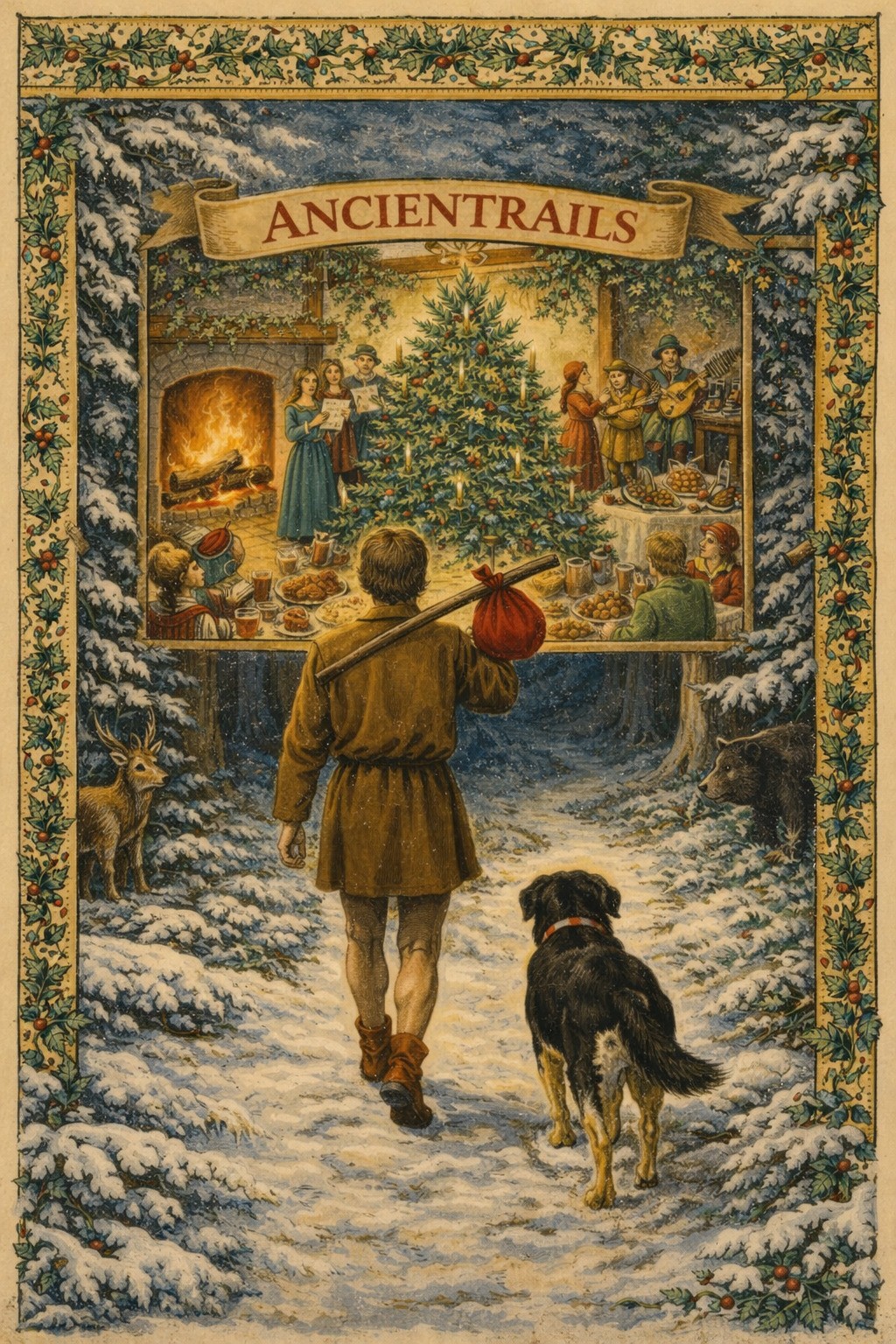
Samain and the Gratitude Moon

Friday gratefuls. Deb and Dave at On the Move Fitness. Seoah’s life joy. The inventor of kettlebells. Treadmills. dumbbells. Television. The transformer. The circuit board. The CPU. Software. Sputnik. Laika. Koko. Any random elephant, giraffe, lion, hyena, rhino, cheetah, zebra, hippo. All of them.

Back to the future. New workout from On the Move. Stepup. TRX pushup. TRX row. Kettlebell one arm shoulder press. Quadraped with a three second hold. Reverse crunch circles. Bridge hold. Step and hold, balance. Deb recommended high intensity cardio for the COPD. Did them up until the radiation started in June. I’ll get back to them, slowly.

She pointed out that the COPD will make me feel fatigued. Oh, yeah. Sarcopenia from aging and sarcopenia from lupron, too. No wonder I’m feeling like that guy on the back of the comic book. You know, the one getting sand kicked in his face? Not much to do but keep exercising, wait for the lupron to drop away. Maybe June of next year.

The Mayans considered the last 5 days of the year as useless days. I used to take that week and do a research project on something of interest to me. Now I’m going to expand that time to December and this year I choose painting. I will poke around in color theory, mixing paints, continuing to paint using shades of intense blue as background. Composition, too. I’ll take Ruth to Meiningers art supply store. Might pick up some new Princeton brushes, some new Williamsburg paints.

Then, there’s the issue of the next decade. The 20’s. Whoa. I’ve lived well into the future. But. Where’s my time traveling Delorian? My transport portal? My brain implants? Why haven’t I met a cyborg yet? You know, like from this year’s Blade Runner.

For the first time I’ve considered whether I’ll live out the decade. Hardly impossible. I’d just have to reach 83 and I know two guys that have already made that or very close to it. Frank’s already there. Bill will be on April 8th. But, who knows? Of course, dying is always possible, but with cancer and copd, my clock may have sped up.

If I knew I would die in the next decade, what would I do differently? Anything? Not sure. I’d like to travel more. See more of Colorado. Make it to Taipei and see the National Museum. Paint more. Write more books. But I already do those things. Love more. Laugh more. Again, not new. Maybe it will be the proportion of those things. Or, maybe something new will appear. Whatever happens, it will be the 2020’s! Buck Rogers time.

Live Long, and Prosper

Samain and the Gratitude Moon

Sunday gratefuls: for the poetry and philosophy contained in the world’s religions. for not having to believe in them. for the intimacy and wonder of holidays. for deep thinkers and their ability to change our minds, to see what we cannot. for the pain and struggles that teach us what’s important and what’s not.

Seoah made a bulgogi soup last night. Delicious. Each time she comes I think, “I’ll cook like that, too.” Then, she leaves. And my cooking returns to its Western, American ways. I’ve added few Korean dishes to my repertoire. Maybe, over time…

Murdoch bounces around, happy and energetic. His teeth still have the pointy sharpness of a young puppy. He discovered the loft the other day, came running in, wagging his tail, rushing around, smelling this, then that. And left. He’s come back. He may join Gertie for longer time periods if he can contain himself.

Stanford University has a recent initiative, A New Map of Life. I like it because it recognizes the three blocks of life I call first, second, third phase: education, family and work, and the third phase. Not retirement, at least not the finish line model, but a new phase of life previously unavailable due to shorter life spans. And, as a result, one without cultural guard rails or guidelines.

Their approach makes so much sense. They want to to redefine, reshape the cultural paradigms for all the phases, not just old age. “Longer lives present us with an opportunity to redesign the way we live. The greatest risk of failure is setting the bar too low.” WP article: We need a major redesign of life. Dec. 8, 2019

Will investigate in greater depth and report back. I’m going through what seems to be an annoyingly long rethink of my own life. This is the fifth year (in 12 days) of our Colorado mountain life. It has peaks and valleys (hah) and they keep on coming.

Old age doesn’t seem to be the real issue for me though it plays a role. What’s more salient is the unpredictable nature of our daily life and the difficulty of getting into a rhythm for creative work. Health span is a key issue. Kate, though much better now than six months ago, still has occasional nausea, occasional fevers and fatigue, occasional heartburn, constant weakness. I have bouts of fatigue, muscle weakness, and general uncertainty added with prostate cancer and COPD.

Not complaining, observing what’s real for us. How do we build a mutual life that reflects and respects these difficult elements without capitulating to them? There is a disparity between us, too. I am younger than Kate by three years and though I have my own serious illnesses I don’t get derailed by them as often as she does from hers.

There’s a question of mutual life and its outlines and our individual lives. I’m admitting here that our answers so far have not been satisfying. It’s a project for both of us and it continues.

Only 200+ Episodes Left

Samain and the Gratitude Moon

Saturday gratefuls: the inventor(s) of pho. SeoAh and I had pho in Evergreen last night. Trees lit with Christmas lights down Black Mountain/Brook Forest Drive. (though. Mule deer bucks sometimes get their racks tangled in these lights.) The snow that graces our yard, Black Mountain, the road to Evergreen. The cold, too.

3:30 pm. The sun has disappeared behind Black Mountain yet still lights up a cold blue sky.

It’s the Holiday Walk in Evergreen tonight. The touristy part of town will close their chunk of Hwy 74 for wandering carolers, Christmas tree lighters, stores with holiday cider and hot chocolate. SeoAh and I will travel past it to the Pho place near King Sooper’s in Evergreen. SeoAh loves pho. So do I.

Exercised. Read more about tzedekah, the Jewish equivalent of zakat, one of the five pillars of Islam.

4:30 am. Orion’s shoulders and head and bow have a misty cover this morning, but his boots and his loyal dog showed above Black Mountain. Headed west again, he’s a bit like Sisyphus, always chasing the hare that stays in sight, but can never be caught. The gratitude moon has reached the waxed gibbous stage, well more than half lit but not quite full. Its light surprised me by creating a shadow to follow my path as I got the mail.

Continuing my journey toward the creation of the Ottoman Empire with Resurrection: Ertugrul. This one and a few others like it have a huge Muslim following, as you might imagine. The deeper I get into it, I’m now in season 3, probably 200 episodes or so, the more it worries me.

Though the story has me hooked, obviously, the depiction of jihad, of Islam as the only way, of the daring lengths to which its warriors will go has me thinking of current day mujaheddin. They may (almost certainly do) see themselves in the depictions of Ertugrul and the Turkmen fighting Mongols and Christians. The unrelenting chants of allahu akbar (God is Great.) and death to infidels feel like propaganda. And, are probably received in that way.

The golden age of television has introduced us to writers, actors, locations, and narratives from many different cultures. I watch Korean and other East Asian dramas as well as Bollywood movies. This is a chance to peek behind the national/cultural psyche of these locales. I relish it.

In Resurrection’s case it has helped me understand some of the media that informs and influences Muslims. This show has powerful resonance, drawing us in not only to the lives and travails of its characters, but also showcasing a certain violent devotion not new to Islam. As I’ve written before, television now allows us some of the best parts of travel, not through travel shows, but through the unfiltered presentation of material deemed congenial to a particular culture.

Only 200 some episodes to go.

Midrash Aggadah

Samain and the Fallow Moon

Made it into Evergreen going slow. Some timid Coloradans ahead. Black Mountain Drive/Brook Forest was icy, but Jeffco public works had put down a lot of sand, enough to make it safe to drive normal speeds.

To the Dandelion. A nice little breakfast place, quiet. Not as tasty as the Wildflower, which is in the touristy part of Evergreen, but the Wildflower is small and the dining area noisy. The Dandelion makes the usual suspects when it comes to breakfast and does them well, but with little imagination.

We discussed Chayei Sarah and how to approach it. I gave Alan a commentary by Zornberg’s mentor (whose name I can’t recall and Alan has her book). Forgot that commentaries are really behind the scenes props for clergy. They’re not secret, but few lay folk ever look at them. They usually require some background knowledge and they get technical pretty fast. Alan, who is a bright guy, admitted that he swam upstream while reading it.

We agreed to go with Zornberg’s approach first (see the post The Abyss Stares Back) and if we run out of conversation, Alan will hop in with what he’s learned. Gonna do a bit on exegesis and hermeneutics from the Christian perspective to introduce the Talmudic approach, midrash aggadah*. Midrash aggadah have a playful quality, making leaps, filling in gaps in the Torah narrative, and displaying a rigorous internal logic while suggesting many different ways of looking at a text.

Here’s a summary of a famous example, Abraham Smashing the Idols:

Abram tried to convince his father, Terach, of the folly of idol worship. One day, when Abram was left alone to mind the store, he took a hammer and smashed all of the idols except the largest one. He placed the hammer in the hand of the largest idol. When his father returned and asked what happened, Abram said, “The idols got into a fight, and the big one smashed all the other ones.” His father said, “Don’t be ridiculous. These idols have no life or power. They can’t do anything.” Abram replied, “Then why do you worship them?” Judaism 101

* Midrash falls into two categories.When the subject is law and religious practice ( ), it is called midrash halacha. Midrash aggadah, on the other hand, interprets biblical narrative, exploring questions of ethics or theology, or creating homilies and parables based on the text. (Aggadah means”telling”; any midrash which is not halakhic falls into this category.)

Why did Sarah die?

Samain and the Fallow Moon

Met with Alan to discuss our bagel table a week from Saturday. Dandelion. A quiet breakfast place off 74 in the northern part of Evergreen. We’re both going to come up with a plan by next Tuesday then we’ll mix and match or choose one.

I’m focused on an interesting midrashic tradition raised by Avivah Zornberg in her commentary on Genesis and the Chayei parsha. Midrash aggadah are torah interpretations by generations of rabbis.They are imaginative, clever, often surprising. The tradition is similar to the notion of hermeneutics with which I am familiar, that is the art of bringing Biblical messages into a contemporary context. I mentioned this in my post on Sunday.

Midrash aggadah are dissimilar in the tools and techniques used. And, in the results.

The midrashic tradition Zornberg mentions in the beginning of her commentary on Chayei Sarah (Gen. 23:1-25:18) began with rabbis wondering about two things: 1. The akedah, or the binding of Isaac. Jewish tradition focuses on the act of binding Isaac for his sacrifice. 2. The death of Sarah which immediately follows the akedah.

Why did Sarah die, they wondered. An interpretation rose up that the akedah was the reason for Sarah’s death, though there is no mention of a connection in the text. In one midrash Isaac returns after the akedah, tells his mother what happened, and she makes shofar like noises, then dies. In another Satan appears to her in the guise of Isaac and tells her what Abraham did. And in yet another Satan comes to Sarah and says Abraham has actually sacrificed Isaac.

From these, then, Zornberg suggests that the problem of Sarah’s life began with her period of infertility, till age 99, ended by Isaac’s birth. The relationship between her and Isaac, then, becomes the central issue for Sarah. It does not resolve, Zornberg suggests, until:

Gen. 25:67 “And Isaac brought her to the tent of Sarah his mother, and he took Rebecca, and she became his wife, and he loved her. And was comforted for (the loss) of his mother.”

This is a direction that would never occur in a Christian exegetical/hermeneutical exploration of these texts. Why? Because the Christian exegete focuses on the words as they exist and critical methodologies helping to clarify their meaning. Speculation about what happened offline so to speak is not encouraged.

This is so much fun for me. I like learning another way of coming at the Bible and I find the midrash aggadah appealing as provocateurs about life and its convolutions. A lot of wisdom in them.