Category Archives: Aging

Reconstructing

Imbolc                                                                     (New Life) Moon

valentine birthday71 times Valentine’s Day and I have shared a moment. This was a quiet one, a good one. Decided I would cook Kate a special meal. In all our years together I’d never done that. It felt great. Went to Tony’s Market (upscale groceries, great meat). Bought a ribeye and some model thin asparagus. Kate found some tiny potatoes. Candles and jazz from Kate’s Pandora Satchmo and Ella channel. Just right. Later, a dusting of snow.

Based partly on the Rumi poem* I posted, sent to me by Tom Crane after I wrote about that old debil melancholy,I’ve decided to lean into my uncertainty and ambiguity. Life purpose seems to be up for reconsideration. Or, perhaps, reconstruction, reimagining. Or, best, reenchantment. But, instead of forcing my way into a new life, I’m letting it come to me. Waiting. Testing. Entertaining.

Bits and pieces that have floated in. All my 70’s, barring some very unusual event, will be lived in Colorado, hopefully in the Rockies. So, this decade, the one I’m now firmly in, is a Western, arid lands, mountain decade. It also has a strong Jewish accent, spoken in a Beth Evergreen dialect.

reenchantmentAt one point concentrating on Colorado and the west. At another, more Taoism. Stop writing novels. Read more. A lot more. A year of the Tao or a year of the West. Travel. In our immediate region. As much as possible. Continue with the sumi-e. Take classes? Go to a Progoff workshop?

Not sure where this is going, but for some reason turning 71 has made me unsettled, willing to reject or set aside old purposes, find new ones. Or, possibly, reaffirm current ones. I’ll know when I’m done with this, moving into a new chapter. But, I don’t know when that will be.


*”This being human is a guest house.
Every morning a new arrival.

A joy, a depression, a meanness,
some momentary awareness comes
As an unexpected visitor.

Welcome and entertain them all…” Rumi, The Guest House

Shoulder, Trees, Writing

Winter                                                                         Imbolc Moon

shoulder-arthroplasty-Mayo-ClinicHippity hop to the ortho shop. Kate’s got an appointment at Panorama Orthopedics today. Her right shoulder. She can no longer hold things up with her right arm and has to use two hands to put dishes away, sometimes to lift a cup. Annoying and painful. Screws up her sleep, too. She needs some kind of solution, more than likely a shoulder replacement. This is the first step, a consult to see what her options are.

A friend of Kate and mine is having surgery for breast cancer today, too. It’s a cancer that has the improbable, but very desirable, cure rate of 100%. In the sort of piling on that getting older can deliver, her husband, only a week later, got a diagnosis of idiopathic pulmonary fibrosis. It’s a killer, but slow, maybe 5-10 years. He’s mid-70’s. Mortality is always stalking us, but seems to knock on the door more often past three score and ten.

Sister Mary tells me she’s been invited as a visiting professor to a university in Kobe, Japan this summer. Very close to Kyoto. And, great beef. Congrats to Mary. Brother Mark is in Bangkok right now, chillin’ in the tropical heat.

Tu B'ShevatAn interesting week ahead. A session on green burial tomorrow night at CBE. It’s part of a conversation about creating a Jewish cemetery up here in the Evergreen/Conifer area. Oddly, I think I’d like to work on that. The next night, Wednesday, is Tu B’Shevat, the New Year of the Trees. Judaism has a lot of pagan inflections, Tu B’Shevat and Sukkot, a harvest festival at the end of the High Holidays, for example. Looking forward to this one because there’s a seder, too, with seven species of fruit and nuts. I’ll explain more on Wednesday. After the this celebration is another Kabbalah session, more double letters in the Hebrew alphabet.

NovelIdeaRigel has her second appointment at the Vet Referral Clinic with Dr. Bayliss this Friday, too. I’m excited about it because we’ll get a clearer picture of what’s going on with her. And, it’s not the dire prognosis we anticipated when we took her in a week ago last Friday.

Meanwhile, I’ve finally levered myself back into writing, now on both Jennie’s Dead and Rocky Mountain Vampire (only a working title). Not sure exactly how I did it, just did it, I think.

Getting closer to using the sumi-e brushes, maybe today. Yesterday I tied string at the base of each new brush after applying a bit of glue all round, too. That had to set for a day. I gathered some towels, watched a couple more videos. Youtube is a fantastic resource for all kinds of things. Jon watches Japanese woodcrafting videos to calm down, for example.

Next week is Kate’s quilting retreat in Buena Vista.


Yesterday

Winter                                                                              Moon of the Long Nights

Rigel
Rigel

The nearly full moon lit up the snow outside our bedroom last night. Soothing, gentle. This one presides over the longest nights of the year.

Two of our females had imaging work yesterday. Rigel got an x-ray, looking again for cancer since she has continued to lose weight in spite of therapy for chronic hepatitis. She’s eight, old for a dog of her size. Her condition, whatever it is, caused me to roll back through the death of many of our dogs just before sleep. Sad. Grief is the price we pay for love.

Kate had a makeup c.t. scan since the one she had last week was not done according to protocols for pulmonary embolisms. It required a contrast dye. Like the first, no contrast scan, this one showed nothing new, nothing menacing. Dr. Gidday now wants her to do a stress test, checking for possible heart issues. Don’t know when that will be.

She also has an appointment in late January with an orthopedic surgeon to discuss her painful shoulders, investigating possible shoulder replacements. She takes all this with a calm spirit, not bringing doom into the present, rather waiting for information. Her quick intelligence and vast medical knowledge could make it otherwise. An impressive woman, my Kate.

Ruth’s tonsillectomy seems to be loosening its grip. On day 6 or so the scabs fall off as healing progresses. This can be, and was for her, painful. Yesterday evening though she texted that she’s ready for empanadas. A great sign.

soupWe have a cookbook, Twelve Months of Monastery Soups, and I’ve been making soups out of it that Kate thinks sound good. She has a favorite, vermicelli soup, a vegetable soup with noodles. I made some for her last night.

I’ve decided to give Hebrew this month. I’ll work on it everyday and see if I can get myself back to a place where it’s at least enjoyable. Right now, it isn’t. If I can’t get there in a month, I’m gonna drop it. Banging my head against this particular wall isn’t worth it unless I enjoy it.


On the Path

Winter                                                                Moon of the Long Nights

86Winter break continues. The identity crisis has passed as I knew it would. The crisis focused on my passive choices, taking the path of least resistance after college and I did do that, giving up my intentionality about career to a socialization experience with clergy-focused fellow students. But. Within that decision to just follow the education I had chosen as a way to get out of a dead end job and an unhappy marriage, I was intentional.

The threads that continued from high school through college, into seminary and afterward during my fifteen years in the church were three: a commitment to political action, a desire for spiritual growth, and a thirst for learning. These same threads continue today though political work has taken a diminished role to the other two. When I met Kate, writing became my chosen focus and added itself to the other three as life long pursuits.

My career, if that’s the right word, has involved expressing in whatever context I’ve found myself, a journey on four ancientrails: act, grow, learn, write. The container has not mattered. And, it still doesn’t. That was the piece I was missing the other day, a brief regression, a going back to pick up something lost. Found.


What Was I Thinking?

Samain (last day for this year)                   Long Nights Moon

identity
sometimes we steal it ourselves

I’m having a crisis of sorts, it will pass and life will return to normal, probably later today, but right now I’m having an identity crisis. Remember those?

Here’s a Psychology Today article about identity. As I took the short quiz at the bottom, I had two achieved statuses, politics and gender roles, one moratorium status, career choice, and a difficult to assess religious status. This latter status, religion, is perhaps more achieved than my current feelings suggest since I’m deep into a context which challenges my commitment regularly.

I’ll bracket the religious question for this post since I do have a position, one I’ve established over many years of thought and with which I’m comfortable. I think the oscillation, tension there is reasonable to expect given my current immersion in Judaism.

The other moratorium status, career choice, is a different matter. It may seem odd to have a career choice moratorium* at 70, but it is so. Unlikely to change now, too. Having this realization again, (it’s not new) is the emotional side of this crisis.

careerI thought I had my life direction nailed down. College, graduate school. Some sort of professional career, perhaps lawyer, perhaps professor, perhaps something not visible from within the boundaries of an Alexandria, Indiana horizon. Then, my mom died. That threw my final year of high school into turmoil. God, this hurts just writing about it.

No one’s fault. A random event, but one with devastating emotional consequences for me. I hit my first year of college, just about a year after her death, with high hopes, probably even fantasies. I’d gone through GQ issues over the summer and picked out a navy blue blazer, charcoal pants, oxblood shoes and a madras sport coat. I had a vested herringbone suit from my junior year. These clothing choices symbolized my desire to become someone new at Wabash.

madrasMost kids heading off for college, especially in the fifties and mid-1960’s, had a similar desire. Shape that adult self. Live into an adult role. The expectation was that college would provide room for exploration, trying on this and that persona, in effect researching skills and passions, until something coalesced. Then, earning money and work would merge into an expression of who you were. That’s why college was called then, the moratorium years. College was explicitly a time to be low on commitment, but high on exploration.

Didn’t happen for me, in terms of career. At Wabash I picked up three bad habits: drinking, smoking and self-doubt. The first two were fraternity based, lots of drinking and smoking. This was 1965, just before the emergence of the drug scene, so I was conventional in those choices. But, I was also an addictive personality so drinking and smoking would require much time and energy later to overcome.

Self-doubt happened in a way not uncommon, I imagine, for small town valedictorians. Wabash, at the time, was highly selective, only 200 in each class, all male and each bright, accomplished. I was not only not the smartest person in the room, I wasn’t even in the middle. Over time I imagine this would have sorted itself out, but I was too emotionally fragile, still grieving. My dad tried to understand, tried to be supportive, but I didn’t let him into my agony.

identity-cover socionic

And so began a pattern. I left Wabash the next year, putatively over financial issues though I had a partial scholarship, but really it was the combination of drinking and feeling overwhelmed by the academic demands. I did well enough, mostly A’s, except for German, which almost resulted in my first D or F until I dropped it, but my nights were spent in anxious dreams, waking up with sweaty palms. I didn’t fit in. I hated the fraternity, but had no choice except to be in one due to odd Wabash rules for freshmen.

In 1966, a time of tumultuous change in the country, especially for college students and especially male, draft eligible college students, I chose, for reasons I don’t recall, to go to Ball State. It was close to home. That may have been the reason.

In another odd circumstance my love affair with philosophy, begun at Wabash, found me only a few credits shy of a major after four semester long philosophy courses I took in my freshmen year. That meant I could take a couple of philosophy classes, secure my major and move onto something else. Anthropology.

anthroI loved anthropology, too. Enough, it seemed, to make it a career. I combined my interest in philosophy and decided to enter the narrow field of theoretical anthropology, thinking about how anthropology works, how it could work, how it should work. That turned out to be a mistake and one I didn’t recover from. I applied to, and was accepted, at Brandeis and Rice, for graduate programs. But because my field was theoretical anthropology, I got no financial awards. That meant I needed a fellowship and I was nominated for a Danforth. In the end though, the end of college and of a political career based on radical politics at Ball State, I chose to do nothing. Just. Nothing.

Judy came into my life right at that point. A someone. Another mistake. For both of us. I did end up in Appleton, Wisconsin with her, moving there after a disastrous few months as a manager trainee for W.T. Grant and Company. What was I thinking?

This question, relevant to career, would become synonymous with my choices, one after the other. Seminary. I stayed in and got ordained. WWIT? I worked as an administrator. WWIT? I became a church executive. WWIT? I left the church to write. In this case I knew what I was thinking, but never got all the way there as a writer so, WWIT? For a moment I went back to the ministry as a UU. I was serious enough to intern at a UU church in St. Paul where I agreed to be the development minister. In this case, a really, really big WWIT?

what-was-i-thinking-webAnd so, here I am at 70, no career I really chose except writing and that one I couldn’t have sustained had it not been for the grace and love of Kate. There’s my identity crisis. Who have I been? What have I wanted to do with my life? Late in the game to ask these questions though to be honest they’ve surfaced right along since Wabash.

I could use help reframing all this. It’s not like I’ve drifted through life, doing nothing at all. I just never wrapped it up in a social role to which I felt like I truly belonged. Don’t know what that makes me at this point in my life. In a sense the third phase is the point when this question ceases to matter. That particular race finished a while ago and I’ve come into the pits. No more laps. Yet. What does, what did it all mean? I really don’t know at this point.

In yet another sense, and one I fully support with most of my being (ha), the answer doesn’t matter. I’ve lived. I’ve loved. I’m still doing both. The essentials. And, enough. I know. I know.

Yet the question lingers. What did I do?


“People high on exploration but low on commitment are in a category that Marcia called “moratorium.” This means that they have placed a hold on making the major decisions in their lives.  They’re thinking hard about what they want to do but aren’t ready to commit.” from the article linked to above.


And life goes on, in endless song

Samain                                                                  Bare Aspen Moon

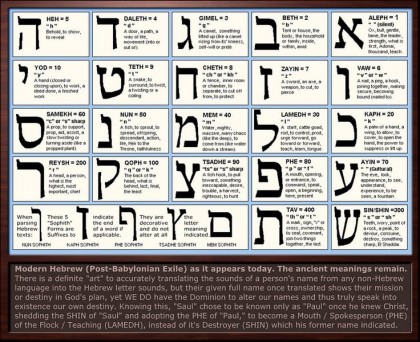
hebrewFinished chapter 1 in the Hebrew text, about half way through chapter 2. My plan is to keep working on the chapters until I’ve finished. The Hebrew class itself is a bit chaotic, lots of great information, but they’re teaching Aleph and Bet, beginners and next level, together. I’m out to sea at least part of the time. OK. Most of the time. Still, I can now recognize shabbat in Hebrew and pronounce five letters. Slooooowwww. Next class with Joann Greenberg at 4:30. Two weeks ago Bill and Tom were here for the class.

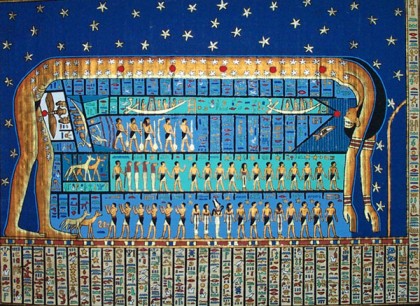
Nut, similar to this

We hung some art in the guest room. Two batik pieces that Mary brought us from
Bali and an image on papyrus of Nut that I bought on the sidewalk outside the British Museum. Kate’s thinking a gray blue for the guest room. She’s beginning to get her interior designer on.

More Jennie’s Dead. Last two scenes were in Selma, Alabama and Denver. High intensity cardio yesterday, slow and long today. New workout tomorrow.

Centurylink comes today to install our new 60 Mbps service. This one requires some work between the box and the house, then a new modem, plus some inside changes at the jack, too. Faster is better and it’s much stronger wifi. That’s good because I bought the grandkids a tv for Hanukkah and it will get its reception with a Roku stick inserted into its USB port.

20171027_161725Kate and I have begun an ongoing effort to help her manage the fatigue which Sjogren’s, rheumatoid arthritis, sarcopenia and reduced available oxygen cause her. We have to be smarter about what mix of activities she does and what ones I do, yet we can’t set up a situation where she becomes housebound. Not good. A delicate balance. Right now we’re looking at the week ahead and trying to imagine how the week will challenge her, then planning for that. A transition to a new phase of life for us.


Sarcopenia is a bitch

Samain                                                                           Bare Aspen Moon

quantumTrying out another browser, Firefox Quantum. Changing browsers is a hassle, but the benefits of Quantum seem considerable. Right now I’m still on Chrome, but I plan to complete the transition today. I’ll let you know how the transition goes-for those who might care.

Spitting snow this morning, colder. 26. Heading into a cooler week, but then again, it is November 28th. A La Nina year.

Finally back at Jennie’s Dead. Again. Been bumpy. Holidays and “getting stuff done before winter sets in.” This latter is a holdover from 40 years in Minnesota. It’s a now thoroughly ingrained instinct inculcated by years of gardening, bee-keeping and brutal winters with little let up in the cold. Then, too, there’s Hebrew, kabbalah, the Evergreen Forum, ancientrails, all demanding in their own way. A good way.

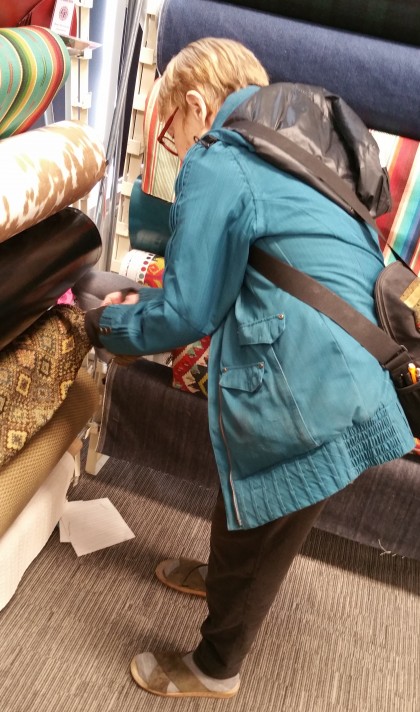
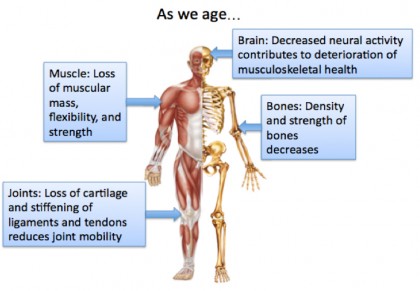
agingSet a time on Thursday to get a new workout. The old one has grown stale, but it brought me to a new level of fitness, one I can feel in day to day activities. Exercise kicks in endorphins for a right now feel good, but it’s most important role is health maintenance. Sarcopenia, the slow decrease in muscle mass that begins in our 40’s, accelerates in our 70’s. You know, opening jars, lifting boxes, pushing a snow shovel, cleaning up the garage, carrying in groceries, all those everyday uses of our body become harder and harder.

In a nod to this change in both Kate and me, for example, I’ve put blue masking tape on all of our round door knobs because our grip strength is less. Arthritis in the thumbs and fingers can make turning the knobs painful. The tape is a temporary fix, a workaround, eventually we’ll have press down door handles installed. Sarcopenia is a bitch.

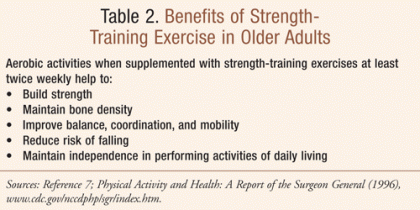
aging2Exercise is a way to push back against these changes. It doesn’t solve them, but it helps. The cardio work maintains the pump that literally keeps us alive, helps it respond to crisis modes without giving up. Been at it so long it’s just part of my day.

Restrung the lights out front trying to get even spacing between the two strands, but my skills don’t seem up to the task. However, I did not allow the best to be enemy of the good. They’re up and I like’m. Just the way they are.


The Journey So Far

Fall                                                                                       Harvest Moon

copertasign_wide_web

Because we began our married life together in Rome, Italian restaurants have a special place in our hearts. Not to mention that the Italians really know food. We went to Coperta last night in downtown Denver. The name means blanket and connotes a warm, comfortable place. It was.

Realized we hadn’t done this in a while, gone out together, into the city. It was revivifying.

We mulled over the move, again, congratulating ourselves on doing it when we did; when we had tired of the work in Andover, but before we’d gone deep into old age. We love living in the Rockies, seeing wildlife and rock, mountain streams every day. Our house fits us perfectly and provided a good respite for Jon and the kids during the last 14 months. The dogs like the yard. Beth Evergreen has given us a community of like minded folks, all searching for their best selves.

IMAG0927_BURST002January 2015

The first three years have had their challenges, most readers of this blog already know them: prostate cancer, Kate’s struggles with rheumatoid arthritis and now Sjogren’s Syndrome, total knee replacement, and Jon’s divorce, his moving in with us. It would be nice if the universe would let up on the lesson plan, give us some time to regroup, get our breath. Could happen.

27 years. 28 next March. Years of learning each other, of supporting each other through thick and thin, challenging each other, cheering each other. Last night we ate Italian and enjoyed the memories it evoked.

Kate and me

Metaphor? Of course.

Fall                                                                               Harvest Moon

kabbalah8The tree of life, the tree of immortality guarded by the angel with the flaming sword; the tree itself still growing in paradise, concealed by language, by our senses, by the everydayness of our lives; the path back to the garden often forgotten, the exile from paradise a separation so profound that we no longer know the location of the trail head and even harder, we no longer have a desire to search for it.

Metaphor? Of course. But in these three words lie a trap for the unwary, a trap in which I allowed myself to get caught and held, a mindhold trap. My life seems like a sine wave of grasping, then losing the significance of metaphors.

When young, I felt the mystery behind the communion wafers and the grape juice at Alexandria First Methodist. At the tenebrae service, when we extinguished the little candles with their paper drip guards and the sanctuary went dark, I thrilled to the change from ordinary experience, sensed the power rolling over us as the memory of crucifixion and death came hurtling through the centuries to land in our small Indiana town, in the very spot where I sat.

The sunrise services held on Easter morning lit up my whole inside. The power of the tenebrae had been defeated and life did go on forever, death only a mistake, an illusion, misunderstood as a cruelty when in fact it was a gateway. I suppose on those days, repeated over many years, I had a glimpse of the path back to the garden.

My mother’s death, I think, shattered this instinctive faith. Those feelings occasioned by grape juice soaked squares of bread, darkness and the rising of the sun, were a true path and one I lost when the brutal reality of grief smeared the way.

But the memory of that way remained. So I moved up from the instinctive triad of netzach-hod-yesod, forced by fear and loss to skip the next triad chesed-gevurah-tiferet and go to the one easiest for me to access, hochmah-binah-daat. I know these hebrew words may mean nothing at all to you, I’m still at the base of a steep learning curve with them myself, but they do appear on the illustration above so you can see where they are on the tree of life.

In simple, but not simplistic terms, the triads are netzach-hod-yesod, the realm of instinctual behavior, chesed-gevurah-tiferet, the realm of emotions and hochmah-binah-daat, the realm of the intellect. Movement in the tree of life goes from the keter to malchut and back from malchut up to keter, so there is no real top or bottom, only different spots in an ongoing process of creation.
kabbalahBut here’s the trap. Metaphor, of course! I studied philosophy, religion, anthropology in college. Then, after a few years stuck in unenlightened instinctual behavior-the storied sex, drugs and rock and roll of the sixties and seventies-I moved to seminary. The trap tightened. I learned about the church, scripture old and new, ethics, church history. It was exhilarating, all this knowledge. I soaked it up. I remained though stuck in the intellectual triad, pushing back and forth between the polarity of intuitive wisdom, hochmah, and analytical thought, binah, often not going on to daat, or understanding. I learned, but did not integrate into my soul.

There was a time, after seminary, after ordination, as I groped my way around in the work of ministry, that I found the path again. It was in mystical traditions like the Jesus Prayer, or the use of lectio divina, contemplative prayer. I had spiritual directors who guided my prayer life and I meditated often, daily for years, went on private retreats for days at a time. In those years I found my way back to the netzach-hod-yesod triad, traveling again on the instinctual path formed so long ago.

The trap sprung another time, though, as I got better at my ministry, more able to apply organizational development paradigms to congregational life, more able to pull the levers of political power for the good of various purposes: affordable housing, unemployment policy, economic development for poor neighborhoods, fighting off corporate takeovers of those same poor neighborhoods, more able to navigate the internal politics of Presbytery life. I became stuck in malchut, the material world which we experience everyday. So stuck that eventually I could see nothing else and the path disappeared again.
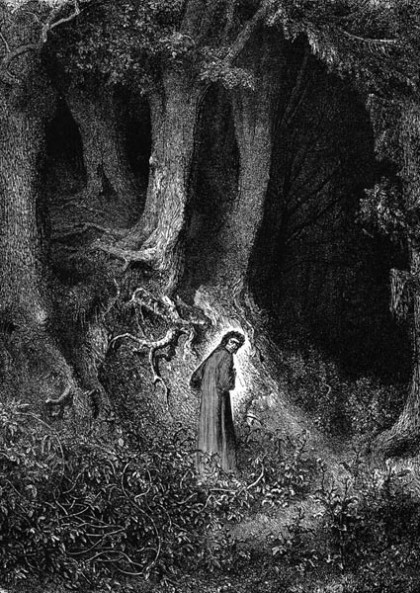
interior_dante_divinecomedy_inf_01_002My heart knew I had gotten lost, in exile once again. In Dante’s words in Canto 1 of the Divine Comedy:

“In the middle of the journey of our life, I came to myself, in a dark wood, where the direct way was lost.

It is a hard thing to speak of, how wild, harsh and impenetrable that wood was, so that thinking of it recreates the fear. It is scarcely less bitter than death…

I cannot rightly say how I entered it. I was so full of sleep, at that point where I abandoned the true way.”

This time I knew I had to extricate myself from the subtle trap, get out of the thought world that had me lost in the dark wood, the direct way lost. It was a wild, harsh, seemingly impenetrable forest.

It was clear that for me the Christian faith had gotten muddled up with ambition, immersion in the world of power. And, most problematic of all, it had become part of the metaphor trap. The metaphor had gone stale, had become a barrier instead of a koan. Not the fault of the faith itself, but of my journey within it.
IMAG0650croppedAt the time of its crumbling another path had begun to open for me. Fiction writing emerged when, ironically, I began writing my Doctor of Ministry thesis. Instead of working on it I ended up with 30,000 plus words of what would become my first novel, Even The Gods Must Die. Irony in the title, too, I suppose.

In the train of that shift came a decision to look into my Celtic heritage as a source for my fiction. While researching Celtic religion for the fantasy novels I wanted to write, I discovered the Great Wheel.

It grounded me. So to speak. My spiritual life became tactile, bound up in soil amendments, bulbs, corms, seeds, spades and hoes, fruit trees, raspberries and bees. And, of course, dogs. Always dogs.

Meeting Kate enabled me to move gracefully out of the ministry and into a pagan worldview. I was back in the netzach-hod-yesod triad, but now firmly attached to malchut, the queendom of this world.

Writing fiction found me exploring the chesed-gevurah-tiferet triad, having to reach into my heart for believable characters, story lines. Over the course of those years, the years since leaving the Christian ministry and now, I began to gradually integrate the triads, at least the three: intellectual, emotional and instinctual. The combination of family life, the Andover years, writing, and working as a docent at the MIA began to slowly weave them into my soul.
2010 01 19_3454Even so, I sat behind the barrier, the flaming sword, the metaphor trap. Beth Evergreen and Rabbi Jamie Arnold have started me on a journey back to where I began, immersed in the dark. Seeking for the light, yes, but happy now in the  darkness, too. The Winter Solstice long ago became my favorite holiday of the year.

When I left Christianity and took up my earth-bound spirit, I shut off access to the fourth triad, the one subsumed under keter: faith-joy/pleasure-will, and its source of energy, the ein sof, the infinite One, perhaps god in small letters. Today, as I write this, I’m more pagan than I’ve ever been, more embracing of the body, the mountains, the stars, the elk and the mountain lion, than any words from any source.
2011 03 06_3396But. At Beth Evergreen I have begun to feel my way back into the fourth triad, the mystery I first encountered on the hard wooden pews in Alexandria, the one pulsing behind the metaphors of tenebrae, of crucifixion, of resurrection,  and now of Torah, of language, of a “religious” life. I knew it once, in the depth of my naive young boy’s soul. Now, I may find it again, rooted in the old man he’s become.

Third Phase Thoughts. Again.

Fall                                                              Harvest Moon

birthday dinner at 65

We had a soaking, all day rain yesterday. Very humid east, not so much arid west. Temperatures were cool during the day and down to 35 degrees last night. After a busy week, having Saturday as a quiet day was good.

The now not as new work schedule has taken hold, at least the before lunch part: Ancientrails, Jennie’s Dead, breakfast, news and e-mails, workout, lunch, nap. The after nap portion, which was to be Latin and reading until 5:00 or so, has still not solidified.

Any schedule has its rhythm broken by errands, medical appointments, maintenance matters like oil changes for the Rav4, scheduling folks to handle things like boiler inspections, circuit breaker fixes, but over time I’ve learned that simply returning to the pattern usually keeps me moving me forward.

caterpillarThat’s especially important for workouts, which are easy to forego. On Mondays, Wednesdays and Fridays, I do 20 minutes of cardio, then resistance work, then 20 more minutes of cardio. On Tuesdays, Thursdays and Saturdays, I do the high intensity cardio plus 50 minutes or so slower cardio. If I miss a Monday, I go on to the high intensity, slow cardio day. If I miss a Monday and a Tuesday, I still go to the 40 minutes of cardio, resistance work day. For me, keeping the same workouts on the same days of the week keeps me from feeling guilty (I’ve missed so many workouts, it doesn’t make sense to even try and get back to my schedule.)  and guilt stops the process altogether.
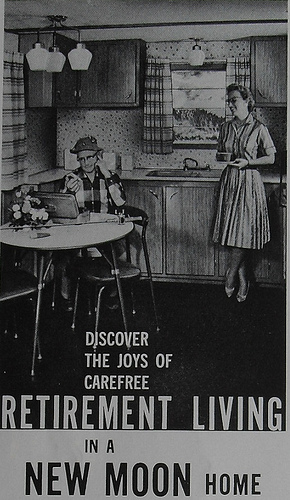
Of course, there is the question of why keep at it? At 70 it would be possible to argue that the pace of life should slow down. Why keep pushing, especially if self-esteem doesn’t demand it. And mine doesn’t.

retirementThe third phase is new. It used to be that 65 or so meant the end of a working life, retirement happened, then death, often before 70. Those that made it into their seventies were often burdened with serious medical problems that drained energy and created obstacles to doing much else.
In 1960, when I was 13, U.S. life expectancy was 69.7 years. In 2015 it was 79 years. Our perception of age is not shaped so much by our experience of age itself, but by our attitude towards age created when we were not aware they were forming. In the working class community where I grew up until age 17 65 was retirement and death, at least for men, who were the primary workers then, followed 18 months or so later.

In other words, when I learned what being old meant, it was basically work, stop work, die, and the ages around which those latter punctuations occurred were before seventy. Life after seventy had no shape, no coherence, except frailty, nursing homes, dotage. (for, as Kim Jong Un says, dotards.) Though is no longer true, and has not been for some time, by 1990 the average life expectancy had risen to 75 years, my inner image of aging was shaped in the 1960’s world of Alexandria, Indiana.

We try to adjust to changes like these, but the patterns of our childhood often shape our beliefs about what’s possible. If work stops at 65, what comes after that? No work? No ability to work? Or, relief that work is over, so the 1950’s model of an ideal retirement, gold or canasta or bingo or photography. Life after 65 meant hobbies, doing things you’d put off doing, then dying. But in fact life after 65 was so short for most people that getting traction for some new phase of life, a phase with no work and the responsibilities of in-home child rearing completed, didn’t seem to make much sense.

growing-whole-molly-young-brown-219pxw-330pxh70 is not the new sixty. It’s the new 70. What 70 is the new sixty really means is that for those raised in the 50’s, 70 now appears like age 60 did when we were kids. Big difference though…we’re in that sixties range of health, but we’re 70 and work has fallen away, the kids are gone. What do we do?
So far my response has been to do what keeps me physically, intellectually, emotionally and spiritually engaged. Why? Because the alternative is the Barcalounger, favorite tv programs, the occasional extended family meal, then the funeral home. The old model of retirement, what our financial consultant Ruth Hayden called the finish line model of retirement, was sort of like forever recess, a surcease from the demands of the boss and the day-to-day demanded non-work like activity, otherwise what was the point of retirement?

Now, though, retirement really means (for those of us financially secure anyhow) a change in who determines how we spend our time during the day. We do, not the workplace. If we take on that responsibility with the image of the 1960’s in mind, we take a breath and try to imagine what we always wanted to do when weren’t working. The more pertinent question, it seems to me, is really who do I want to be?

retirementYes, retirement and the life following it, the third phase as I call it, is just that, a new and different time of life, one in which the question of how do I live can have a radically different answer than in the first two phases. Who are you? Who do you want to be? If you want to be a person whose constant focus is recreation, who gets up in the morning for another day of adult recess, you can. If you want to be a dress designer after years as a forensic engineer, you can. Or, as in my case, the work before retirement age was satisfying, self-directed, so there’s little reason to change just because some age-related cultural turning point has been reached.

What this means for me is that as long as I am able, I’ll continue to write, to read, to research, to stay engaged in current happenings. I’ll keep at my spiritual growth, stay connected to friends and family. I’ll work out and do what I can around the house. When I can no longer do these things, if that time comes, I’ll reassess. Death is always ready to greet us, we don’t have to accelerate the process.