Arty Whirl

Beltane                                                                        Early Growth Moon

Grandma and I got in the machine and went into the big city.  Where we ate dinner at the Gasthof on University, weiner schnitzel for both of us, a nod to our honeymoon late night dinner in Vienna, then we motored over to the Northrup King Building, one of several repurposed large building complexes in Northeast that house artists and galleries.  This is Art-a-Whirl weekend and all those buildings have open houses.

Cars and people and walking from gallery to gallery, studio to studio, talking with the artists, looking at the amazing range and skill levels represented.  I chose the Northrup-King building because it has three floors of artists in a long, L-shaped brick structure.  We only made it through the first floor and we saw many studios and galleries.

An impressive metal sculptor on the far northern end did small shoes to large table pieces ranging from the representational like the shoes to the very abstract.  He had a great shock of white hair and very neatly organized shelves of metal materials for his work.

At another stop I bought a small blue print, Ocean, that reminded me of the color field painters and Kate got a print of Jerry Garcia for Jon.  Mostly we looked, seeing this and that we liked, not buying, not really in the mood, though I did see a large ceramic piece, bees as the motif, that I would have purchased in flusher times.

An important part of this kind of jaunt for me is the stimulation, knowing others are out there giving their lives over to their imagination, seeing it come outside into works accessible to others.  Made me wonder what it would be like to have a building full of writers with people coming through looking at short stories and novels, maybe buying one, maybe not, talking about them with the writer.

Went Fast

Beltane                                                                      Early Growth Moon

Writing and revising in the a.m., translating in the afternoon.  A busy day.  About to be punctuated by a visit to the Northeast’s art gala, Art-a-Whirl.  Ironically we will visit the Northrup-King building, site of a long ago demonstration on behalf of the grainmillers union folks who worked in the plant as seed specialists.  Northrup-King got bought in a corporate raid by Sandoz at a time when pharmaeceutical companies were putting the farm back in pharma.  They were basically buying up seed patents.  Seed patents.  Think about that.  This was in the late 70’s.

Po-Mo and Kids

Beltane                                                                            Early Growth Moon

Po-mo shows up where you least expect it.  This time post-modernism reared its torqued and twisted head in the form of a children’s movie from Dreamworks, The Rise of the Guardians.  Now, this is old news since this is a 2012 release, but I don’t stay au courant in movies, especially movies for kids.

Still.  I did see it tonight.  It’s quite a head-bender if you look at from a theological point of view.  Two key for instances:  Santa Claus and the Easter Bunny.  In the movie Santa and the Easter Bunny are part of a team of four known as the guardians.  The notion is that they guard childhood as a place of innocence, fun, imaginative thought and belief.  Here’s a theological kicker not unfamiliar in Christmas movies, Santa Claus stands in for Christmas, not the baby Jesus.  That is, it is the consumer driven toy and present extravaganza that gets billed as the reason for the season, not the incarnation.  You’ve seen it before.

But here the Easter Bunny represents Easter.  Which is about, he says, in Hugh Jackman’s Aussie Bunny accent, “Hope, new life.”  Gee, those sound like the themes of the passion without the gory stuff.

OK, at one level this is kid’s fare meant for multi-cultural audiences, many of whom are not Christian, so, maybe.

However, the real dramatic driver in the movie is the addition of a new guardian to the old group of four:  Santa Claus, Easter Bunny, the Tooth Fairy and Sandman.  The Man in the Moon, who picked all of the guardians, has now chosen Jack Frost as a new guardian.  A fifth.

Bear with me here.  The going gets a little theoretical, but I think the pay-off is interesting.

Jack comes into the story when the Boogeyman has gone on a campaign to stamp out belief in first the Tooth Fairy, then the Easter Bunny, aiming to get all four including the sandman who brings sleep and pleasant dreams to children.  Both the Boogeyman and Jack face the same problem, nobody believes in them so they are insubstantial, real but not seen as real because the belief meter doesn’t spike among the younger set at the sound of their names.

So the movie takes on the task of finding Jack a place in the believing hearts of children while simultaneously beating back their belief in fear’s ability to hurt them.  The battleground is children’s hearts.  First the tooth fairy loses her powers as child after child falls victim to the boogeyman’s nightmares, then the Easter Bunny.  Sandman gets disappeared by the boogeyman and eventually even Santa’s sleigh weaves and bobs and crashes to the ground, a no longer believed in Santa barely strong enough to stand.

Jack Frost, as you might expect, wins back the hearts of the children with his joyful, fun loving snowball fights and loop-the-loop kid’s sleds rides.  The children begin to believe again and the guardians grow strong, defeating the boogeyman as the children step forward to defend the guardians.  Jack Frost points at the boy leader’s chest and says, “The real guardians are in here.”

This, in other words, is a movie about the magical thinking of children and their charming, wonder-full beliefs, a movie that equates belief with that world and uses the characters dreamed up by American capitalist culture as the agents of restoring children’s beliefs in their existence.  Po-mo.  In a children’s movie.

Welcome, Growing Season!

Beltane                                                                                  Early Growth Moon

We have turned the corner on winter it seems and now will begin the gradual invasion of a more southerly clime, with heat and humidity climbing like kudzu broken free from the Confederacy.  We are two distinct climates in one here in Minnesota.  The one for which we are best known and with which most of us here identify is the polar influenced late fall, winter and early spring.  Cold, often severe, snow and a long fallow time typify this one.

The second, one for which we are not known at all, but which we know well, is the briefer Northern summer in which all signs of that polar influence wane then disappear, giving way to temperatures often reaching the 90’s and sometimes into the 100’s–this has happened more lately of course–and dewpoints moist enough to make being outside like wrapping yourself in one of those turkey cooking bags sold around Thanksgiving and sticking yourself in your oven.

This means, the good part, that we can grow crops that mature in under 120 days or so, leeks stretch that, but I’ve done it consistently.  This is long enough to get most garden vegetables including tomatoes, peppers and others that require frost free conditions when planting. (which shortens the season).

The bees, long adapted to cold climate, are fine with these temperature swings; it’s the multivalent attack of pesticides, mites, loss of habitat, mite borne viruses or viruses aided by the mite weakened bee and reliance on bees not bred for hygienic behavior (cleaning out diseased larvae before they can infest the colony).

Our cherry, plum and pear trees all blossomed in Monday’s record heat.  The apples have not, yet, and I’m glad because once their blossoms fall I have to get out the ladder and bag each fruit set.  And, this year I’m getting more aggressive with the damned squirrels, those tree bandits.

It’s time to get out there and dig several holes in the ground, mash it up, put it in a plastic baggy and send it off to the lab.

Well.

Beltane                                                                    Early Growth Moon

too good to not share.  from the folks at ThinkProgress:

RNC Director Of Hispanic Outreach Quits Party And Registers As A Democrat

By Adam Peck on May 14, 2013 at 9:00 am

When Republicans appointed Pablo Pantoja to State Director of Florida Hispanic Outreach for the Republican National Committee, they hoped he would be able to bridge the sizable gap that only expanded during the 2012 elections, when the state’s 4.3 million Hispanic voters supported Barack Obama over Mitt Romney by a 20 percent margin.

But after months of inaction by Congressional Republicans on comprehensive immigration reform and stiff resistance by Republican-leaning groups like the Heritage Foundation, Pantoja has had enough; on Monday, he announced via email that he was leaving the party and registering as a Democrat:

Friend,

Yes, I have changed my political affiliation to the Democratic Party.

It doesn’t take much to see the culture of intolerance surrounding the Republican Party today. I have wondered before about the seemingly harsh undertones about immigrants and others. Look no further; a well-known organization recently confirms the intolerance of that which seems different or strange to them.

Pantoja goes on to specifically cite last week’s revelation — that an author of Heritage’s false report on the cost of the Gang of Eight’s immigration bill wrote a dissertation in which he suggested that Hispanics are at a permanent disadvantage because they have lower IQs — as the final straw in his political evolution.

Prior to assuming the role of state director, Pantoja served in the National Guard, doing multiple tours abroad in Kuwait and Iraq before returning to the states and getting involved in Republican politics. In 2010 he served as a field director in Florida during the midterm elections.

Republicans have for months tried to find ways to make inroads with the country’s growing hispanic population, especially in the swing state of Florida. Hispanics there turned out to vote at a rate of more than 62 percent in 2012, significantly higher than the national turnout rate of 48 percent and the highest rate of Hispanic turnout in the country.

Bee Diary: 2013

Beltane                                                                                     Early Growth Moon

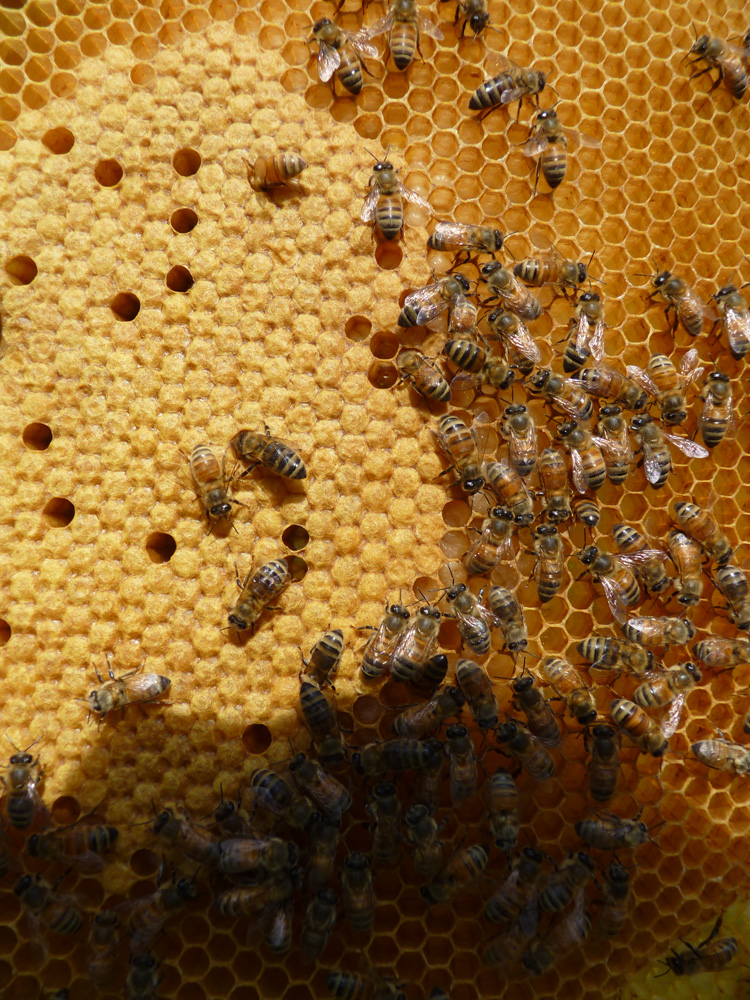
The bees.  This queen has gone to work, pushing out eggs, which develop into instars, then larvae.  I watched several brand new baby bees chew their way out of their brood chambers today.  One that I watched I followed around the frame, wondering what she would do.  She walked a bit like  drunken sailor, connecting antennae to antennae to her older sisters, poking her head into an empty brood chamber, then backing away.

Seeing her alerted me to the pallid, hey I’ve just been born, look of the newbees and I found several after seeing her.  This seems to be a very healthy and friendly colony.  No excitement, buzzing the head.  Just working away, some air conditioning, some nursing, some flying in with pollen laden legs, some flying out.  The queen in there somewhere dabbing eggs into brood chambers, then moving on.

Also got the second round of beets in the ground, double planting some with the kale and chard, imagining I can get in one turn over of the beet crop before the greens mature.  We’ll see about that.  The leeks look great, the onions not as good but not bad.  Kate’s sugar snap peas are two inches high or more, a few of her cucumbers have broken the surface.  We’ll not see carrots for some time and their germination is not so hot anyhow.

After watering everything in, I came back inside.  Tomorrow I’m going to gather a soil test for International Ag labs and finish cleaning up the patio.  Then it’ll be off to see the people of the reindeer.

Cities

Beltane                                                                       Early Growth Moon

Writing the post below reminded me of a topic I pursued in some depth for many years, cities.  Cities fascinated me from the moment I visited Chicago, Washington and NYC as a teenager.  Small town central Indiana, even the Indianapolis of the late 50’s and early 60’s, had none of the energy, the danger, the possibility.

(Cedar-Riverside People’s Center, formerly Riverside Presbyterian Church.  I had an office there in the late 70’s and early 80’s.)

When I moved to New Brighton in 1970, on my very first day at Seminary, also my very first day in Minnesota, we visited the Guthrie, the Walker and the MIA.  Not too much later I discovered a program, I don’t recall its name, that allowed students to buy theater tickets and orchestra tickets for ridiculously low prices.  That put me in the seats at the Guthrie, its design in the old spot based on the Stratford, Ontario festival theater, a theater in the round(ish) with a thrust stage, a theater I had visited many times.

At some point not long after that I got a job as a weekend staff person for Community Involvement Programs (CIP), a facility for training recently released and high functioning developmentally disabled adults.  The concept involved apartment based training, teaching folks how to live independently.  The next stop after C.I.P. was your own apartment.

I lived in the facility, located in Mauna Loa apartment building, just to the east of what was then Abbott Hospital in the Stevens Square Neighborhood.  After that move I lived in either Minneapolis or St. Paul until 1994, our relocation year from Highland Park, St. Paul to Andover. (There was a brief and unhappy hiatus at the Peaceable Kingdom, my first wife and mine’s 80 acre farm in Hubbard County, and a bit of time in Centerville, the rest all in the cities.)

Over those years, starting with the organizing of the Stevens Square Community Organization and its subsequent redesign and redevelopment, which featured a very public fight with General Mills over their purchase and rehabbing Stevens Square apartments, my life became inextricable from the life of urban neighborhoods.  That engagement stuck until I left the Presbyterian ministry in 1991.  It even lasted a year beyond that when I took on teaching a small group of students in urban ministry internships.

Someday, I’m going to write about those years.  They were fun and a lot of good got done.  Plus I learned a lot of things about cities.

Make No Small Plans

Beltane                                                                      Early Growth Moon

The record heat, here for only one day, has receded and we’re about to get more normal May temps.  70’s and 80’s.  Good for work outside.  Today the second planting of beets, gathering soil for a soil test and checking the bees.  Gotta put a pollen patty out there, too.

The big redevelopment plan for the area west of the Metrodome looks pretty good to me.  That area has sat almost fallow as far as urban land goes for a long time.  Back in 1975 or so, a really long time ago, I chaired the Minneapolis Year 2000 25 year planning process for the central community which included downtown.

Back then we pushed residential uses to the perimeter of the business district and eliminated a planned grocery store.  The concept, if I recall correctly, was to keep neighborhoods intact and to encourage the development of neighborhood business districts which we felt a downtown grocery store would inhibit.

Times change.  I love the idea of the Yard, a great park, two blocks long, a central park mini.  Green space is critical to the health of urban areas and once its gone, that is built upon, it’s very difficult to recover it.  This would be such an opportunity.  Higher density housing and strong commercial development can make that possible.

The stadium?  Pahh.  A plague on all football houses.  Each of the newer breed of NFL charity homes, Habitat for Football, involves working folks ponying up tax revenues to line the profits of already rich owners who share in lucrative television contracts as well.  The public good here escapes me.

And I like football.  Sort of.  Those concussions have begun to gradually wear away at my football fanboy.

Anyhow the Crystal Football Cathedral made those of us in this house wonder about the A.C.  That’s right, air conditioning.  Looks like a lot of thermal gain to me and this Viking ship will not have a cooling sea breeze to carry away the heat.  Not to mention 90 foot doors.  Whoosh, there goes the A.C.  I’m sure they’ve got this covered.  Don’t they?

Gotta Get Out More

Beltane                                                                              Early Growth Moon

My docent class is on a 5 day jaunt to Chicago.  Were it not for Kona’s vet visits, I’d be there, too.  This is a full week now since I sent in my resignation to the MIA.  Nada.  Silence.  Nothing.  12 years.  Almost as weird as the weather.  It’s like the Institute has organizational autism.

It’s been a full day with work outside and inside, a quiet evening reading.

Though I can see that the chained mornings and the Latin in the mid-afternoons is very productive, I’m also seeing a desire in myself to get out more.  Kate had to sort of drop kick me into it, but now that she has I realize the path I’ve chosen will increasingly isolate me and us, if we’re not very intentional about getting out.

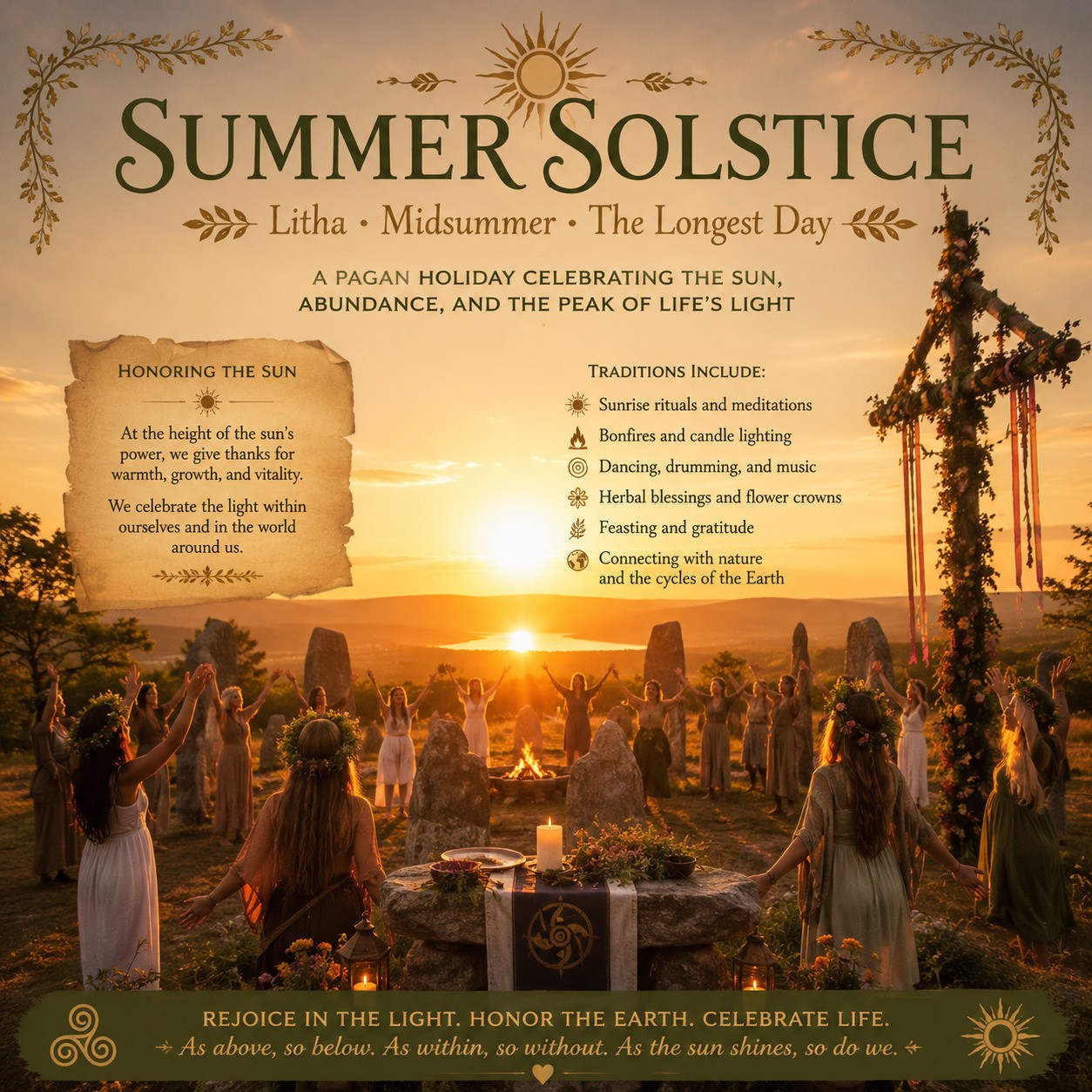
To that end I signed up us for a fund raiser for CSA Roots, apparently the former Community Design Center with which I did a lot of work in the late 70’s and early 80’s.  This fund-raiser features a hand-crafted, all locally sourced meal at the Heartland Restaurant across from the former site of the St. Paul Farmer’s Market.  Appropriately enough the dinner is on June 21st, the Summer Solstice.

We’re also planning a trip into the American Swedish Institute this week to see the Sami exhibition and eat at the Institutes new restaurant.  Hmmm.  Do most of our activities involve food?  Which by the way is ok since I’ve lost at least 14 pounds on this lower carb diet in addition to increasing the nutrient load of my food consumption and, the point of it, lowering my blood sugar well below levels of concern.


Quotes more quotes

“To be rooted is perhaps the most important and least recognized need of the human soul.”

Simone Weil

“In every parting there is an image of death.”

George Eliot

“It is never too late to be what you might have been.”

George Eliot

“What you remember saves you.”

― W. S. Merwin

“We’re neither pure, nor wise, nor good; we do the best we know.”

Voltaire

“The
Earth would die
If the sun stopped kissing her.”

Hafiz – The Gif

“At the heart of all great art is an essential melancholy.”

Federico García Lorca

“Painting is not an aesthetic operation ; it is a form of magic designed as mediator between this strange hostile world and us.”

Pablo Picasso

“Once you awaken, you will have no interest in judging those who sleep.”

James Blanchard

“If you are lonely when you’re alone, you are in bad company”

Jean-Paul Sartre

“A great pleasure in life is doing what people say you cannot do.”

Walter Bagehot

“The greatest mystery of all is reality.”

Beckman

“I was made for another planet altogether. I mistook the way.”

Simone de Beauvoir

“There is no sun without shadow, and it is essential to know the night.”

Albert Camus – The Myth of Sisyphus

“Reading and sauntering and lounging and dosing, which I call thinking, is my supreme Happiness.”

David Hume

“Architecture is the will of an epoch translated into space.”

Ludwig Mies van der Rohe

“I am an idealist. I do not know where I am going but I am on my way.”

Carl Sandburg

“Of all the words of mice and men, the saddest are ‘It might have been.’”

Kurt Vonnegut – Cat’s Cradle

“Death is not an event in life: we do not live to experience death. If we take eternity to mean not infinite temporal duration but timelessness, then eternal life belongs to those who live in the present. Our life has no end in just the way in which our visual field has no limits.”

Ludwig Wittgenstein, Tractatus Logico-Philosophicus

“Do not look for a sanctuary in anyone except your self.”

Siddhārtha Gautama

“Truth is stranger than fiction, but that may well be because we have made fiction to suit ourselves.”

G.K. Chesterton

“You don’t have to burn books to destroy a culture. Just get people to stop reading them.”

Ray Bradbury