Memories

Beltane                                                                     New (Solstice) Moon

Over the last couple of weeks I’ve had interactions with folks from Alexandria, Indiana resulting from a reader posting a blog entry, a 50’s boyhood, to an Alexandria Facebook site.  It’s been interesting.  The most interesting interaction has come from an old classmate who found my memories romanticized.  You can see her comment under Who.

(1st)

I wrote her and in doing so discovered that she was a girl (then) who had done very well in our class, but didn’t (apparently) get the recognition she felt she deserved.  I had to reflect that could have been true.  Sexism (though not named) was alive and well back then and I’m sure it effected teacher’s perceptions and other students opinions.  It may have helped me to some awards and recognition.  Impossible to parse out now at this remove, but I’d never thought of it until she wrote.

Having said that I want to add that happy memories are not necessarily romanticized.  That’s a word used by an outside observer.  As resident in those memories, they were happy.  Being a kid among kids is a great way to spend time when you’re young.  Sure, we had our hassles, too.  Our arguments and fights.  I remember one incident where a next door neighbor pulled my pants down in front of my friends.  This was the nuclear option at the time.  I thought life was over and I could never face anybody again. Until the next day of course.

(3rd)

Once my life moved away from Monroe Street it began to take on a more serious, turning toward adult tone.  We had a house on Canal Street, one  we owned, rather than rented.  In junior high I remember a fight with Rodney Frost, a bad one by the standards of the day. (low)  Rodney died several years ago and my first memory when I saw his obituary was of that 6th grade fight near the junior high school.

Girls remained a mystery for me well into college, so I had the normal ration of pre-teen and teen angst over dating, sex and self worth.  Those were not happy memories.  My father and I began to part ways emotionally during junior high, a fact I credited only much later to a growing unease he had with my intellectual maturing.  When this distance had reached its maximum, around my senior year of high school, my mother had a stroke and died seven days later.

(4th)

Those months and the years following them were more than unhappy times.  They were a constant struggle for self-worth capsized often by grief and the estrangement I had with my remaining parent.  This was just the way it was.  Do I wish it could have been different?  Of course.  Do I know it won’t be.  Yes, I do.
That period and its attendant miseries are now in my past, but they are in my past and they show up whenever I visit that period or that place, Alexandria.

(third phase)
First Fire

Beltane                                                                   New (Solstice) Moon

The old moon went to black and the new moon in waiting, the Solstice Moon, has not yet appeared.  The weather stayed on the cool and cloudy side today though it did get a bit warmer later.

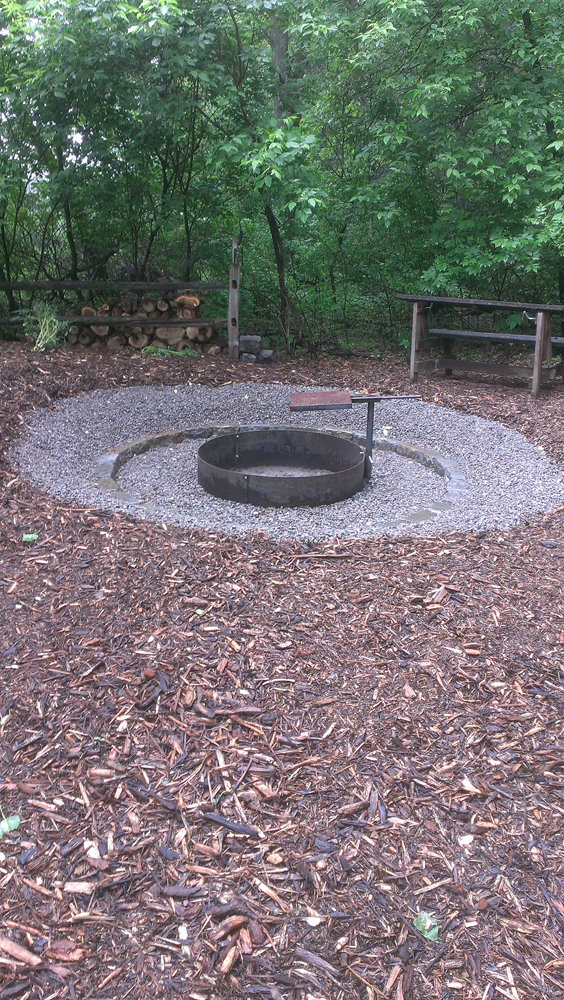
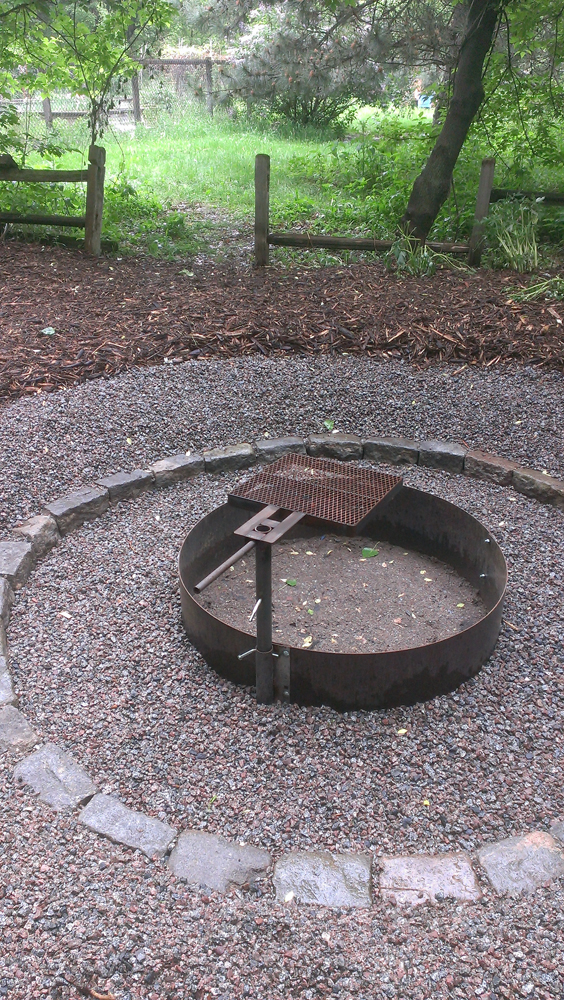
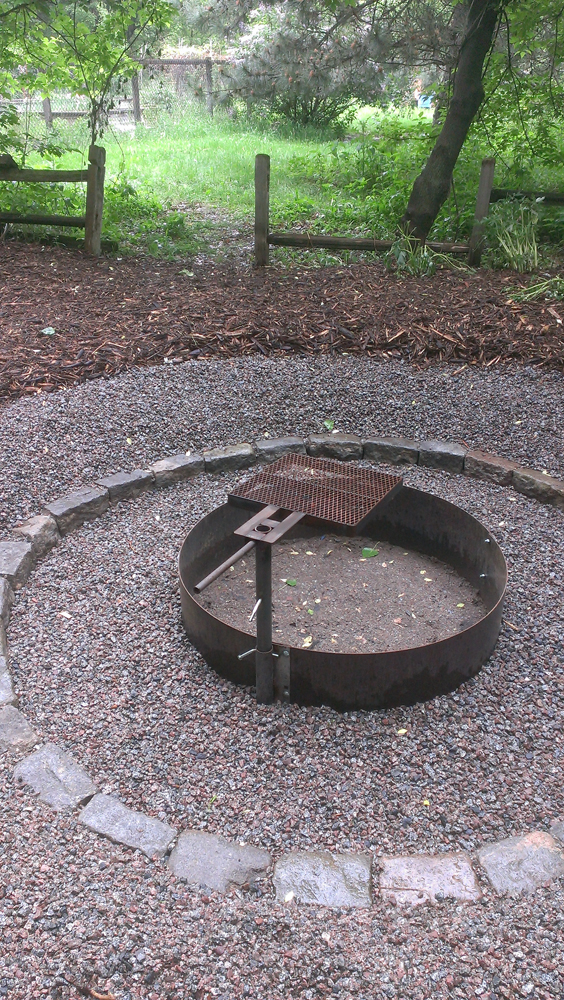
Kate and I had first fire in our new fire pit area, dining on a delicious dinner of cowboy caviar, chicken wings and a broccoli, bacon and raisin salad while part of a dead black locust tree burned.  The crushed gravel we had Javier put around it will have to be modified in some way since it tends to slough when walked upon.  Could have foreseen that but didn’t.

We sat there, watching the smoke rise among the ash trees around the border of what used to be a compost pile.  Our woods surrounds the area, in essence a new outdoor room tucked into the front edge of the trees near the grandkids playhouse.  Looking back into the woods I kept wondering what it would have been like, looking into woods like these and not knowing where they ended.  You can’t even see our property line, so the woods could be impenetrable for all that can be seen.

Afterward we watched two more episodes of the Swedish crime drama, Wallander, not the Branagh one, but the original.  I like the Swedish one better.  In it Wallander has more personality in it than the depressive, uncommunicative character portrayed by Branagh.

Teslamania

Beltane                                                                        New (Solstice) Moon

If you don’t know much about Nikolai Tesla, or, even if you do, this will blow your mind.  I promise.   Click this link to read it.

Does Great Literature Make Us Better?

Beltane                                                                  Early Growth Moon

Does Great Literature Make Us Better?  NYT article you can find here.

I’ve read great literature off and on my whole life, starting probably with War and Peace as a sophomore or so in high school.  I’ve also read a lot of not great, but not bad either literature and have even written some myself.  And, yes, I’ve read some distinctly bad literature, but not on purpose.

A formative experience in my reading life occurred in my sophomore year of college when I took a required English literature class.  Before taking the class I had given serious thought to majoring in English.  Then I had whatever his name was for a professor.  He told me what the books I read in his class meant.  He also claimed, proudly, to read Time Magazine from cover to cover each week as a form of discipline.  (That would have been discipline for me, too.  Punishment.)

Whether he represented English literature professors or not I don’t know, and I suspect now that he probably didn’t, but at the time I decided I could do the work of an English major without putting up with anymore of that kind of instruction.  I would read.  And I did and I have.

(Greuter Seven liberal arts  1605)

[That’s how I ended up in Anthropology and Philosophy for a double major.  Though I did have almost enough credits for a geography minor and a theater minor.  The theater credits were almost all in the history of theater, which I found fascinating.  The geography business came about because I was interested in the Soviet Union and, to a lesser exent then, China.]

Has reading Tolstoy, Dostoevsky, Singer, Hesse, Austen, Mann, Kafka and all those others made me a better person?  Hell, I don’t know.  In the article quoted above I think the writer refers to an argument about liberal arts in general; that is, that studying the liberal arts makes one more able to think critically in a complex world and, therefore, to act with a higher level of moral sensitivity.

That the liberal arts and reading great literature teaches critical thinking is, I think, established.  They do this by the comparative method, familiar to students of anthropology and philosophy and literature and theology.  How does it work?  In the words of blue book essay tests since time immemorial, you compare and contrast.  By comparing this culture to that one, or this writer to that one, or this book to that one, or this period of philosophy to that one or this theological perspective to that one, a sensitivity to the variations in argumentation, in problem solving, in abstract analysis becomes second nature.

This sensitivity to the variations does not, I think, breed a more moral person, but it does produce a more humble one, a person who, if they’ve paid attention, knows that this solution or that one is not necessarily true or right, but, rather is most likely one among many.  This humility does not cancel out conviction or commitment, rather it positions both in the larger reality of human difference.

So, in the end, I don’t believe the case for reading great literature is to be made in its efficacy or lack of it in creating moral sensitivity, but rather in great literature’s broadening of our horizon and in the concomitant deflation of our sense of moral righteousness, perhaps, oddly, the very opposite of creating a more moral person.


Bah!

Beltane                                                              Early Growth Moon

A challenge to every warm blooded Woolly Mammoth everywhere:

Now that Russian scientists claim to have retrieved a vial of blood from a thawing wooly mammoth carcass from the permafrost of Siberia, the scientific community has been buzzing with speculation that we could finally be on the cusp of bringing the wooly mammoth back from extinction. But even if we could do that, would we want to?

(I say, Let’s turn this picture around so they’re all following the one guy headed our way!)

Until now, the basic argument in favor of species de-extinction was that it offered humanity a chance to redeem itself for the wrongs committed over thousands of years. Humans, one could legitimately claim, have been mucking up the planet since time immemorial. As a result, many of the species that have been the targets of de-extinction efforts have been chosen because they seem to possess some basic fundamental right to survive. Often, they look much like species that have survived until today. If it hadn’t been for humans interfering with their natural habitats and delicate ecosystems, the argument goes, they would have been flourishing today.

Take the passenger pigeon, for example. Until 1914, the passenger pigeon was among the most plentiful species on the planet, numbering in the billions. Along the Eastern seaboard, residents could look up into the sky and see flocks of them flying overhead in such numbers that the skies went almost completely dark. And then humans got involved. Within a span of 25 years, the passenger pigeon had gone extinct, due primarily to commercial hunting and exploitation (e.g. passenger pigeon feathers were used for things like mattress filling). As a result, humans should feel at least a tinge of regret for wiping out the passenger pigeon.

But that same argument – a chance to redeem human wrongdoings over a wrongful extinction – doesn’t hold in the case of the wooly mammoth. The wooly mammoth, with its massive hair coat to preserve warmth, stood no chance for survival once the Ice Age ended. As Darwin first theorized, evolution is like an algorithm followed by nature. If an adaptation helps a species to survive and prosper, the adaptation will stick. If it doesn’t, it will eventually disappear from the gene pool. For better or for worse, certain species will go extinct when they can no longer adapt to their environment. It wasn’t just that wooly mammoths had heavy hair coats – they had all sorts of other adaptations that helped them thrive during the Ice Age, like huge tusks to clear away snow and ice. Bringing back the wooly mammoth would be tantamount to bringing back a species that deserved to go extinct.

To get around this argument, though, some scientists are starting to make the case that it wasn’t Mother Nature who did in the wooly mammoth — it was humans. Once the planet started to thaw out, humans came into contact with the wooly mammoth in greater numbers, and began to hunt them ruthlessly for their meat, bones and even skin. It’s essentially the passenger pigeon thesis, extended to the wooly mammoth. De-extinction fans will surely tell you that humans bear a type of evolutionary guilt for having wiped out the wooly mammoth, never mind climate change.

(the one in the middle looks sort of like Ode doesn’t it?)

Yes, de-extinction is a mind-blowing concept and it’s easy to understand why a number ofvery smart scientists are leading the charge to bring back extinct species. Most of the folks who turned out for the TEDx De-Extinction event in Washington, D.C. in March seemed to be good-intentioned scientists who were genuinely excited by the advances in DNA sequencing and cloning. In this TEDx video, for example, Hendrik Poinar invokes our childlike sense of wonder, suggesting that the wooly mammoth was a kind of Ice Age Babar who took a few wrong steps and unfairly got wiped out.

Even if we go with the Jurassic Park scenario – creating a highly-controlled environment (i.e. a theme park) where the wooly mammoth could conceivably flourish – it doesn’t reason that you can simply hit the “rewind” button on evolution. As some conservationists are already warning, bringing back a species like the wooly mammoth could lead to the disappearance of other species who share similar habitats. Once you bring back a new species, you have to start thinking about ecosystem effects — and about Butterfly Effects. Bringing back the wooly mammoth would require massive changes to existing ecosystems.

As a society, we need to recognize that the de-extinction of the wooly mammoth would be an evolutionary mistake. Just because we can do something doesn’t mean that we should. We often assume that evolution works in a purposeful fashion – upward and onward, with each successive step bringing us that much closer to perfection and increasing complexity. However, evolution does not necessarily follow a linear progression, enabling us to neatly re-trace our steps. There are jagged steps, hints and feints, that are impossible to replicate by simply “evolving backwards.”

At the end of the day, de-extinction implies that scientists have a better algorithm than nature does for determining which species should flourish, and which ones should not. If that’s not scientific hubris, then what is? As a result, the looming battle over de-extinction might end up being one of the few times in the history of the world that scientists and Creationists can line up on the same sideline and root for the same team to win.


Don’t Get Too Comfortable

Beltane                                                          Early Growth Moon

Mark Seeley University of Minnesota & MPR

My MPR colleague Dr. Mark Seeley gave us some astounding benchmarks on just how rapidly Minnesota’s climate is shifting, and how extreme weather in Minnesota is becoming the new normal.

-Weather Whiplash: The record warmth of March 2012 was the “most anomalous month in Minnesota and USA climate history” Fast forward to spring of 2013, and Minnesota is living through one of the coldest and wettest springs on record. This kind of year to year “weather whiplash” is unprecedented in Minnesota’s climate record.

-On the need to adapt: Minnesota’s infrastructure is built upon older perceptions of climate behavior that no longer hold true. We need to adapt our infrastructure to the new climate reality…which include more heat waves, tropical humidity episodes (70F to 80F+ dew points) in summer and excessive rainfall events.

-On changing rainfall patterns: A greater percentage of Minnesota’s annual precipitation is coming from summer thunderstorms…and the extreme rainfall they produce. The gentle soaking rains of our youth are fewer and farther between. That is promoting a cycle of flood…and drought in Minnesota. Twice in the past 6 years several counties in Minnesota were declared in flood…and drought at the same moment in time.

The “new normal” in Minnesota’s changing climate includes an “amplified thunderstorm signature” meaning more of our rainfall is coming in the form of heavy downpours.

Lady Fortune Takes a Break

Beltane                                                                              Early Growth Moon

Fortuna shifts her affections.  I fear I’ve been late in my sacrifices to her over the last month.  She left me dangling near the bottom of the pack tonight at Sheepshead.  Balancing things out, I suppose.

(fortuna)

Of course, there were a few self-inflicted wounds that I can’t foist off on her.  But there were those really bad hands.  And, yes, that one very good one.

Had supper with friend Bill Schmidt.  We ate at Pad Thai on Grand Avenue in St. Paul, near Macalester College.  It’s interesting to note how perspectives change as age downshifts expectations and heightens other facets of life.  A factor we both gave a nod to is one little admired in our mobile culture, the virtue of inertia and of its sometime attendant virtue: rootedness.

The soul, I believe, craves constancy, needs some stability and a key way we get that is to put down roots somewhere.  I’ve talked about it elsewhere, but it may be especially important in the third phase.  This is not to deny the attraction of travel, even of picking up and moving somewhere else, but the decision to do so late in life needs, I think, to be carefully made, with an eye not only to what will be gained but what will be lost.

Ready.

Beltane                                                              Early Growth Moon

Got my soil test results back from International Ag. Labs.  I plan to follow their recommendations and have sent an order into their local supplier.  Our goal here continues to be the same:  sustainable gardens producing high quality food using no pesticides and only biologically justifiable soil amendments.  This is a different approach from either permaculture or organic growing.  On the one hand it emphasizes soil optimization, reaching that goal through amendments whether organic or non-organic that support that end.  The end is a soil that produces high quality food in a manner sustainable over the long run.  Makes a lot of sense to me and I’m eager to get my order and start using it.

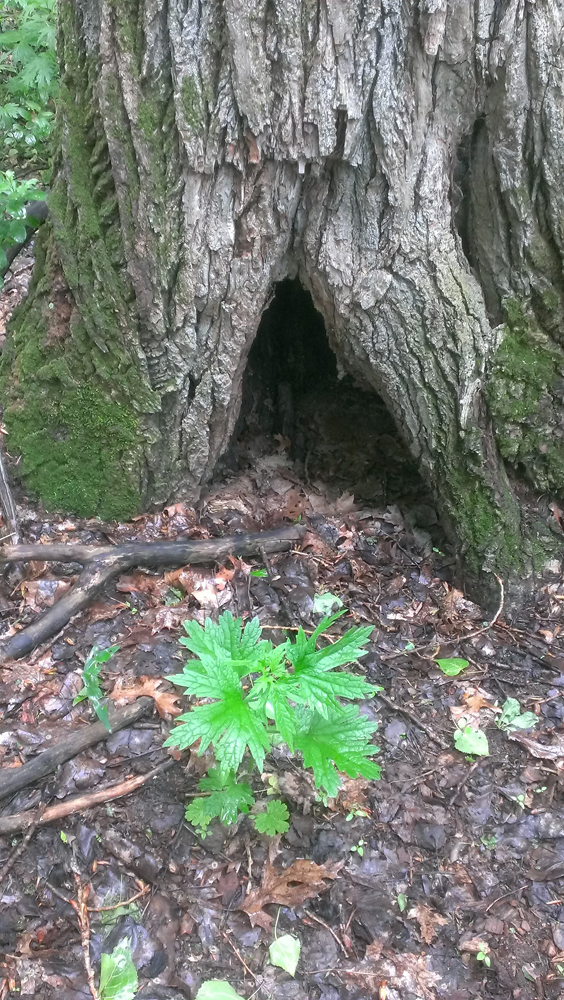
Last night at the Woodfire Grill Mark Odegard talked about a mushroom hunter friend who said that as long at the lilacs bloom, the morels can be found.  Our lilacs are still in bloom, so I wandered back in our woods.  First thing I saw when I entered the path was a giant morel.  I scooped it up, went looking for others.  Couldn’t find any.

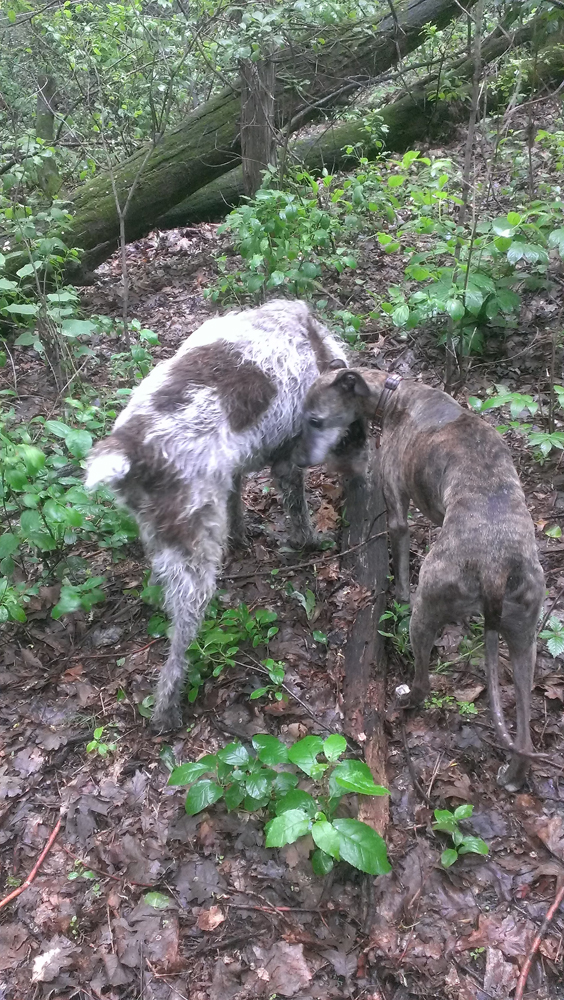
I didn’t do a thorough search though due to my recent switch to a lower carb diet.  In the process I’ve lost about 15 pounds and my jeans, conformed to a higher carb me, now slip around my waist with no belt.  Which I had left upstairs.  So, with Gertie and Kona racing around, I wandered a bit, looking at the ground, grabbing my pants, looking some more.  When it started to rain, I gave up and came back inside, promising myself that I’d get that belt and look more methodically when it was dry.

p.s. More on this later, but I heard a news report about Singapore yesterday relating to urban agriculture.  In this case it’s vertical, four-story ag with, they kept emphasizing, no soil.  I know this is possible because I have a hydroponic setup myself, but it flashed through me what a tragedy it would be for the human race if we lose that primal bond with mother earth.

Don’t get me wrong.  I think this is a great idea.  It uses the energy of a 60 watt bulb, they recycle all the water and grow fresh vegetables with a very short garden to consumer trip.  My concern is that its prevalence might make us forget the planet which gave us birth and which receives us after death.

Men Around the Woodfire

Beltane                                                                 Early Growth Moon

A gathering at the Woodfire Grill in St. Louis Park: Mark, Frank, Stefan, Tom, Bill and myself.  We spoke of Frank’s trip to Ireland and France, of Mark’s hunting down morels, of Tom’s single crystal which is on its way, of soil tests and gardens, Austin and the hill country of Texas, Michael Pollan’s new book: Cooked, and a book Mark is reading called the World through Drinks:  Beer, Wine, Coffee, Tea and Coca Cola. (plus one I can’t recall)

We meet, hear each other, see each other, then leave validated again.  Affirmed again.  Friends, still.