Went to the Hearing Rehab Associates shop today for a hearing test, hearing aid cleaning and tune up. An old folks event. First order of business, shine a bright plastic wand in my ear and make my ear drum go owwiiee. Then, into the Scott Pruitt sound proof booth. I felt like I was right there at the EPA, protected from those damned environmentalists.
The booth has two outlets, but I only need one, for my right ear. My other ear goes along, because, what’s it gonna do, but it doesn’t have to participate. That stopped a long time ago. First words. Then, beeps. Finally, staticky sounds with the hearing aid on. Result? Hearing is in the same place as a year ago. Good news. The hearing aid needed some adjustment to clarify higher range sounds. A few clicks of a mouse and that was done.
I also checked in, as I do from time to time, to see what’s new for us single sided hearing loss folks. Since the left ear went dark when I was 38, 1975, last millennia, there’s not been a sufficient advance to make my situation better. “That’s one thing we can’t fix,” said Katie, the audiologist. She did give me information on a BAHA device, Bone Assisted Hearing Aid. Might look into it. Still, she seemed rather doubtful that it would do more than alert me to sound coming from the left. Nothing new.
Also, as long as I’m on health matters, I made an appointment with Lisa, my internist, for a back pain consult. I work out, with work outs from a personal trainer, and have done for a long, long time, but I still tweak my back. Tramadol helps. I’m in a bit of an odd spot since my kidney disease makes taking NSAIDS inadvisable. Don’t want to go to opoids and acetaminophen doesn’t always knock down severe pain. I hope she’ll give me a prescription since I don’t know when it’s going to happen.
Meanwhile, though it’s way cooler here than Denver, it’s still too freaking hot. OK. Rant over.
Spent most of yesterday on submissions. I revised School Spirit, taking 2.0 down to 2,700 words from 4,800, and submitted the revision to Mysterion. I developed a table in Word to track my submissions. It has these columns: submission, work, publisher, response, rejection, acceptance, contract, published. Later on today I’m going to begin revision of Superior Wolf, which I want to get out as soon as I can get it where I want it.
I now have an Evernote file for Novel and Short Story markets which contains 25 new markets and I will build that file. I need another log to track reading periods, periods when a particular market opens to submissions. They are often only a month long, so you have to both have work that fits their interests and know when to send it. Once I get a rhythm going here, I’ll get back to agent submissions, arguably more important than submissions to markets.
So, I’m facing my fear, not only that, I’m leaning into it, grabbing it by the scruff of the neck and saying, “Come on, now. Message received. Stop already.” This is partly mussar driven, the practice I wrote about on July 6; but, it’s also driven by self talk that long preceded mussar, though ineffectually, and even a bit by the shame and embarrassment.
What, exactly, has the fear been doing for me? It’s tried to protect me, fence me off from disappointment and failure. It feels the pulse of shame before it rushes through me and says, go another way, that feels bad. Just keep your head down, don’t poke it up, make yourself visible. And, of course, in spite of that self-protective urge, the result has been that for 30 years I’ve felt disappointed and I’ve failed at publishing because I never took the risk.
Fear, like doubt, is good. To not fear the fall from a high cliff is stupid. Getting a flu shot makes sense because fear rightly says the flu is worse. Slowing down around a mountain curve? Sure, fear tells me I’d fly off into the void otherwise. But fear is pluriform, it responds to many things. When on the Savannah, a fear of vulnerability probably sensed a predator nearby, or an enemy. Pay attention. Hide. Be ready to defend yourself against death. Having a red light moment is adaptive, until it isn’t.
Publishers and editors and agents, even critics and readers, are not lions or hyenas on the veldt. The fear I’ve allowed to rule me for the past three decades however has believed them so. The shame then is a complicated emotion which recognizes the self-deception and self-protection. It knows I’ve chosen the critique of intimates, why hasn’t Charlie ever published, to the critique of possible readers. That’s embarrassing, but it’s where I’ve been for a long, long time.
Now, however, a strange, new moment is on the rise. In part I got tired of the narrative I’d been telling myself, been telling others. “I’m just not good at marketing.” I call bullshit on that. In part I read this article about setting a rejections goal and this time it made sense to me, a sort of akido move, use the power of your adversary against them. In part it was this month’s mussar practice of facing fear in order to learn about trust.
Yesterday, for the first time I can ever recall, I felt like I was getting down to the business side of writing. Yes, I’ve made submissions before, but I have never made as organized and concerted an effort as now. It feels good.
But, if I’ve begun to push the fear, tried to educate it that this is not an arena where it’s helpful, which I have, I’ve begun to wonder about it, too, from the mussar perspective. If I face the fear, face it down, then does trust appear? If the student is ready…
I know that fear vitiates trust. If we’re afraid of another person’s motives, we’ll never get to know them well. If we’re afraid of public speaking, no one will hear us. If we’re afraid of our own motives, we’ll take few risks. In these cases, if we face the fear, listen to it, talk it down, choose to act differently, then we may find love, may discover that people want to know what we have to say, may open ourselves to the world’s rich opportunities.
I’m starting from the fear, however, not trust. If I eliminate the fear, if I continue (and I’m pretty sure I will) to organize, revise, submit, and create new work, will trust appear? In what? The question I’m asking is this, does eliminating or modulating fear create trust, always? If so, in what?
seeing through the fear goggles on
In this instance, for example. If I have pushed back the fear, acknowledged the shame of constant wheedling about submitting my work, and have finally gotten somewhere with both, in what do I now have trust? That eco-system of publishing and readers will therefore embrace my work? Not really up to me beyond getting my work out there. That I’ll be a better person? Maybe. Since the fear has weighed heavily on my psyche for all these years, lifting it might have, probably will have, a positive effect on my sense of self. Perhaps I’ll trust life more, be less reticent. This would be huge, obviously.
Don’t think this is the heart of it though. Somehow the trust that emerges is, more importantly, in acceptance of vulnerability, trusting that when I’m afraid, or even ashamed, that I can still be in this world. We’ll see, of course, if this is true, but it feels right. Fear, then, can be seen as a tool, an important and necessary one, but one to pick up and then set down. It’s not a tool we want to always have to hand and when it is in hand, we need a plan to get it back in the toolbox after it’s done its work.
I’m neck deep, ok maybe in over my head, in lesson planning, something I’ve not done before. I realized though that I did do a lot of educating over my twelve years at the MIA and I do have good facilitator, process skills. Even so, I’m having to learn about a key moment of Jewish development, the b’nai mitzvah, oddly, a marker of the very same transition Ruth is in right now. There’s as much culture as theology here, a cultural milieu with which I have little familiarity. But I’m picking it up.
Yesterday I finally got an organizational handle on what I was doing. That’s the moment when a lot of study and thinking begins to sort itself out into recognizable components. In this instance it was a religious school year long calendar, each class for which Alan and I are responsible indicated by date. In other columns there are holidays that occur in a particular month, September, for example, has Rosh Hashanah and Yom Kippur and Sukkot; middah of the month, for example, again, September is hitlamdut or curiosity; a column with one of Maimonides 13 articles of faith for each month. There are also Hebrew letters for each class day, a progression throughout the year that will follow the kabbalist’s tree of life and links to the parsha (Torah portion) for each week.
With these elements identified lesson planning will be easier because content can be plucked from any of the columns to enhance a particular class. There’s another move in the process, integrating the b’nai mitzvah curriculum developed by a national organization called Moving Traditions with those classes for which Alan and I have to develop our own lesson plans. Once how we do that is decided and dates for the b’nai mitzvah classes show up on the calendar, we should be able to move fairly quickly to a plan for the year.
I love this stuff, the pulling together of disparate complexities into one whole. This is a big challenge and I like that, too. Not to mention that I really enjoy the people at Beth Evergreen.
Lifted a case of 24 cans of wet dog food out of the box on Thursday. Kate happened to be there. The moment I straightened up, I said, “Fuck. I shouldn’t have done that.” I lifted it with my back slightly bent, not with my legs, but my arms. Friday and Saturday were walk around like a hunchback days. I know better, but it had a cardboard cap on it. I took that off and it was very light, just cardboard. Somehow my body took that as a cue that the canned dog food would be light, too, so I let my guard down. Better this morning, but geez. How old am I again?
Kate’s figured something out. She’s been much, much calmer with the grandkids here, better for her and for them. It’s great because she has more fun, doesn’t end their visits exhausted, wiped out. I can see a corner being turned. She’s also about to get a handle on her nausea, I can feel that, too. When she does, and she gains back a few pounds? Watch out.
“Dear Charles, Thank you for sharing your writing with us! We received a very large volume of submissions and can only accept a small number; unfortunately, we are going to have to pass on your work this time. We wish you well as you continue writing, and we encourage you to consider submitting to us again in the future.” submission to the Metz Review, School Spirit
When I read it last night, a sharp flash of shame and embarrassment went through me from top to bottom. The old familiar response came, too. Not gonna do that anymore and I marked the e-mail done to get it off my screen.
Then, I paused. Wait. This is the moment I wanted. Lean into the shame and embarrassment, see what it means. Why do I feel that way? So many reasons. Personal competence. A big risk taken with no results. Kate’s been so supportive of my writing. Most of all though it’s my work, being rejected. And it feels bad.
OK. So, I feel all those things. I’m vulnerable, made myself vulnerable, put myself and my work out there. And, I’m not dead. I didn’t shrivel up like the Wicked Witch of the East. The fear is me trying to protect myself from rejection, from disappearing, yet it will cause, has caused me to reject my work myself; to write, then let the work lie in bits and bytes, hidden on my hard drive.
Maybe it’s like a phobia, the more times I expose myself to rejection, the less painful it will become? I don’t know, but in any case I know I have to lean into rather than flee from it. This fear is real and painful.
Not sure here all of a sudden. It was shame that I felt when I read this note. Didn’t realize it, name it until I began writing this. Why though? Why shame? Perhaps it’s from that old, underlying conundrum, am I living up to my potential? Who’s to say? Perhaps it’s wanting to be seen as a creative person, a writer of books, yet secretly suspecting that I’m not worthy of those identifiers. Perhaps it’s as simple as failing and being ashamed of failing?
What I do know, for sure, is that this shame, a hot desire to hide, to cover myself, to flee works against me, is not for me, in any way. And I could identify that paradox in another, in Kate or one of the Woollys, or a friend at Beth Evergreen. I would have compassion for it, yet also have a tough love move against it. It’s not who you are, it’s an attack on yourself from within. Perhaps we could call it Shaitan, the Devil because it is evil to push yourself down or to push another person down. Why? Because living is all we have and shame makes us shrink from life.
Shame, huh? Gonna have to give this more attention.
At the Mussar Vaad Practice group we all come up with a practice for the coming month, a practice based on that month’s middah or character trait. Each month the congregation has a middah of the month. Emunah, or faith was the middah last month. My practice focused on sharpening doubt, a practice that made me feel more alive, more grounded in faith as a necessary human act.
This month I’m getting even closer to the bone of my inner skeleton, as we focus on bitachon, or trust. This radical confidence is a natural sequelae of emunah. Like doubt is on the same continuum as faith, but at one end of it, trust is on a continuum, too, with fear. In the Jewish approach to these matters it’s not doubt bad, faith good, fear bad, trust good; it’s about knowing how to deploy them at the appropriate times, or if not deploy them, be able to feel them, to know them without hiding.
Following on the rich experiment with sharpening doubt, I decided to go with the same approach, the far end of the continuum, and focus on fear. I said as much at the MVP, but the fear I wanted to confront embarrassed me (probably making it an excellent candidate), so I didn’t name it there. I will now.
Albert Camus 1955
My fear, the core fear, is exposing my writing to publishers and critics. Ancientrails doesn’t ignite that fear for some reason, maybe because it’s seen by only a few, but sending off my novels and short stories and poems to publishers causes my fear to burst into a wildfire.
It’s quiet, though. How it works is I think about submitting work, I make a move or two toward that end, then abandon it. Often not intentionally, at least not overtly, but I allow this or that to get in the way. Query letter? I can’t do a good one. Mail the manuscript? Too much hassle. Find an agent? The old writing ouroboros rises from north sea. Nothing published? An agent won’t want my work. Yet, I need an agent to get my work published. A problem that constantly eats its own tail.
That same fear is the one I faced after the Durango trip, writing here about setting a rejection’s goal. I have made two submissions so far, one of Missing, a novel, and one of School Spirit, a short story. By focusing on my fear of rejection, the vulnerability it exposes, the possibility that I’ve been wasting my time for over 20 years now, I hope at least to get my work out in the world. Whether any one wants it is, well, up to them.
I’m embarrassed to write this, ashamed I’ve been so fearful, yet I have been both embarrassed and ashamed for most of the most of the time I’ve been writing. Now is not different. The only way I can make it different is by finding publishers and agents and getting my work to them.
I’ll let you know how it goes. I just got a new shot of magazines and book publishers open to submission today. That means tomorrow I’m going to be reading submission guidelines, looking at finished work and getting stuff out there. Staying at it is the key, I know that. Persistence. Something I’m usually pretty good at.
Smoky the Bear’s fat index finger points at Very High on all the fire danger forest signs we drive by. In Evergreen the fire station there says Extremely High. The Spring Creek Fire is at 103,000 acres burned and 35% containment. The 416 is at 54,000 and 45% containment. The Weston Pass Fire has closed 285 at Fairplay and is at 12,000 acres with 17% containment.
There’s a lot of low level anxiety here, knowing all it would take is a careless camper, a lightning strike, an automobile accident to put us in danger, too. The big fires are in the southern and southwestern parts of the state where some areas have passed beyond extreme drought conditions, so the fuel load is tinder dry.
Half of the slash, May, 2016
We are left not with trust, then, but only hope. Hope that fire will not burn down our houses and upset our lives. Once Kate and I decided that if it burns, it burns and we move on, my anxiety level decreased. We chose to live here, chose to build our Colorado life in an area vulnerable to fire.
August 2016
Choices, like our psyches, are never only this or only that. We moved here to be closer to the grandkids, yet to have our own life in the mountains, too. That is, we chose to move from the relatively safe from fire Andover (though the occasional derecho, tornado and hail storms were destructive.) to the wildlife/urban interface of the Rocky Mountains. It’s desirability is captured by its adjectives, we are where the wildlife live, yet urban amenities are also close. We have the beauty of the Rockies, the mule deer bucks and does that visit our yard, the elk that bugle in the fall, the mountain lions that cough in the night, black bears and all manner of other creatures. Yet, we also have the existential danger, especially high in early and mid-summer, of fire. Not an either/or, but a both/and.
Life, too, though not a choice we made (but to continue our life is a choice), puts us in an even more dire dilemma. We were thrown by circumstance into the life/reality interface, knowing that the wildfire of our death grows increasingly less contained as we age. At some point it will engulf us, burn out the wild mind that has carried us from birth. I’m ok with that, too. Not that I have a choice.
Sixth dead tree down. All limbed, the slash moved to the road, and Elk Creek Fire Department notified. They have a new program this year. We put slash within 5 feet of the road and in 5 foot or so piles. They’ll come by and chip it. This is not a small deal since the last slash chipping I had done cost $600. Sometime in the next few days I’ll cut all six of them into fireplace sized chunks and stack them.
Just a few stray aspen in the wrong places to fell and I’m done with tree work for the year. I like it. It’s outside, the smell of fresh cut wood, get to use my body, creates firewood and helps give our property a better chance in a very high fire season. I miss the same sort of work that our large gardens in Andover used to give me, but I have no intention of recreating those here. Too hard up here, other things to do. Well, if we had a greenhouse, I’d get back to it. I miss working with plants, with the soil.
A friend wrote about my life here in Colorado. He is, he said, intentionally simplifying, trying to have fewer obligations, yet I’m taking care of dogs, doing more work around the house, cutting down trees and teaching at Beth Evergreen. Now I happen to know that this same guy, who is older than I am, recently completed a show in which he made posters of all the bridges across the Mississippi in the Twin Cities. He has also found a patron who loves his art, so he’s producing larger art works across various media. Not exactly slowing down in that sense. Life in the old lane does force us to make choices about how to use the energy and time we have, but so does every other phase of life. Now though we know ourselves better so we can get more bang for the time and energy.
His comment did give me pause, wondering if I’m ignoring the moment, the actual state of my life. Kate and I were talking about this a couple of days ago in relation to her diminished energy, occasioned by Sjogrens, arthritis and this damned nausea that afflicts her. When we whack down the nausea mole, I’m hoping the other symptoms will give her some rest for a while, especially since her shoulder surgery has been so successful. Even so, we do have to adjust to our current physical and energetic and intellectual reality, and she’s not likely to go back to the energizer mode of yesterday.
Here’s my situation. I have my chronic illnesses, collected along the way. I don’t hear worth a damn, have stage III kidney disease (stable), glaucoma, high blood pressure, an anxiety disorder (which, frankly, is much, much improved), arthritis in various spots. A repaired achilles tendon and a titanium left knee make my legs not what they were. All these are facts. If you ask me, I’ll tell you, though, that my health is excellent. None of this drags me down, either physically or emotionally.
ancora impari
Having said that, my intellectual faculties seem intact though I admit it’s hard to know sometimes from the inside. I’m emotionally more stable, less reactive, have a more nuanced approach to relationships, much of this thanks to the lessons of mussar at Beth Evergreen and the very sensible approach to life that is Jewish culture. THC helps me sleep better than I have in my life. Writing still excites me, makes me feel puissant and I have projects underway, a novel and a collection of short stories, plus an idea for a novelization of the Medea myth. Kate and I have a great relationship, we do a lot of things together, enjoying the years of getting to understand and appreciate each other. Grandparenting is a wonderful life moment.
Right now, in other words, I am old, 71 is past the three score and ten, yet I’m still eager, still curious, still hopeful, still physically able. So for me, 71 is my age, but decrepitude has not captured me yet. It will, if I live long enough, I’m sure, and slowing down, when it becomes necessary, is something I foresee. It doesn’t frighten me, since death doesn’t frighten me. Until then, I’m going to keep plowing ahead, purpose driven and excited about life and its various offerings.
Gertie is apparently blind in one eye. Her left eye has been clouded by a cataract for some time, but an exam Monday revealed she may also have acute glaucoma and her pupil did not constrict when confronted with light. As in dogs in general, it doesn’t seem to bother her. She’s still her wriggly, rascally self.
Rigel seems to have recovered completely from her earlier this year bout with a food allergy. At some moment in the recent past she saw something that interested her out by our far back fence. Now, she lies on the deck, forelegs dangling over, eyes locked on the fence. In the morning she often goes back there to check things out, sometimes she’ll lie in the grass just beyond the shed, again eyes focused on the utility easement that begins just beyond the fence. The easement itself is a wildlife highway since it’s kept clear by IREA (Intermountain Rural Electrical Association) and extends up and down the mountains.
Kate bustled around yesterday in short bursts and defeated the nausea demon by not taking her diclofenac in the morning. Or at least we think that was it. She’s engaged in an experiment right now to test whether the diclofenac might be a major contributor. Problem is that the diclofenac covers her arthritis pain and without it she’s in pain. Difficult and complicated.
We went to the Mussar Vaad Practice group last night. Interesting conversation about faith and trust, the difference between the two. The difference is slippery and of course hinges on what they mean to you. If faith is the equivalent of belief, as in many creedal theologies it often is, then faith is fragile. If, however, faith is about our everyday willingness to live as if life will continue, as if our loved ones will not die at least today, as if abundance is ours to claim and experience, then it is not fragile, but a necessary component of the awakened, vital life. Trust is more transactional, more circumstantial, not global, but specific. It is a willingness to know the other, for instance, and, accept them as they are. Trust is, as a writer quoted last night said, the mother of love and the daughter of truth.
Here’s a surprisingly existential sentence from economic journalist, Annie Lowrey, “The way things are is really the way we choose for them to be,” she writes. Her new book, “Give People Money: How a Universal Basic Income Would End Poverty, Revolutionize Work, and Remake the World” (Crown),is considered as part of a New Yorker article, “Who Really Stands to Win from Universal Basic Income?”
UBI is an interesting idea, made more interesting by Nathan Heller who offers a good summary of its possibilities and pitfalls, and I recommend the read; but, I’m much more taken by that single sentence of Lowrey’s. Lowrey is, as Heller says, a policy person, so her comment in this instance refers to our economic reality. Our economic life is not a divine endowment from a class loving God, rather it is the sum of choices we make as a people, choices reflected in our laws, our deference to the wealthy, our moralizing (Calvinist driven in large part) of personal income and wealth (more, better person, less, worse person), even the choices we make as consumers. In sum we live in a created society, one that we can choose to recreate or even uncreate.
Why are we so reluctant to recognize that racism, sexism, homelessness, income inequality, white fear are the result of decisions we’ve made collectively and individually? I think the answer lies in ideas Arthur Brooks identifies as the bedrocks of conservative thought. Below is a portion of that article, Republican or Conservative: You Have to Choose.* NYT, June 25, 2018. Though it may surprise readers of this blog, I have considerable sympathy for these ideas.
They challenge the Lockean idea of a social contract among independent actors, a notion at best abstracted from common life. They challenge the fabric of a liberal political worldview. I agree that we are not wholly autonomous individuals. Heidegger’s notion of thrownness underlines this point by reminding us that our life begins in a particular time, in a particular place and in particular circumstances over which we had no choice whatsoever. Brooks says something similar, “…individuals emerge out of families, communities, faiths, neighborhoods and nations.” To this point, I’m with him. There are unique realities that shape us.
But, to sacralize that unique reality, “…conservatives have always placed tremendous emphasis on the sacred space where individuals are formed.” says Brooks, serves to deny its perniciousness, its damning of so many to lives of desperation, marginalized from both economic and cultural blessings. Once we emerge in the era, the family, the town or neighborhood or rural place, the religious or areligious space gifted to us, the nation of our birth, once we are over being thrown into circumstances beyond our volition, we gain the power of choice.
It is decidedly not the case that though thrownness may come first, as Brooks says “The order comes first.” that “…individual freedom is an artifact of that order.” No. Order is neutral, neither a moral good, nor a moral constraint. If the order into which we are born nourishes lives, lifts people into their best possible existence, then, yes, let’s sustain it. If, however, the order into which we are born is itself pernicious, damning us to poor education, inadequate nutrition, a lifetime of social doubts about our worth, then we must recognize the truth of Lowrey’s wonderful encapsulation of the liberal perspective: “The way things are is really the way we choose for them to be.”
*”Conservatives said we…think you’ve got human nature wrong. There never was such a thing as an autonomous, free individual who could gather with others to create order. Rather, individuals emerge out of families, communities, faiths, neighborhoods and nations. The order comes first. Individual freedom is an artifact of that order.
The practical upshot is that conservatives have always placed tremendous emphasis on the sacred space where individuals are formed. This space is populated by institutions like the family, religion, the local community, the local culture, the arts, the schools, literature and the manners that govern everyday life.
Membership in these institutions is not established by rational choice. We are born into them most of the time and are bonded to them by prerational cords of sympathy and affection. We gratefully inherit these institutions from our ancestors, we steward them and pass them along to our descendants.”
 Spent most of yesterday on submissions. I revised School Spirit, taking 2.0 down to 2,700 words from 4,800, and submitted the revision to Mysterion. I developed a table in Word to track my submissions. It has these columns: submission, work, publisher, response, rejection, acceptance, contract, published. Later on today I’m going to begin revision of Superior Wolf, which I want to get out as soon as I can get it where I want it.
 So, I’m facing my fear, not only that, I’m leaning into it, grabbing it by the scruff of the neck and saying, “Come on, now. Message received. Stop already.” This is partly mussar driven, the practice I wrote about on
  Publishers and editors and agents, even critics and readers, are not lions or hyenas on the veldt. The fear I’ve allowed to rule me for the past three decades however has believed them so. The shame then is a complicated emotion which recognizes the self-deception and self-protection. It knows I’ve chosen the critique of intimates, why hasn’t Charlie ever published, to the critique of possible readers. That’s embarrassing, but it’s where I’ve been for a long, long time.
 I know that fear vitiates trust. If we’re afraid of another person’s motives, we’ll never get to know them well. If we’re afraid of public speaking, no one will hear us. If we’re afraid of our own motives, we’ll take few risks. In these cases, if we face the fear, listen to it, talk it down, choose to act differently, then we may find love, may discover that people want to know what we have to say, may open ourselves to the world’s rich opportunities.

 With these elements identified lesson planning will be easier because content can be plucked from any of the columns to enhance a particular class. There’s another move in the process, integrating the b’nai mitzvah curriculum developed by a national organization called Moving Traditions with those classes for which Alan and I have to develop our own lesson plans. Once how we do that is decided and dates for the b’nai mitzvah classes show up on the calendar, we should be able to move fairly quickly to a plan for the year.
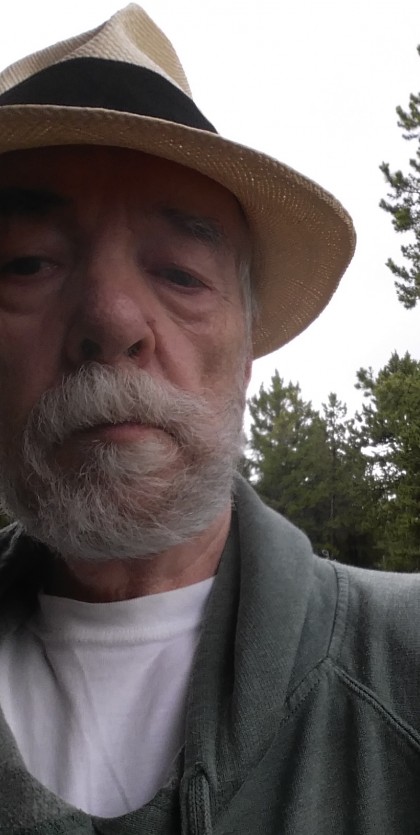 Lifted a case of 24 cans of wet dog food out of the box on Thursday. Kate happened to be there. The moment I straightened up, I said, “Fuck. I shouldn’t have done that.” I lifted it with my back slightly bent, not with my legs, but my arms. Friday and Saturday were walk around like a hunchback days. I know better, but it had a cardboard cap on it. I took that off and it was very light, just cardboard. Somehow my body took that as a cue that the canned dog food would be light, too, so I let my guard down. Better this morning, but geez. How old am I again?
 Ouch. I got this note back:
 Then, I paused. Wait. This is the moment I wanted. Lean into the shame and embarrassment, see what it means. Why do I feel that way? So many reasons. Personal competence. A big risk taken with no results. Kate’s been so supportive of my writing. Most of all though it’s my work, being rejected. And it feels bad.
 Not sure here all of a sudden. It was shame that I felt when I read this note. Didn’t realize it, name it until I began writing this. Why though? Why shame? Perhaps it’s from that old, underlying conundrum, am I living up to my potential? Who’s to say? Perhaps it’s wanting to be seen as a creative person, a writer of books, yet secretly suspecting that I’m not worthy of those identifiers. Perhaps it’s as simple as failing and being ashamed of failing?
 What I do know, for sure, is that this shame, a hot desire to hide, to cover myself, to flee works against me, is not for me, in any way. And I could identify that paradox in another, in Kate or one of the Woollys, or a friend at Beth Evergreen. I would have compassion for it, yet also have a tough love move against it. It’s not who you are, it’s an attack on yourself from within. Perhaps we could call it Shaitan, the Devil because it is evil to push yourself down or to push another person down. Why? Because living is all we have and shame makes us shrink from life.
 At the Mussar Vaad Practice group we all come up with a practice for the coming month, a practice based on that month’s middah or character trait. Each month the congregation has a middah of the month. Emunah, or faith was the middah last month. My practice focused on sharpening doubt, a practice that made me feel more alive, more grounded in faith as a necessary human act.
 That same fear is the one I faced after the Durango trip, writing
  I’m embarrassed to write this, ashamed I’ve been so fearful, yet I have been both embarrassed and ashamed for most of the most of the time I’ve been writing. Now is not different. The only way I can make it different is by finding publishers and agents and getting my work to them.
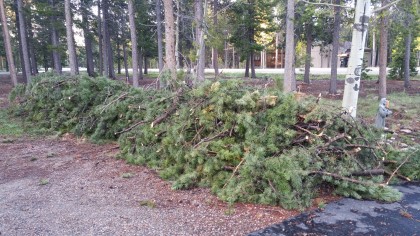


 Sixth dead tree down. All limbed, the slash moved to the road, and Elk Creek Fire Department notified. They have a new program this year. We put slash within 5 feet of the road and in 5 foot or so piles. They’ll come by and chip it. This is not a small deal since the last slash chipping I had done cost $600. Sometime in the next few days I’ll cut all six of them into fireplace sized chunks and stack them.
 A friend wrote about my life here in Colorado. He is, he said, intentionally simplifying, trying to have fewer obligations, yet I’m taking care of dogs, doing more work around the house, cutting down trees and teaching at Beth Evergreen. Now I happen to know that this same guy, who is older than I am, recently completed a show in which he made posters of all the bridges across the Mississippi in the Twin Cities. He has also found a patron who loves his art, so he’s producing larger art works across various media. Not exactly slowing down in that sense. Life in the old lane does force us to make choices about how to use the energy and time we have, but so does every other phase of life. Now though we know ourselves better so we can get more bang for the time and energy.
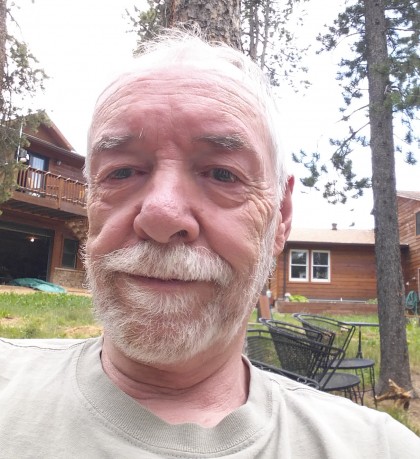 Here’s my situation. I have my chronic illnesses, collected along the way. I don’t hear worth a damn, have stage III kidney disease (stable), glaucoma, high blood pressure, an anxiety disorder (which, frankly, is much, much improved), arthritis in various spots. A repaired achilles tendon and a titanium left knee make my legs not what they were. All these are facts. If you ask me, I’ll tell you, though, that my health is excellent. None of this drags me down, either physically or emotionally.

 Kate bustled around yesterday in short bursts and defeated the nausea demon by not taking her diclofenac in the morning. Or at least we think that was it. She’s engaged in an experiment right now to test whether the diclofenac might be a major contributor. Problem is that the diclofenac covers her arthritis pain and without it she’s in pain. Difficult and complicated.
 Why are we so reluctant to recognize that racism, sexism, homelessness, income inequality, white fear are the result of decisions we’ve made collectively and individually? I think the answer lies in ideas Arthur Brooks identifies as the bedrocks of conservative thought. Below is a portion of that article,
  But, to sacralize that unique reality, “…conservatives have always placed tremendous emphasis on the sacred space where individuals are formed.” says Brooks, serves to deny its perniciousness, its damning of so many to lives of desperation, marginalized from both economic and cultural blessings. Once we emerge in the era, the family, the town or neighborhood or rural place, the religious or areligious space gifted to us, the nation of our birth, once we are over being thrown into circumstances beyond our volition, we gain the power of choice.