Category Archives: Memories

Harvest

Fall                                      New (Harvest) Moon

Second round of apiguard in the parent and the divide.  The top box on the package colony has gotten heavier, but I plan to feed them some more as I will do to the parent once the apiguard comes off in two weeks.  Sometime in early November I’ll get out the cardboard wraps and cover the hives for winter.  That will pretty much finish bee work for the year until late February or early March.  I’ve given away honey and plan to give away more.  Part of the fun.

A quick walk through the vegetable garden shows kale and swiss chard looking good, a few rogue onions that escaped the harvest, plenty of carrots, beets and butternut squash.  The harvest is 2010-10-04_0351not yet over and will go on until the ground threatens to become hard.

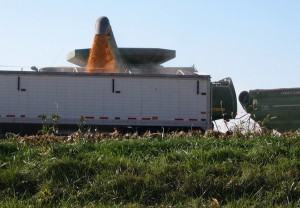
While I drove through the countryside on my way back to Lafayette on Monday, I passed field after field of corn and beans, some harvested, some not, about half and half.  Seeing those scenes put me right back at home, especially the corn fields.  Here’s a field near Peru, Indiana with the combine spilling corn into a tractor trailer for transport either to a corn bin, grain dryer or even straight to the grain elevators, all depending on the price and moisture content of the corn.

Indiana is no longer home, Minnesota is, but Indiana has a large section of my heart, the chamber of childhood and early young adulthood, a room full of corn fields, basketball, small towns, a baby sister and brother, county fairs and James Whitcomb Riley poems.  I was glad to be there the last few days and to walk again in the part of my heart filled there so long ago.

We move now toward Samhain, Summer’s End.  Blessed be.

A Life in Ruins: Part II

Fall                                    Waning Back to School Moon

When I visited Angkor in 2005, I wrote a piece for my Pilgrimage series entitled, A Life in Ruins.  Ephesus, Delphi, Delos,Rome. Pompeii, numerous civil war battlefields and Attuthya are among the many ruins I’ve visited, trying to piece together from blocks of stone, information plaques and Blue Guides their meaning and significance. At Knossos I wondered what it felt like to be in the labyrinth of rooms that made up what entered legend as the habitation of the Minotaur.  At Delos I imagined what the birth of Apollo and Diana was like.

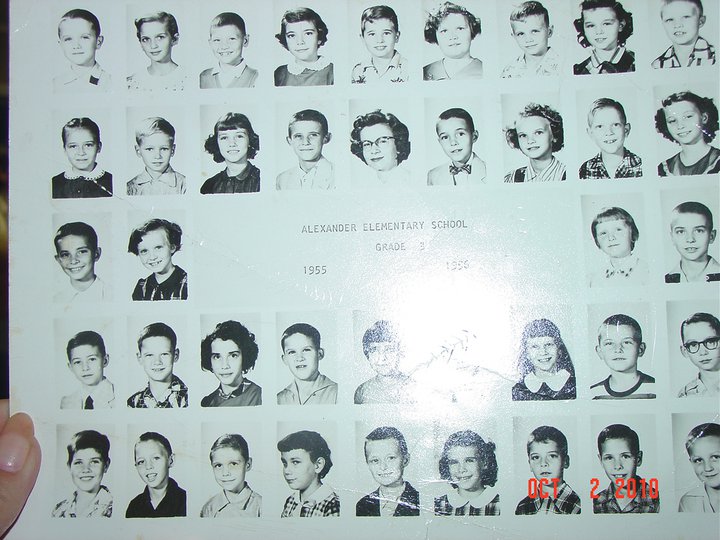
Given that history, amazing is an understatement when I discovered my actual life had become a site with ruins, not one, but many.  In my hometown of Alexandria the first factory in which I2010-10-02_0396 worked, Johns-Manville has nothing left but concrete coated pillars and a loading dock.  I worked as a receiving clerk the summer I was there, so I knew exactly what went on there when the trains loaded with coak and limestone rolled onto the factory grounds.

That was the first, but far from the last.  The old High School, my middle school, gone.  Tomlinson, my first elementary school. Gone.  Most of the businesses of my youth, abandoned shells.  This is only in Alex.  In Anderson the mighty General Motors Guide  Lamp and Delco Remy, employers once of 25,000, gone.  Parking lots and concrete factory pads covering thousands of square feet and fenced in with tall chain link are all that remains.

If we had a magic button we could push, one that would light up the home’s lost among those 25,000, we would have a better estimate of the lives ruined along with these structures.  These are the missing elements at Ephesus, Rome, Delos.  What about the lives of the priests, the grounds keepers, the cooks, the sailors?  Like members of my class and their parents forces beyond their control eliminated the places where they earned their livings.  Places made sacred by the holy work of labor.  So much desecration.

These factories, these shops, these shuttered houses, these abandoned people are the friends and family with which I spent the weekend, real people, not statistics.  Never did I think that the mighty flood of cars bearing workers on Highway 9, no absurdly named Highway of Vice Presidents, would dry up.  Never did I think that the vibrant small town of my youth with its mens store, its womens store, two variety stores, two pharmacies, a bakery, two theatres, bars and banks and service stations would fade away only to be replaced by dollar stores and wholesale outlets.

So this weekend, an affair of the heart most of all, a reconnecting with those who lived then, only underscores the pain.  I will never visit a new ruin again with the same detached attitude.  Real people lived there;  real people suffered.

Camp Chesterfield: Blessing of the Animals

Western Hotel, Camp Chesterfield, 8 pm.

This was my day to poke around here at Camp Chesterfield, the reunion over and a day remaining on my stay in the Western Hotel. I picked a poor day. Instead of the usual worship services held today thee was a blessing of the animals. Before that I went back to the gift shop, which has an unusual collection of books and items for sale.2010-10-03_0378

Footfalls on the Boundary of Another World, by Robert Dale Owen seemed the most substantial work on spiritualism, so I picked up a copy. Written in 1860, a California outfit named Health Research has produced a facsimile edition. Most of the works on spiritualism were from the late 19th or early 20th century, the prevailing zeitgeist here at this 124 year old Spiritualist center. It will make for interesting reading.

I looked through many other books, including a series by Alice (?) that fills a bookshelf. A couple of the books interested me: White Magic and Esoteric Knowledge (actually 6 separate volumes), but at $27 or so a copy, I decided to pass. Besides, the book store plans to go online next month, so I’ll have access there whatever titles I want. Most of the ones that intrigued me were by presses I suspect even Amazon doesn’t carry.

Why do they intrigue me you might well ask. In part because this small subculture has shown durability over the centuries, persisting and now beginning, it seems, to thrive again. They tap into the universal hope that something persists after death, that death is not final, rather a transition to the Spirit world, or the non-physical plane. As a writer of fantasy novels, I like to use religious world views grounded in living or once living faith traditions. Not much has been done with Spiritualism and it carries such a strong overlay of Victorian and Edwardian sensibilities, that it makes a good setting for a novel.

As I made away across the grounds from the Western Hotel, the direction of transition in spiritualism, I passed a prayer grotto, a large marble angel, a setting of busts honoring creating of major faith traditions and a setting of concrete tables with two wooden chairs. These last I imagine were at one point the site of outdoor readings.

Just beyond the chairs and concrete tables was the cathedral. That’s what they call it. This is a rather modest cathedral, though it has two ranks of movie style seats and a large stage upon which a pulpit sits. The décor is simple, plain plaster, a couple of small stained glass windows and a statue of Jesus off stage right.

I began with a critical attitude. The nearly bald older woman in the flowery chiffon dress couldn’t pronounce Assissi or covenant, both coming out garbled at best. She also started the service with a CD of a 9/11 fireman singing God Bless America followed by the pledge of allegiance. Peculiar way to start a worship service unless in a militia camp. Then she read a brief bio of Francis, butchering the words yet again.

Once came she came down from behind the pulpit and discarded her professional persona for animal lover, the service got in synch. She loved each animal, from Great Danes to Italian Greyhounds and lively kitties to one brought forward in a roller bag because, as her own said, “She has severe arthritis.”

Our nearly bald celebrant said, “Well, I can identify with that.”

Animal after animal came down, got a sprinkling of holy water and a St. Francis medal and a dose of love. The celebrant assured us that the water and the medallions had been blessed by Fr. Justin. From a traditional theological perspective this was peculiar at best.

One of the Great Danes, almost as big as our Irish Wolfhounds, took it upon himself to lap noisily from the basin holding the holy water. A sanctified stomach.

As a couple of people came up with names of pets who had died, there were asked when the transition had occurred. They were then assured that St. Francis greeted each animals arrival, as did, in one case, another cat who had died—transitioned– in the last year. The grief and the joy which met all the animals or their owners who talked of loss was real and consoling and honoring.

Seeing the animals up there, participating in the service, made me realize how infrequently we give active attention to the sacredness of animals and the human-animal bond. This all felt more authentically spiritual than many services I’ve attended.

I shed a few tears for Hilo and Emma, both recently deceased—transitioned. It was an affecting time and one that convinced me of the sincerity of this unlettered woman who spoke of spirit and transitions.

I hope to get a Tarot card reading before I go, though because this is Sunday it seemed awkward to call people. I’ve got tomorrow morning yet.

Friends

Fall                               Waning Back to School Moon

October 3nd, Western Hotel, Camp Chesterfield 8:35 am

Had breakfast again in the Maxon Cafeteria, just east of the Western Hotel. It was late enough that the crowd here for John “Medicine Bear” Doerr’s workshop, Becoming a Spiritual Warrior, had already eaten, so I dined alone. Oatmeal and bacon.

A good nap after the laundromat yesterday followed by a quick visit to the gift shop here at the Camp. It reopens at noon today. Lots of interesting books and gee-gaws from a wide range of religious traditions. I’ll spend some money.

Big doings last night at the south room of the Norwood Bowl. A cement block addition to the bowling alley, the south room has a parquet dance floor, seating for around 70 which we filled 45norwood-bolw-10-02_0402and a kitchen area;/wet bar raised above the dining and dancing floor by about three feet. It was a perfect space for this event.

Having the homecoming parade float and the impromptu meal at the Curve on Friday night, the Historical Society meeting yesterday morning followed by the tented champagne brunch at Steve Kildow’s place before this sit down meal allowed a lot of mixing and story telling to happen over an extended time. It made for a real sense of having gathered together again as a class.

Toni Fox, a self-described “a bit plump but still cute as a button,” was an early crush of mine. By early I mean first/second grade. She’s retired now and set to go on a 1940’s train ride to Memphis with her now cancer free husband. Louie Bender worked his charm on the ladies as he always did, vying at times with Toni for the attention of the crowd.

Jerry Ferguson, an old buddy with whom I apparently had more good times than I recall, and I had a lot of laughs remembering crazy stuff we did. Jerry remembers, and others did too so I’ll take their word for it, that we painted 1965 on the water tower. He said, “I turned to you and you were high-tailing it for the truck. I yelled, Charlie, what are you doing?” “Man with a shotgun,” I shouted over my shoulder. Tom Urban got behind the wheel of Jerry’s green pickup, we dived in the back and Tom drove across the railroad track. Tony Fisher said, “We could see the whites of the engineer’s eyes.” Big fun. Lucky I survived childhood.

Tom Friend was there. He played coronet in high school and had a way with the ladies like Louie. Tom lived near the Nickel Plate tracks north just off Harrison.

Frank Johnson and Susan Mahoney, high school sweethearts and married since college, live in Fort Wayne. Frank had a benign brain tumor, quadruple by-pass surgery and prostate cancer. “I’m getting all the bad stuff out of the way before retirement.” He should be almost bullet proof. Susan, who looks like she did in high school, now works in admissions for a private school. They attend 1st Presbyterian in Fort Wayne, a congregation that tasted blood about 4 clergy ago and have continued to chum the water with each new pastor. A typical pattern for churches that succeed in ousting a minister, usually to devastating affect on the congregation.

Larry Stafford workdd for GM at Guide Lamp for 42 years until they shut down five or so years ago. Now, at 63, he’s out of a job and trying to find something new, “But, Charlie, there just aren’t any jobs out there. I got my associate degree in information management, too.” A tough spot.

Tony Fisher sells insurance in Liggonier, Indiana. A couple of years ago he won $2,000 dollars at an insurance convention, money for a trip. He chose New York City. “I didn’t know Central Park was so big you could drive through it. I saw Ellis Island and the Statue of Liberty, Ground Zero. I always wanted to see them. Course I also saw the wax museum and Ripley’s Believe or Not, too. I’d go back.”

Traveling is on his to do list. He wants to go Las Vegas for “all the glitz and glamor” and he also intends to take the South Bend to Chicago train and see the Shedd Aquairum and all that stuff. “Ive gotten interested in that stuff as I’ve gotten older.”

Steve Kildow, who paid for and hosted the champagne brunch yesterday worked at GM and lost a good bit of money when GM’s stock tanked. Looks to me like he compensated for it in other areas.

Old groups that hung out together 45 years ago reformed, catching up in the years since 1965 and reliving the ones before. Memories were the token of exchange over the weekend and each person came with a full account and left even richer in them.

A photographer took shots of the whole class, then broke us down by feeder schools: Orestes and Cunningham were outside Alexandria’s city limits, Tomlinson and Clarke were for the southern and northern parts of the city for elementary school. I didn’t even know Clark existed. We were only in Tomlinson and Clark for first and second grades then we merged at what is now Thurston Elementary.

Miss Thurston would come in to the lunch room, go student by student, rapping each on the shoulder, “Now Charles Paul. Eat your peas.”

Toni Fox recalled that when we went to Tomlinson the school took us home for lunch because the school was on Highway 9 and we couldn’t walk home. I didn’t remember that.

Richer Howard told me the saddest story of the evening. Richard Lawson, a good buddy while I was in High School, went to Vietnam and came back disabled. He married, had a couple of kids. A divorce took him hard and he lost his job, became homeless. Richie gave him money now and then.

It got to the point where Richard was living out of his car. He had a stroke and that made getting around difficult. During a recent very cold winter he had returned to his car, opened the door, then slipped and slid under it. They found him there the next morning, blue and solid.

Richie also told a tale about Richard. Richard joined the Navy after his discharge from the Army. Richie got a call at 3 am, “Hey, Richie. What’s you doin’?” “Sleeping.” “Hey, man. How do you cook a turkey?” “What?” Turns out Richie and some other sailors had washed up on the shore of Spain somehow and a farmer gave them a turkey, but non of them knew how to cook it.; Richie put his wife, Becky (Ellis, no relation), on the phone and she walked him through the steps.

There were, as there always are, those who couldn’t come. Ronnie Montgomery I missed most since we had stayed in contact through college. Zane Ward and Larry Cummings, part of the poker playing crew, I’ve not seen since high school. Zane runs the junk-yard and Larry has bait shop in Arkansas.

Jerry said Jack Staley has his own engineering firm specializing in heating and cooling systems. Jack has the controls for Budweiser’s beer storage warehouses in his basement in Indianapolis. The warehouses are in St. Louis. Mike Taylor, the only African-American in our class, who moved before high school, also became and engineer specializing in high-end kitchens.

Willard Grubb, another poker player, is a pharmacist nearby.

We’ve had deaths, mostly cancer and brain tumors, but a heart attack whiled driving, too. That was Rodney Frost, the guy with whom I had my one and only fist fight. Mike Gaunt, my doctor’s kid, died a couple of years ago. One of the pretty girls in our class, Sherry Basset, died in 1989. Two died in Vietnam. I don’t whether 20 or so is a lot or a little for a class of 120. Since we’re all 63, the number will grow faster between reunions now.

The woman I met here yesterday from Bogota said that one of the things she admired about Americans was their loyalty to groups. “Coming all the way from Minnesota for people you knew 45 years ago. In Colombia it’s just go and live your life. That’s it.”

There were, too, the objects and places to which memories adhere, the house on the corner of Harrison and John that has the stone wall running along the sidewalk. When Mom and I would go downtown, I walked up the flat mortared slope and then along the top, watching my mom from high above. At the point where some steps broke up the run of the wall, I always looked in the yard and so the big doghouse built for their St. Bernard. The hill, which felt so big back then, down which I rode my skateboard. I got pulled over by the police and ticketed for being in the street. At city hall I looked up the ordinance and found that wheeled vehicles were required to be in the street.

Those two numinous blocks of Monroe Street where I lived from age 4 or 5 to age 12 were the terrain of magic for me, where nights became playgrounds for hide and seek and kick the can, where a field nearby became a fort, a hide-out, a place of refuge, where Mike Hines and I performed our experiments where explosion was the mark of success.

In 1957 Mike and I were out back in our backyard, we lived across the alley from each other. We looked up and saw three silver shaped objects high in the late afternoon sky. To my recollection this was September or October. We watched those objects for a while, then they went behind the moon. That’s right, behind the moon. Mike and I reported this to my dad who wrote a small article in the paper about it. This was the time of the UFO’s and Mike and I saw some. Nothing ever came of our sighting.

Mike left the US during the Vietnam War for Canada. According to Toni, who saw Mike’s sister Susan not long ago, he’s still there.

Some of us had grown up on the same street together, then gone to elementary, junior high and high school together. We passed from children to youth to teen-agers together. Those memories, those years together in the same place are a powerful bond, one not broken by time or physical separation. We proved that all over again at this weekend.

Chicken Pot Pies and Memories

Fall                                                 Waning Back to School Moon

Before the Vikings game on Sunday I made two chicken pot pies, whole pies filled with chicken, vegetables and a thickened vegetable broth made in the process.  These are my second and third meat pies and I find I enjoy making them as much as I do soup.  Something about baking a pie that has meat and vegetables intrigues me.  This one had our leeks, potatoes, onions, carrots, garlic, parsley and thyme.  My favorite vegetable from this garden is the leek.  The subtle flavor and the delicate flesh of the leek both appeal to my palate.

Here are a few of the ingredients plus a tomato and raspberries from our garden.  This potato looks similar to the woman of la mouthe in the MIA’s collection.  At least to my eye.670_0300 Fresh ingredients are key to Italian, Chinese and vegetarian cooking so a garden facilitates those cuisines, at least during the harvest system.  Our best meals of the summer happen in September.

Visiting Westminster today brought up all kinds of memories.  Don Meisel, former head pastor, came into the men’s room once during a Presbytery meeting.  I had a report on top of the urinal, reading it.  Don said, “My, you must get a lot of work done.”  Presbyterian humor. Another surprising Don Meisel moment.  There on the wall of a hallway was the exact same Granlund sculpture, the Tree of Life, that I bought Kate for her 50th birthday.  Don had given it to the church in memory of his wife.

Jim Campbell’s name came up, too.  Jim was a top exec of Northwest Bank and a leader on the Community Involvement Program’s board.  I worked at CIP for 4+ years, starting as a janitor and week-end staff person during seminary and moving up to Director of Residential programs.  Jim came to me at one point and asked if I would take on directing both the Residential programs and the Day Activity Centers.  I thought about it and said no.  That surprised him, I could tell.  It surprised me a bit, too.  I had no interest then or later in advancement, even though I did end up as an Associate Executive Presbyter.

Then, the chapel.  What a peaceful space,  a definite English feel to it wood, limestone, slate floor, a beautiful organ.  Wilson Yates, then professor of society and religion at United Seminary, married Raeone and me in that chapel in 1979.  Ed Berryman, the organist, refused to play the music we wanted.  I don’t remember what it was.  We had Handel’s Water Music.  Ed liked it.

There were, too, many mornings of bible study with urban clergy in the now much renovated basement area.  Bible study was always one of the fun parts because Presbyterian clergy pride themselves on their scholarly ability.

Well, off to bed.  Gotta catch the Empire Builder at 7:30 am.

Going Home

Lughnasa                                              Waxing Back To School Moon

Ah, well.  It seems the bug has won.  A cold.  Again.  After two years of relative health, I’ve had three colds in as many months.

My 45th high school reunion, for which I purchased tickets and made hotel reservations a month ago, has shifted a bit.  Early notices said October 2nd, but the bit about homecoming, it turns out now, falls on Friday, October 1st.  I’ll change my plans if I can since riding on the float with the other members of my class was part of the attraction for me.

At the seminary last Thursday night I walked past the Steckel Learning Center to get to the new chapel.  Earlier that day I had seen Clyde Steckel, after whom the seminary named it.  Clyde taught psychology and pastoral counseling.  He’s in the junior docent class that is in training now.  We chatted a bit after the docent luncheon.  Turns out he was in Anderson, Indiana, his home, for his high school reunion just last month.  I’d forgotten he was from Anderson.

His dad worked at Delco Remy and thought, Clyde said, “That it would go on forever.”  Delco made starters and batteries for all the GM cars.  In the 50’s and 60’s Delco and Guide Lamp employed around 25,000 people working 3 shifts.  Now they’re both gone.

There are plenty of chores to get done here before I go, but I have to go into St. Paul right now to hear Leslie preach.

School Days. Good Old Rule Days.

Lughnasa                                                    New (Back to School) Moon

See you in September

Have a good time but remember
There is danger in the summer moon above
Will I see you in September
Or lose you to a summer love   The Happenings (see current pic, right, at EPCOT)

Mmmm.  Nothing says aging like current pics of yesterday’s bands.

Hi and Lois had a cartoon this morning in which Dot presents to his class on his summer vacation:  “Didn’t do anything much, but that was a lot better than here.”

Made me think.  Lots of cartoons, op ed pieces, jokes, old recollections place school over against summer:  freedom versus confinement, fun versus work, anarchy vs dictatorship, innocence vs real life.  You can add to the dialectics.

Granddaughter Ruth’s entry into pre-school, as I said a couple of weeks ago, opened my eyes to the exceptionally long journey on which she has just begun.  At a minimum for a girl like Ruth, teachers as parents, Jewish, well educated grandparents, seemingly bright, her schooling will last 4 years beyond high school.  That’s 18+ years of interrupted summer idylls, broken off by the sound of school bells, announcements over the pa system (text messages?) and the scramble to buy school supplies.

Like the putative frog in the slowly boiling pot of water most students don’t realize just how long this commitment is until they near the end of it, for some high school, for others college.  I was, for example, in the third (last) quarter of my senior year in college when, over a cup of coffee in the student union, it came to me.  I didn’t have to go to college.  It was a choice, but so little of one in fact that I only woke from the enchantment as the wicked witch of the real world was about to have me for lunch.

Shopping for school supplies.  Loved it.  First day of school.  Eager to be there.  Learning.  Loved it and still love it.  School and its silly restrictions, its teaching to the mean, its lack of imagination.  Hated it.  A result for me was a suspicion of the motivation of people in authority.  They said they wanted to educate me, really they wanted to control me.  I learned many lessons in school, many of them I wish I’d never encountered.

First among them was the sense that true learning was something one had to wrest from the world by main force, not expecting any real help from those who labeled themselves as teachers.  This was a bad, a terrible lesson.  It has not served me well.  I don’t trust mentors, teachers to have my interest ahead of their institutional commitments.  Still don’t.  I probably could have learned to write much better if I had.  Probably would have finished a Ph.D. if I hadn’t graduated from college soured on the whole apparatus of higher education.

This was a wonderful, blessed lesson.  It has served me very well.  I trust my own work, surround myself with opportunities to learn and apply myself to them with vigor.  My thought is mine, shaped only by the minds I encounter in books or in paintings or in movies or of friends.  This has lead to an independent, critical and outsider perspective for me, again, a blessing and a curse.  The blessing is the necessity of creating my own thoughtworld; the curse is the lack of peer interaction around it.

Since I believe with all my heart that life is one choice after another and that we are responsible for the choices we make, no matter the influences of others or institutions, I cannot blame anyone but me for where I’ve ended up.

The educational establishment, however, still has not gotten over its early industrial template of bells, order and discipline, the true goals of the system, not encouraging inquiry, creation and craft as Paul Goodman talks about:  “It is by losing ourselves in inquiry, creation & craft that we become something. Civilization is a continual gift of spirit: inventions, discoveries, insight, art. We are citizens, as Socrates would have said, & we have it available as our own. ”  This is the job of education, to spark in us the gift of curiosity, the courage to make things and ideas of our own and to have the fundamentals of good work to polish them.

Our school system, contrary to the longing of the Asian educational establishment, does not in fact, stimulate creativity.  The creativity and self-initiative so prized by Asia happens in spite of the cloak of institutional rigor draped over the shoulders of even 4 year old Ruth.  It happens because our culture does allow for outliers, for outsiders, for prophets, for critics–our schools do not.

Do school bells, attendance taking, rigid curriculum, regimented class times, supervised play and little, if any, student input get to the goal, helping students grow up as human beings into a culture without losing nature,  learning how to be part of a sensible and honorable community? I say no, it does not. Paul Goodman, again:  “I might seem to have a number of divergent interests — community planning, psychotherapy, education, politics — but they are all one concern: how to make it possible to grow up as a human being into a culture without losing nature. I simply refuse to acknowledge that a sensible and honorable community does not exist.”

Memorable

Lughnasa                                            Waning Grandchildren Moon

Katie slipped her hands around my arm and stroked.  Then stopped and put some pressure on.  Then stroked some more.  Katie was my birthday present from a thoughtful wife.  She learned her trade from Sister Rosalind and the Sister’s school for massage.  I’m feeling knot and kink free.  Massage clears out the mind as well as the muscles.  As Katie moved around my body, memories came flooding back.  Mom’s hands on my neck when I had polio.  The Alexandria 4-H county fair.  That afternoon in Bangkok when I let a tiny Thai woman loose on my just ruptured achilles, not knowing what it was.  Steel fingers and pain.  Lots of pain.  Then the night I stepped in the sewer grate while my body moved forward and my right foot stayed in place.  Body memories, unlocked by Katie.

Memories have a fluid, slippery existence, just like Katie’s hands as she followed the process of my spine from neck to tail.  As I write about Mom and polio, an image of stuffing tissues into hardware cloth followed.  The float for homecoming for my class, seniors at last.  Being pulled away from that by who?  I don’t recall.  Then I was in Anderson, 9 miles away, at St. John’s hospital where my mother had been taken after collapsing while serving a funeral dinner.  After that the sculpted green plastic and aluminum tubing of waiting room furniture at Riley Memorial in Indianapolis.  Mom on a gurney, now 7 days after stroke, me riding with her as they took for an operation.  She reached away from me and said, “Son.”  The last words I heard from her.  The painful early morning talk with my father, should we remove the life supports?  Yes, we both decided.  Yes.  Then the funeral.  And the days and weeks and months after where I failed to integrate mom’s death as a powerful life lesson and instead took it as an emotional blast that rocked my very foundations.

Bangkok, stumbling away from the 7-11 and the amulet stand in front of it, hurrying to get to the ATM.  Traffic making me anxious, not careful.  Blinding pain, yet running anyway because of the traffic, the cars.  All the traffic and the cars.  The night air humid as the flashing neon of Chinatown bathed the sidewalk in alternating colors, like the northern lights.

As I know, we change our memories each time we access them, so all of these events, crucial as they are to my story, may not represent the truth at all, at least not the veridical, the actual truth.  But, in a more important way, they are the most truthful of all since they are the truth that has shaped my response to all these things and the thousands more accreted over the years of my life so far.  Even my account of the massage, who knows how close it is?  Yet the feeling lingers.  Good.  Feeling.

A Herd Remnant

Summer                                               Waxing Grandchildren Moon

The thundering herd of 11 Woolly Mammoths had dwindled to 5 by the time it found the outer reaches of urbia, the ex part.  Tom, Bill, Frank, Mark and Stefan joined me to make 6 of us for the July 2010 meeting.  Kate put together sandwiches, hor d’oeuvres, her rhubarb pudding with nutmeg cream sauce and various vegetables.  The food kept us all this side of the tar pit for another 24 hours.

We had a pre-meal excursion through the dog-proofed garden and over to Artemis Hives.  Various questions were asked and some were answered.  Most kept a respectful distance from the now upwards of 100,000 total bees at work.  It was fun to share the bee keeping work and the colonies with the crew.

Since I learned the cut comb method of honey extracting from Linda’s Bees, I gave each Woolly an aluminum foil square with the first ever Artemis Honey to leave the hives.  It was a signal moment for me and a highlight of my evening.

We checked in, discussed the natural world and listened to a couple of excerpts from “Hair”, reminiscing as we did about the 60’s, that moment in our lives, the unusual and powerful forces at work then.  Woolly Scott plays drums in a rendition of Hair directed by his son in Carbondale, Colorado.  He will be out there the whole month of July and shared some powerful emotional moments he has already had mounting this late 60’s classic musical.

The second picture itself took me back to those times.  I had forgotten the pure, animal joy of having long hair and flinging it around to the Doors, or Led Zepplin or the tunes from Hair.  Being stoned helped, too.

Mark Odegard, our only dam lock keeper, reported on his 7 pm to 7 am shifts at the #1 lock and dam.  There is a peregrine falcon nest nearby and he has observed the rearing of two peregrine chicks, including a late phase in which they peck so fiercely at their parents that the parents stand outside the nest and drop food into the razor beaked young.  I have known parents of adolescents who might have benefited from the example.

He also saw one chick’s first flight, a tumbling, gliding, clumsy landing affair.  Night on the river casts a spell, he says, and all down there succumb.

Kate and I, introverts by nature and preference, have just finished a week with the grandkids and their parents followed immediately by several days of preparation for visitors.  It wore us out.  We got up, ate breakfast, went back to bed and got up again around noon.  I’ll probably get another nap in before workout time.  Next time we’re going to have a cook, a cleaner and a gardener.

It is quiet here now.  Blessedly so.

The Odor Of Sanctity

Summer                                    Waxing Grandchildren Moon

Have you ever smelled fresh bees wax?  A smell that takes you right to the essence of the natural world.  It exudes a sense of well-being, freshness, vitality.  I harvested some honey today for the Woolly meal on Monday night.  The honey and the honey comb offer that same sensation; perhaps, as latter day Catholics might have said, it is the odor of sanctity.

The experience this morning took me back to two other smell, for me equally enmeshed with the natural world as our obvious home.  The first one, of the longest standing for me, I experience in the  produce cooler at Cox’s Supermarket when I worked there as a boy.  This smell combined apple scents, oranges, bananas, lettuce, watermelon, whatever was in season into a perfume that drew me back often.  I would sneak away from stocking shelves or breaking down boxes, push the plunger that opened the door, step inside and be transported to paradise, a place where everything suggested abundance, nourishment and fine flavor.

Another one of these scents came to me only this year as I harvested parsnips.  Lifting the tapered white parsnip out of the ground, I brought its roots, only just holding the parsnip in its intimate relationship with the soil, to my nose.  Ah.  Again, freshness, vitality, well-being.  It was as if, for a moment, I inhabited the parsnip’s underground world, the place where it truly lived.  There, with the scent, I could trace the connections between the parsnip and its source of nutrients in the soil around it; I could feel the back and forth of vegetable and soil as they interacted in a dance older than the oil beneath the Gulf, older than the iron ore on the range.

Yes, as I think of it, the odor of sanctity is it, exactly.  The sacred blossoms into molecules that excite this oldest sense, the one that relates us most closely to the rest of our animal brothers and sisters.  The sacred emerges from the sophisticated work of the honey bee turning nectar into honey.  The sacred emerges from the fruits of the earth as they await transport to our tables.  The sacred emerges within the top layers of  soil, that thin web of living things that supports the plants from which we all take our sustenance.  Yes, the sacred emerges in these places, and it sends out an aroma to draw attention to itself.