Lughnasa College Moon
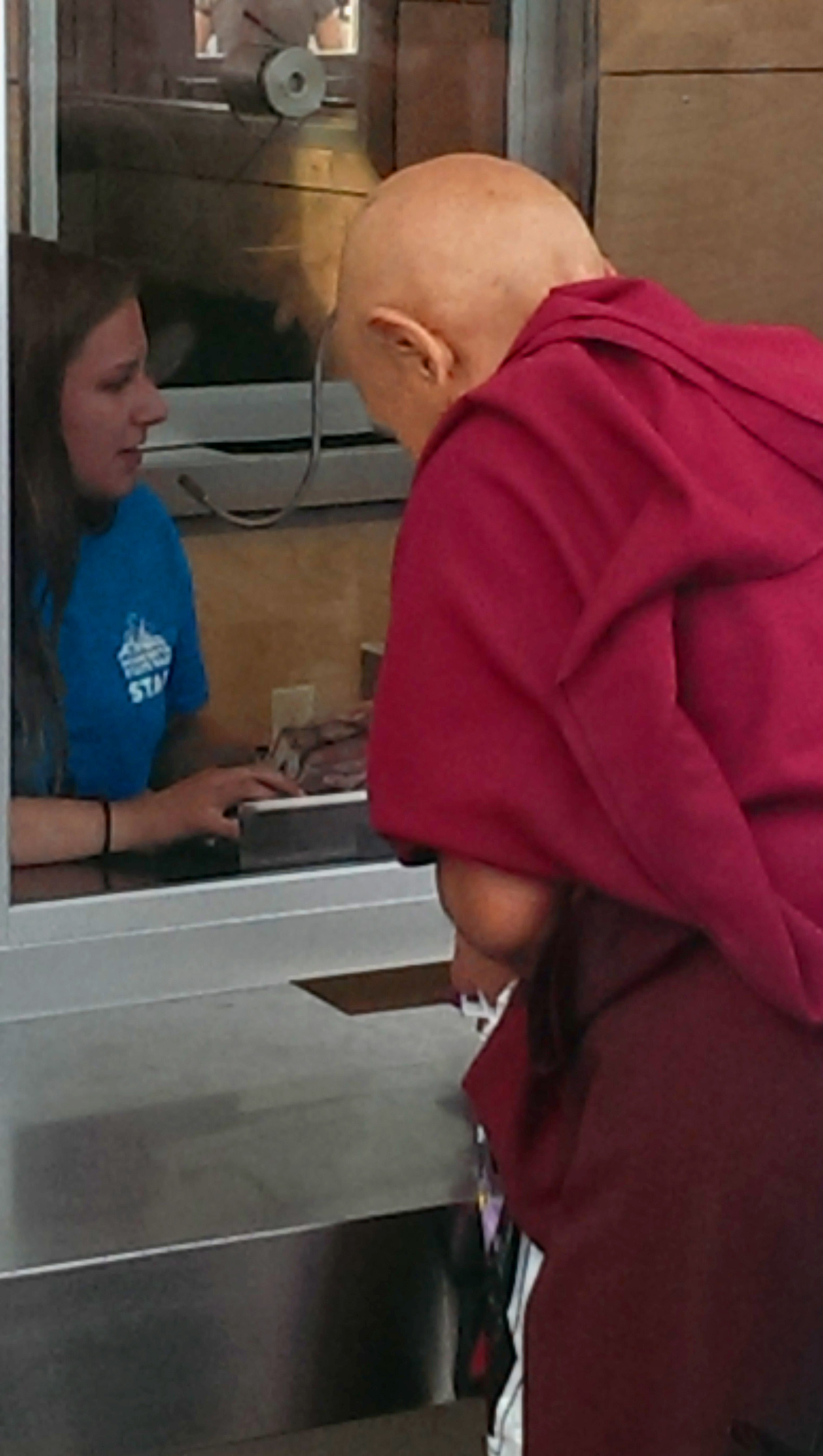
This guy was in line ahead of me for a discounted senior ticket:
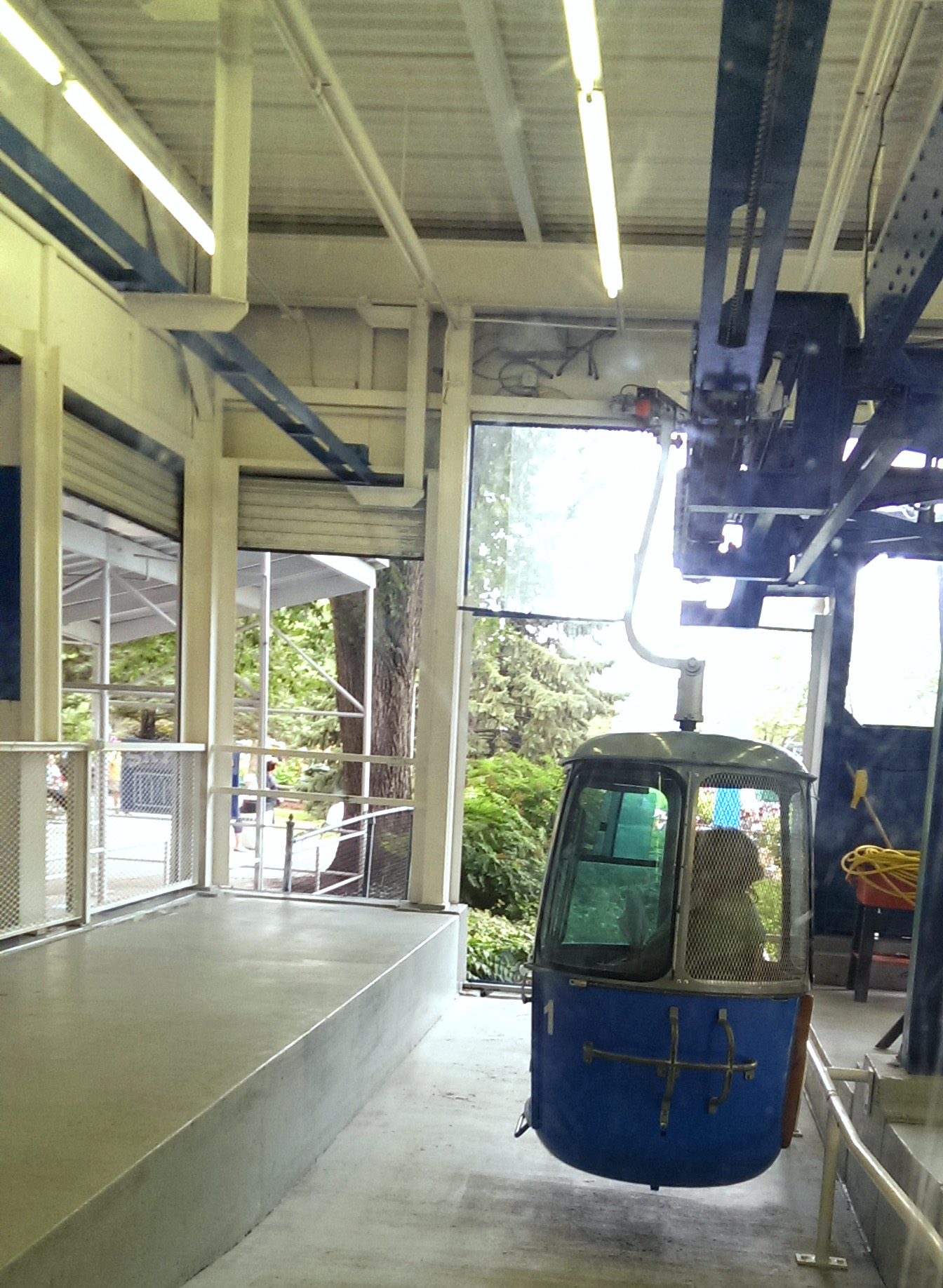
Samsara
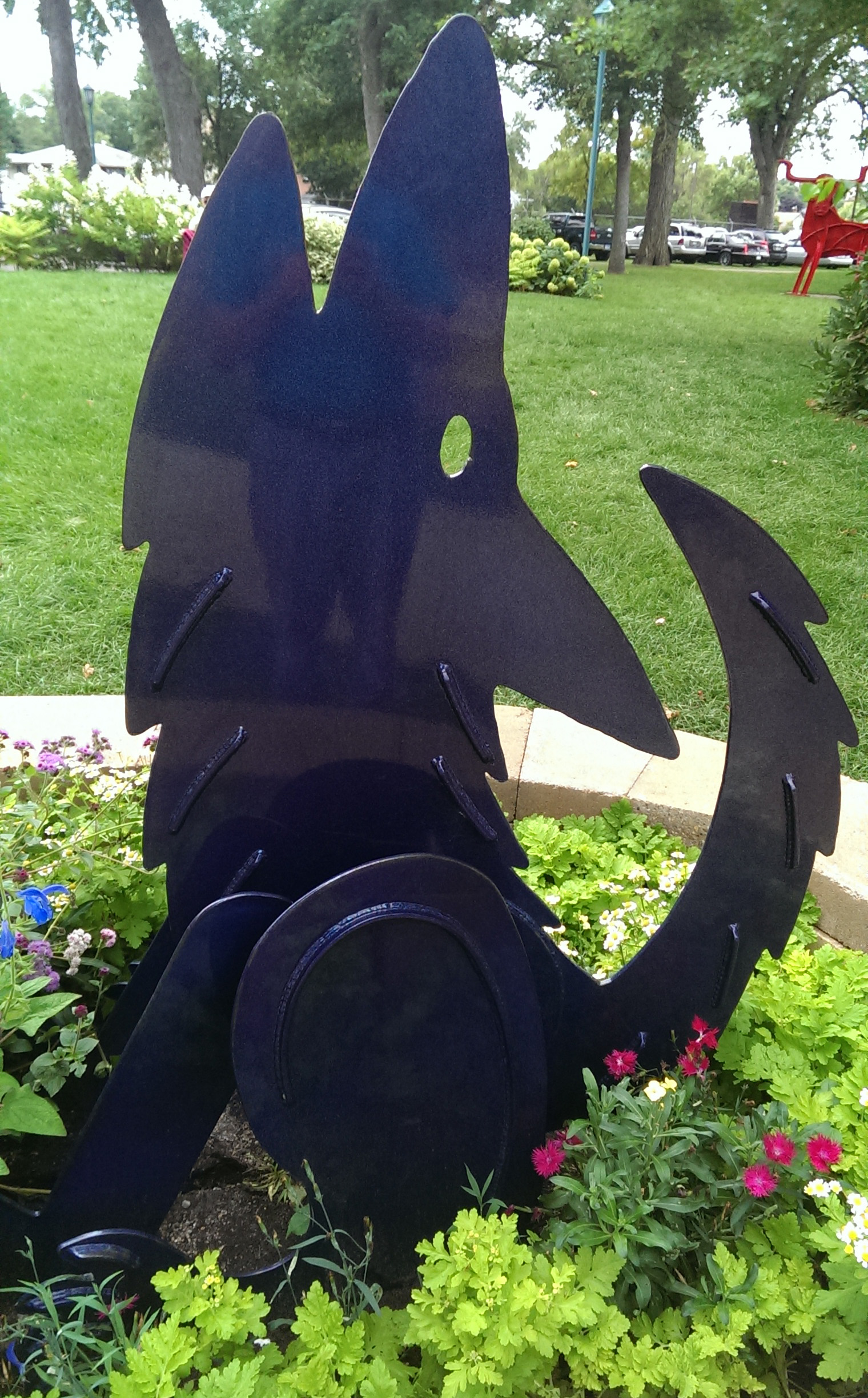
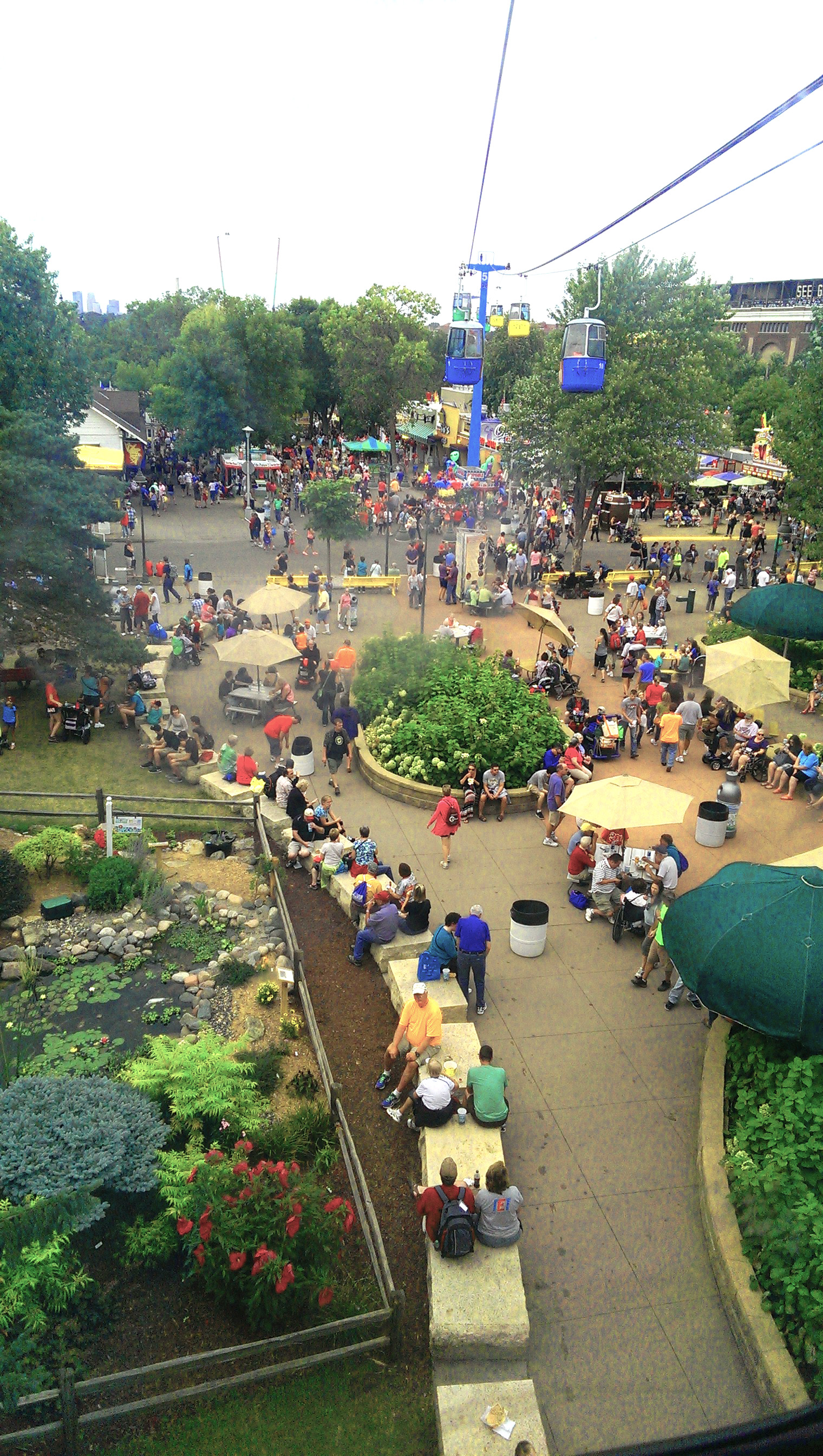
A howl from the West. Our future.
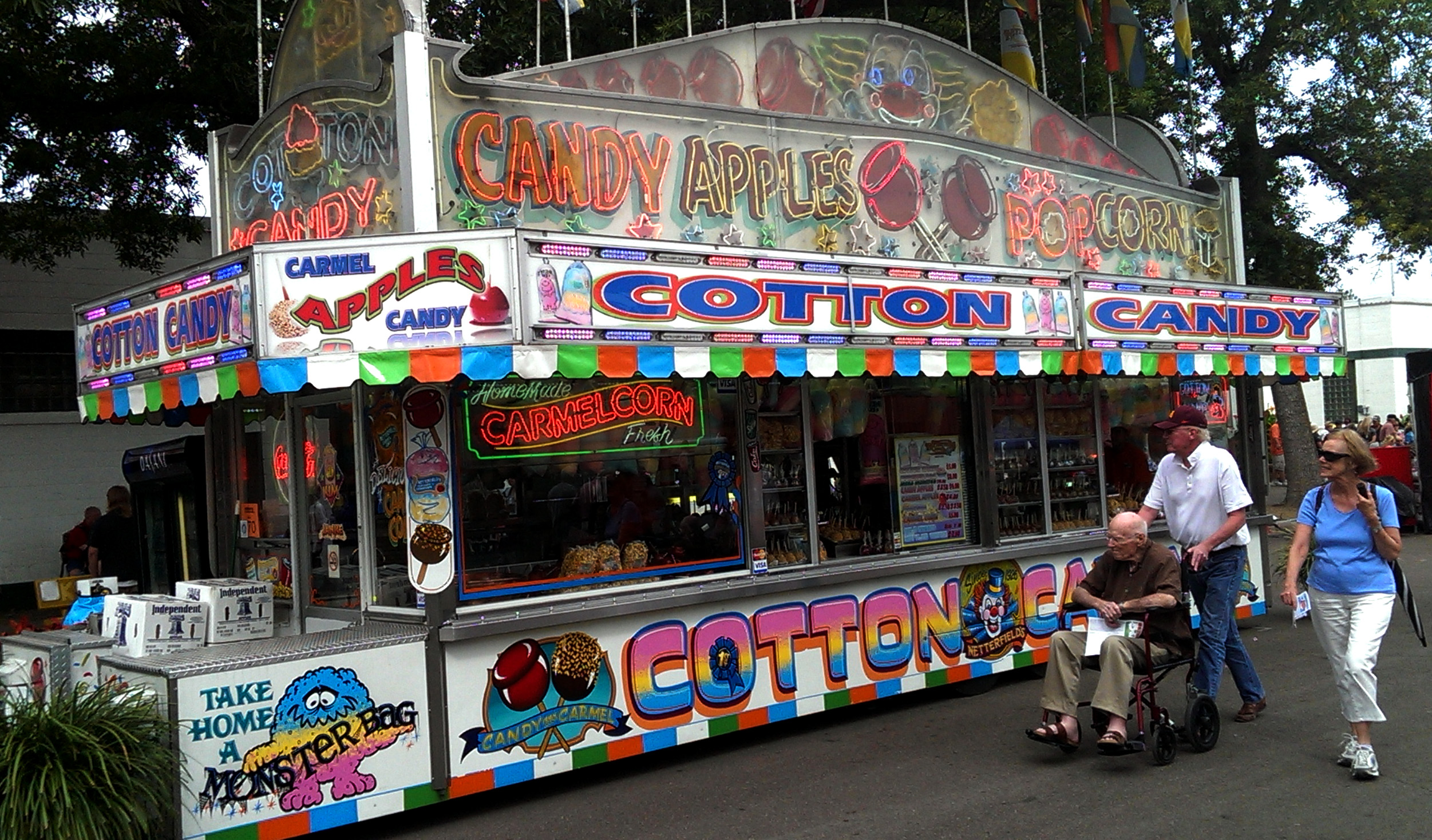
More of samsara.
Dulling the pain of samsara.
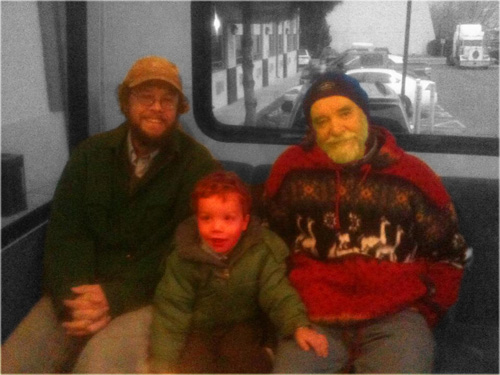
Mortals
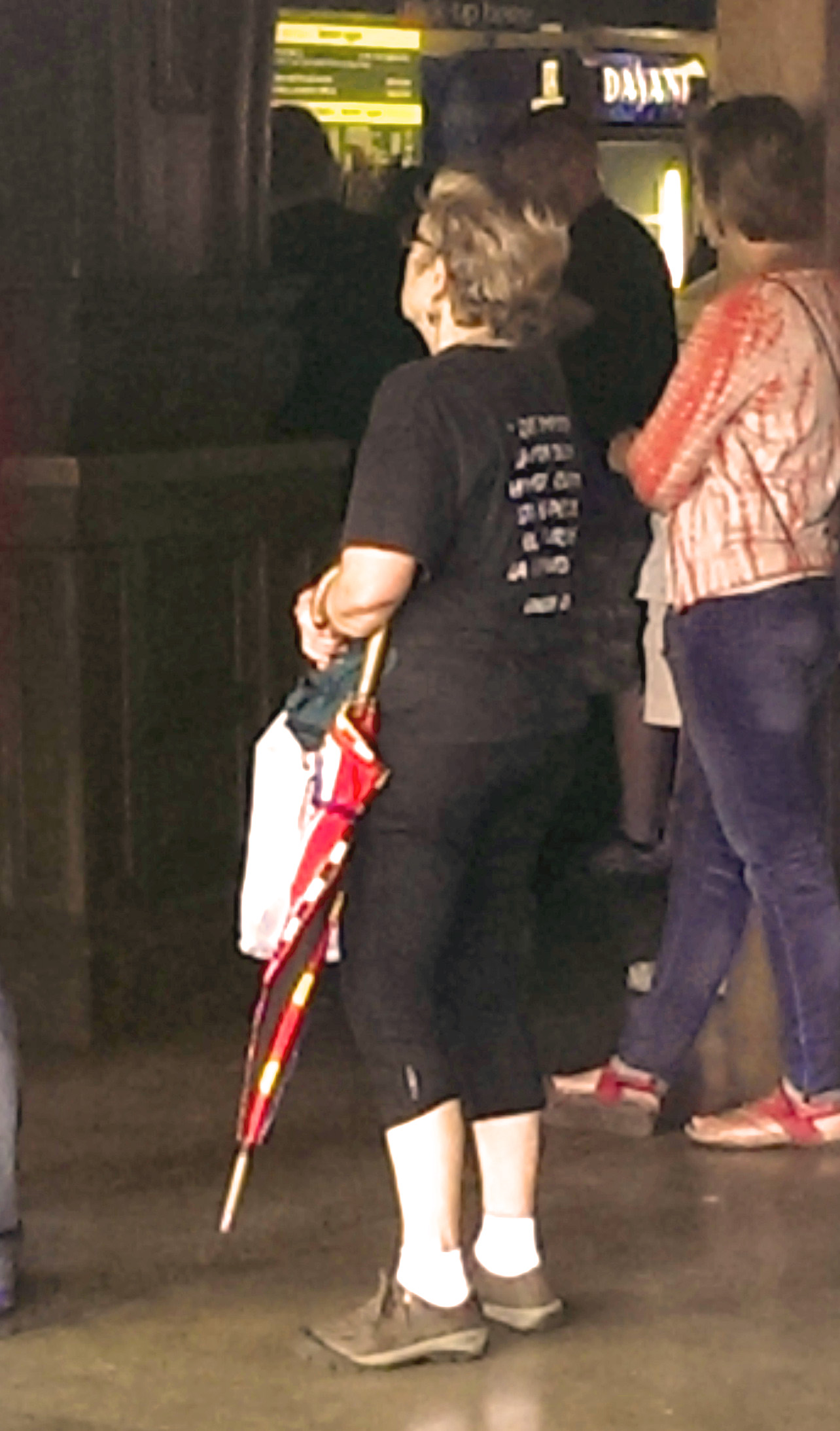
What we become if we remain at the State Fair too long.
Lughnasa College Moon
We’re off to the fair today. The last hurrah as residents of Minnesota. I’ve gone many times over the years, probably a bit more than half of the years I’ve lived here, say 25. As I’ve gotten older, stamina has become a modest issue, but a bigger one is sameness. Even with the amazing number of new food products and the changing line-up in the 4-H buildings and the animal barns there is a regularity, a predictability. On-a-stick! Blue ribbon! Necessary kitchen gadget!
Of course, that very predictability is one of the fair’s charms, too. It will always have that slightly wacky, down-home feel. The Midway will have lights; machinery hill will have tractors and the GOP/DFL booths will have politicians racing their engines for an upcoming election. And, there will be cheese curds.
For a guy trying to figure out how to connect Americans with the land, with what I think of as a kami-faith for this land is our land, the state fair is a huge ritual moment. Too often an opportunity lost to take our head out of the work-a-day cubicle world and go outside, to look down, to see the amazing, miraculous things happening in the soil and among the plants. And cows. pigs. llamas. rabbits. horses. In that sense it’s the ur-moment in the year for effecting change.
Lughnasa College Moon
“Skiers rejoice! A dusting of snow fell on high mountain peaks, above the timberline, over night…” from today’s Denver Post
So much there. Snow in August. High mountain peaks. The timberline. Skiers rejoice! That Toto is not Minnesota news. It makes me want to be there now, gladdened by the snow and able to see the high mountain peaks nearby.
The timberline is the Krummholz line, too. The Krummholz line has stunted trees, specimens that have somehow figured out how to survive right on the border between tree/no tree altitude. These are bristlecone pines on the way up to Mt. Evans. Mt. Evans has the highest paved road in North America and is in Clear Creek County, our intended destination.
The mountains and their geology, their wildlife, their plant life all excite me, make me want to be in a new place. After 67 years as a flatlander Clear Creek County will be a major change.
Lughnasa College Moon
Out for a brief round of harvesting this morning: raspberries, tomatoes, peppers, beets, onions. The big raspberry harvest is still ahead of us; the goldens have only begun to ripen and they’re the largest number of canes. We’ll still have more beets and carrots, plus the leeks which have matured early this year.
The August grass dripped with dew and soaked my outside Keen’s, then the lower part of my jeans as I worked. A garden in the morning, before the heat has come, while droplets of water still cling to bent over leaves is a place of promise. It is the Lughnasa/Mabon/Samain season captured in a moment in a time. The harvest is the zenith of gardening’s purpose, at least vegetable gardening.
We can imagine folks bent over their tomatoes, their green beans, their cucumbers, their squash. Striding through raspberry canes and, armed with scissors, headed into the grape arbors. They’re all over the state, all over the nation in these months, gathering food, the oldest of ancient traditions. How can the future be bleak in a garden, in the morning, in the harvest season?
Lughnasa College Moon
If you read articles about higher education, you will have noticed an ongoing debate about its future. Will there be brick and mortar campuses? This is the same debate that retailers have as online sellers, especially Amazon, but many others, too, among them Walmart, batter the solid walls of American shopkeepers. Will there be brick and mortar businesses at all?
In both cases a process called disintermediation is at work, that is, removing the intermediary between the deliverer of goods and the end customer. In the case of retail businesses economies of scale, snappy delivery and vastly increased inventory (or at least access to inventory) tilt the momentum right now toward the online seller.
In higher education the internet seems to provide the same threat. The MOOC, the massive open online course, threatens to broadcast the best teachers to a wide audience, free. Even inversion, a variation on online education where professors lecture online and then classes meet to discuss assignments and raise questions, could, in theory be used to teach massive numbers of students at the same time.
Rather than elimination of the state university, the less prestigious private schools and community colleges the more likely result is a new paradigm altogether, one that uses the advantage of the best educators broadcast widely and cheaply and the advantage of the brick and mortar campus in delivering the moratorium years.
Education is not, for most, a solo affair. It involves rubbing up against others, their ideas, their prejudices, their spark. And the moratorium years-that time between the teens and full adulthood (which seems to be stretching out longer now)-in our culture need to take place away from home.
The best content offered at the most reasonable price should be a boon to all institutions of higher learning. Maybe the brick and mortar experience is shorter or taken in more discrete chunks. What’s magical about three quarters or two semesters? Why does it all have to be in the same location? Why not two years here, one there? Or two months in the city, two in the country. Or a season abroad, then a season back home. Why not mixtures of all this for the stay at home learner, the adult for whom education is, or at least can be, a solo affair?
Lughnasa New (College) Moon
Today Islam went in a green tape box. Some of it. Those Tafsir books I got at the Dar-el Salaam Mosque in 2012. Red box. A bunch of outdated travel guides: Thailand, South America, Venice, Turkey. Some books on India and Japan, too. But I kept a bunch on Islam, Japan, Korea, India and Hinduism.
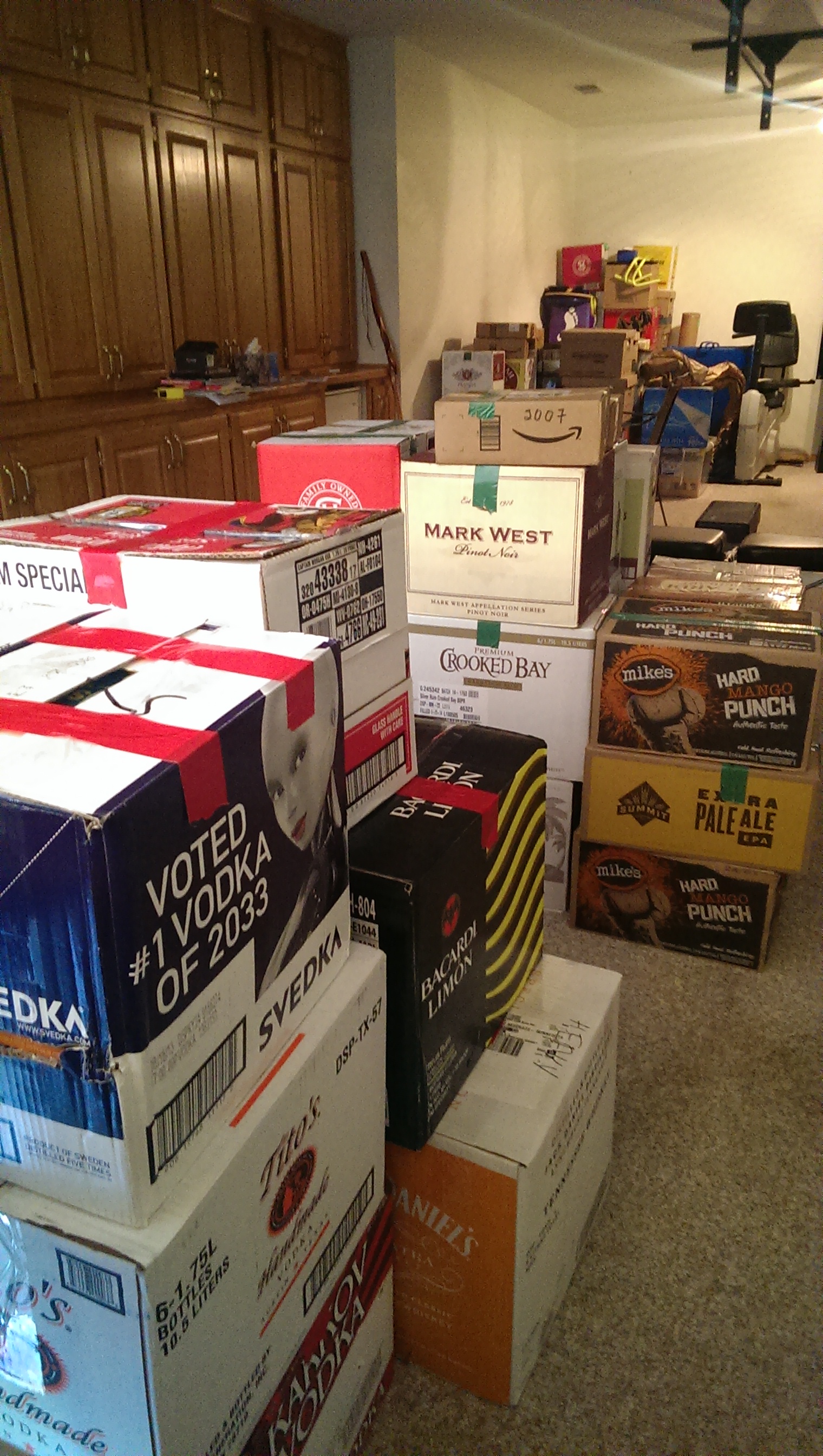
Now the empty bookshelves outnumber the filled, the boxes have begun to assume mass, large rectangles with colorful liquor ads spread out in random patterns. The green tape boxes now far outnumber the red, though a very large number of red have already gone. As the book mounds grow and the shelves stand empty, the reality of Colorado comes closer.
Colorado Gardening-for thinking gardeners-came yesterday. Not sure how they got this address, some random form filling probably, but the news is welcome. Up in Idaho Springs, Clear Creek County, our target destination, the last frost of the season looks like it will come on time, September 12th. Makes the necessity of hoops and plastic evident.
Lughnasa New (College) Moon
It fell out of a book. Wouldn’t have meant much to somebody else, a polariod, slightly faded, with a golden haired dog looking through a gate, his head on the bottom supports. But for me it was another one of those Olympian bolts. Tor. God, I loved that dog.
Tor used to sleep on the corner of the Persian rug, right by the edge of the large glass-doored bookcase. When I got up in the morning, when I went to bed at night, he was there. It was with him that I first started consciously stopping, getting down on his level, rubbing his head, telling him how much I loved him.
The shortness of the Irish Wolfhound’s life span awakened me to the brief time we have with those we love. Awakened me to not waste the moment by passing by, too busy, ignoring the thumping tail. Those brown eyes turned up.
So consider this, for this moment, my coming to you, on your own level. My hand touching you, with the only gift we mortals have, presence. Me to you. Tor taught me this.
Lughnasa New (College) Moon
Listening to outlaw country as I pack boxes full of books on Romanticism, American religious empiricism and Hindu thought. It’s harder in here, in the study where I’ve concentrated the books that have captured part of a long term idea. Wondering, for example, where the threads of the Classics, the Renaissance, the Enlightenment, Romanticism and Modernism come together. Are there clues there about tomorrow, about critiquing today? About laying bare the bones of this time?
How does religion play against this whole backdrop? Does it have a future, a non-dogmatic, non-institutional future or is it an anachronism with unusual vitality?
Or, on another tangent, how does the environmental movement and its thinkers weave into the Reimagining Faith work I’ve been doing for awhile. Does Jung matter in this or any of these threads? Maybe you can see how having books at my fingertips, books not obtainable outside university libraries, is important to me.
Again, you could rightly ask why I bother. Don’t know. This is just stuff that interests me and has interested me for a long time.
Lughnasa New (College) Moon
This week on the calendar I have on Monday through Saturday: pack, Latin. Thursday will be our state fair day. Other than that packing, Latin and work in the garden will occupy us.
Today and until I’m done I will be packing the study in which I work every day. That means the sorting will get harder, green tape boxes outnumbering red tape ones. Probably by a lot. It also means the confrontation between time remaining (in my life) and the projects (intellectual and creative) that keep me excited will come center stage. I’ll try to sort out the ones I feel I can fruitfully engage over the next 20 years from the ones I can’t.
That means I’m considering active intellectual and creative work at least into my late 80’s. That feels like a stretch, maybe, but one I believe my health and potential longevity justifies.
Let me give you an idea of what I have in mind. Complete the translation of Ovid’s Metamorphosis. Write at least four more novels. Write essays or a book on Reimagining My Faith. Write and read much more poetry. Write essays or a book on matters related to the Enlightenment, liberal thought, modernism. Write essays or a book on matters related to the Great Work. Include in this work considered attention to Asian literature, art and thought, especially Chinese and Indian. Continue regular art historical research and write essays about aesthetics and particular art/artists.
Why? Because I can. I’ve no evidence so far that my thinking is strikingly original or unusually deep, but my intellectual maturation has taken a longer time than I imagined it would. So the best may yet be ahead. Or so it feels to me. Under any circumstances such work will keep me alert and focused.
As for right now. Where are those empty boxes?
Lughnasa New (College) Moon
Rain so hard it sounded like hail has scoured the air, washing the dust out and dropping the temperature. The tornado watch expires in half an hour though we’ll have more thunderstorms later tonight. Weather is local; climate is global. Climate change in this case has given us days with more moisture in the air, driving up the chance of stronger storms and more concentrated rain fall.
(Curry The Line Storm)
Robert Jay Lifton, a grand old man of American letters, known for his psychological and psychiatric work on war and nuclear weapons, has written an interesting article in the NYT, The Climate Swerve. He’s careful, doesn’t overstate the evidence, but he makes a point similar to one I made here a month or so ago. Something’s happening to public opinion about climate change. Something pressing the public toward concern, possibly creating the political climate necessary for making difficult choices. Read the article for his thoughts about “stranded assets.” It’s a concept you will hear about more often in the future.
Had lunch with Jon today at the Craftsman on Lake Street. He was in town, briefly, for the wedding of a long time friend, flew in yesterday and out today. Dressed in a new blue striped dress shirt, dress slacks, neat beard and his curly hair, he hardly looks 45, almost 46. More like mid-30’s.
The bond of this family has begun to gel, why now I’m not sure, though it must have
something to do with Ruth and Gabe getting older. There’s a realization about our own aging, our fragility that comes as kids advance in years, but in this case it’s a sweet realization, a realization that the future, as the song says, is not ours to see. But that that’s ok since we know well some who will inhabit it, shape it, lead it.
The future they inhabit will have its own set of agonies and joys. When Ruth and Gabe confront a world altered by climate change, by the polarization of political parties in our time, by the struggles to drag some of the Middle East back to a seventh century golden age(that was never golden), by the rise of China and India and Brazil and Indonesia, they will be in that world as we are in ours: a bit confused, somewhat hopeful, mostly living their lives from day-to-day just as we do.