Details

Fall                                                       Full Autumn Moon

Off to the city of Andover to get stakes marked with orange fluorescent paint.  Why?  We exurbers put these to mark the edges of our lawn so the city snowplows plow the street and not our frontyards.  This is what comes of not having sidewalks.

Usually I don’t put these in before Halloween since they make such good Halloween prank possibilities, but I’m going to this time.  Just in case though I got twice what I needed.  I can redo it if I need to when we get back.

New filter in the furnace.  Salt in the water softener.  Then turned it off.  Saturday I’ll turn down the temperature on the water heater, clear out the refrigerator and turn it down, too.  Lights on timers.  You know the drill.

One last garden chore.  Putting down mulch, then spreading composted manure on top of it.  Tomorrow or Saturday.

Saturday we take the dogs over to Armstrong Kennels, their new home until Thanksgiving.  We’ll pack and weigh Saturday.  We have no intention of paying heavy bag fees.

Learned yesterday that our lanai cabin has two deck chairs for our exclusive use.  That’s a bonus.

Sheepshead tonight.  It’s in the cards.

News from Ha’il

Fall                                                            Full Autumn Moon

News from Ha’il*.  Mark reports having to leave a restaurant with a friend because it was about to close for prayers.  During prayers many businesses in Saudi Arabia lock customers in so they can continue shopping or eating.  This is at least three times a day, could be more since there are five prayer times.

He also commented on the number of funeral homes:  0.  Families inter their own dead, then have three days of mourning.

Likewise:  no cinemas, bars, karaoke places or houses of ill repute.  But, there are Pakistanis, Uzbeks, Tajiks, Bengalis, Philipinos, Brits, Americans, New Zealanders, South Africans.

The area around Ha’il has very old mountains and looks like Monument Valley or Arizona, he says.

Interesting to have an embedded informant in the heart of Arabia.  More illuminations to come.


* Ha’il is largely an agricultural centre, specializing in grains, dates and fruits. A large percentage of the kingdom’s wheat production comes from Ha’il Province, where the area to the northeast, 60 km to 100 km away, consists of irrigated gardens.
Ha’il is well-connected to other urban centres to the south, by road. Buraydah is 300 km southeast, Riyadh is 640 km southeast and Madina 400 km southwest.
Modern Ha’il is city of a widespread centre, and numerous parks.

History
1836: A local dynasty is established with Ha’il as its centre, by Ibn Rashid. Ha’il thrives from controlling the pilgrimage route across the desert, connecting Mecca and Iraq.
1891: The Rashidi clan make Ha’il the capital of large parts of Arabia, known as Najd.
1902: Najd loses Riyadh, but is recognized as a kingdom.
1908: The Hijaz Railway opens, beginning the decline of Ha’il.
1921: Following an attack by Ibn Saud, the rulers of Ha’il has to surrender.

A Year of Two Springs

Fall                                                  Full Autumn Moon

A cool rain and a chilly fall evening with wet gold stuck to the bricks and asphalt, a low cloud cover and darkening twilight skies.

Though ready to travel there is a sadness in missing the rest of fall, the transition from this still part summer, part cooler season time to the bleaker, barren time of November.  It is a favorite season, the continuing turn toward the Winter Solstice.

We will leave it behind, first for the warmer, much warmer Western Caribbean, then sweaty Panama and hot Ecuador.  As we move south, we move into spring with milder temperatures, then, in southern Chile among the fjords and glaciers and around Cape Horn, the southern equivalent of the far north, where temperatures will be cooler.  So, for us, 2011 will be a year of two springs.

And, a shortened fall.

Meanwhile, Mark in Ha’il, Saudi Arabia faces 97 as a typical daytime high.  Gotta wonder what global warming has in store for the desert kingdom.  Sort of the old petrocarbons coming home to roost.

Distracted By The Future

Fall                                                         Full Autumn Moon

Just realized I’m going to have change my headings once we’re south of the equator. Seasonal reversal in the Southern Hemisphere. I knew about it, of course, but hadn’t factored it into the blog.

These days I have my eye on the National Hurricane Center. Right now it says what I want it to say at least through a week from Sunday: no tropical cyclones. This is the hurricane season, so that could change.

As our embarkation approaches, I find myself withdrawing from now in anticipation of then. A violation of the be here now idea, I know, but it seems the pull of vacation exceeds the adhesion of home. Based on previous experience, this process will reverse itself about a week before the trip ends.

Why did we choose a vacation lasting right at 6 weeks? Because we could, of course. But, why a cruise?

I just read a remark by Simon Winchester, author of Krakatoa and most recently, Atlantic, in which he dismissed large ship cruising because it takes away the direct experience of the ocean. He has a purist point, I suppose; but, some of us were born to sail the ocean blue in small craft, appreciating each swell and squall, but another large chunk of us can neither afford that nor desire it.

Here’s what appeals to me about a cruise. Being on the ocean, cosseted or not, puts us on water, the element that covers 70% of the earth’s surface. That experience, perhaps not as dramatic as Winchester prefers, has a magic of its own. Sort of like traveling through space instead of our atmosphere. A primal difference.

Kate finds the unpack and pack once part of cruising a primary benefit. In cruising the hotel goes with you from country to country, eliminating the schlepping of luggage from train or plane or car and back again.

Relaxation comes as a corollary. The less schlepping, the more relaxing. Relaxation alone makes cruising a wonderful vacation. You have a cook, a maid, a ship to explore, few demands. That means time can be devoted to reading, drawing, exercise, enjoying your partner’s company, sleeping. Here, the ocean adds a good deal. Contrary to Winchester, the ocean’s presence cradles the ship and, when the weather is good, rocks us to sleep. There is, too, something about being on a ship, on the ocean, away from everything land bound that frees the mind.

Cruising does limit the kind of in-depth exposure to a culture that many people enjoy. Shore excursions, except the priciest, tend to stay with driving limits of the port. Still, even when I have traveled hotel to hotel, unless we rent a car, our excursions are limited and even with a car, you can still see only so much.

The bigger limit than nearness to the port is time. A cruise ship is rarely in a port more than two days. That short period of time makes serendipity almost impossible. This is a big downside for me, but compensated for by the relaxation.

Cruising is a particular kind of vacation, not the kind I would prefer every time, but for a celebration together with an emphasis on relaxation, it’s the perfect post-retirement mode of travel.


Bee-Keeping, The Third Year

Fall                                                         Full Autumn Moon

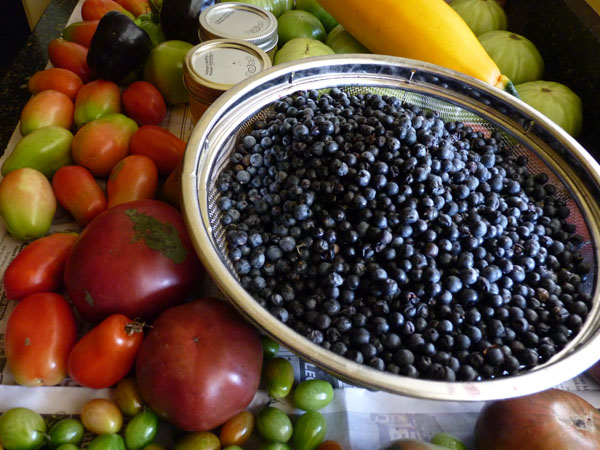
Our revels now have ended.  The very last of the year’s harvest, four-foot long decorative squash and birdhouse style gourds, Kate brought in yesterday. 

The bees are done for the year.  Two colonies will die over the winter and the third, with luck, will survive.  Even if it does, this is my last  year for overwintering colonies.  The part-time, small quantity operation we have here doesn’t justify the extra work of mite treatments, concern over various ailments only caught by colonies that survive from one year to the next and the inhibited production of the colony developing as a parent colony.

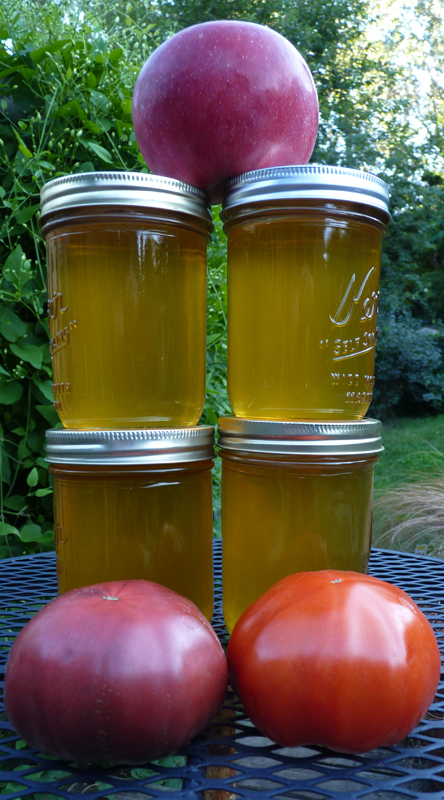
Artemis Hives now has two honey harvests under its belt in this, the third year of bee-keeping here.  Kate and I have developed a work flow.  She takes care of wooden ware, uncapping frames and bottling while I put foundations into the frames, manage the colonies, remove the honey supers and bring them to the house and insert them in the extractor.

Three hives, or even two, will make honey enough for us and our friends.  The process is more straightforward after three seasons, now heading into the fourth.  The bees have become part of our life here, like the perennials, the vegetables, the orchard and the dogs before them.

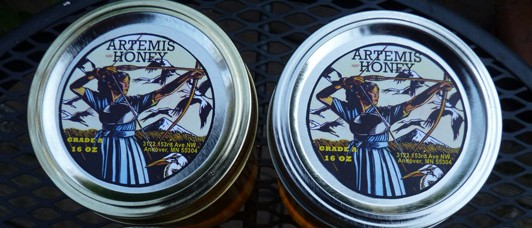
We also have the beginning of a label collection with 2010 and 2011 labels designed and produced by Woolly Mammoth Mark Odegard.

Where Have We Been? Where Are We Going?

Fall                                                                 Waning Autumn Moon

“Trying to determine what is going on in the world by reading newspapers is like trying to tell the time by watching the second hand of a clock.” – Ben Hecht

Keyhole history.  A standard assumption among historians.  Decades, even centuries, must pass before we can determine the relevance of particular events in the flow of human history.  Anything said, for example, about the George W. Bush presidency, relies more on bias and hunch that on historical context.

We judge poorly when we judge matters in which we have had some part, even if the part were only reading newspapers.  Hecht’s comment tells the story with a great metaphor.


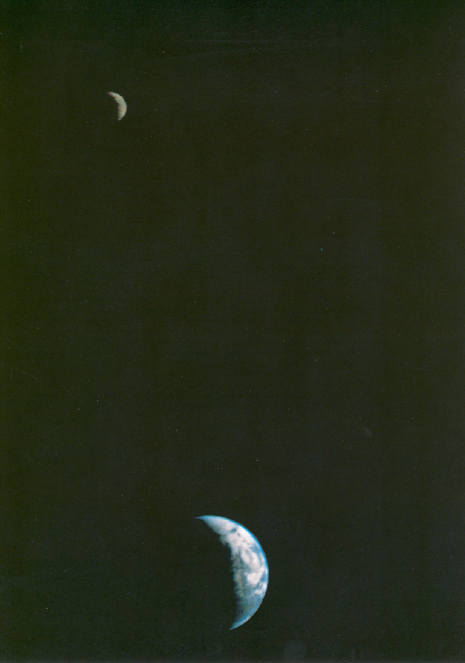
(This picture of the Earth and Moon in a single frame, the first of its kind ever taken by a spacecraft, was recorded September 18, 1977, by NASAs Voyager 1 when it was 7.25 million miles (11.66 million kilometers) from Earth. The moon is at the top of the picture and beyond the Earth as viewed by Voyager. In the picture are eastern Asia, the western Pacific Ocean and part of the Arctic. Voyager 1 was directly above Mt. Everest (on the night side of the planet at 25 degrees north latitude) when the picture was taken. Voyager 1 was launched September 5, 1977 and Voyager 2 on August 20, 1977. JPL is responsible for the Voyager mission.)

Having said all that, let me give you two instances in which keyhole history does not have wait.  These photographs, amazing images, show historical moments that need no time to pass before their significance becomes clear.  

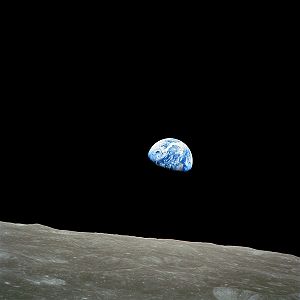
Here humanity achieves a perspective never before possible.  Ever.  Not in the entire history of the human race.  A view of earth from the surface of the moon, the famous 1968 shot by astronaut William Anders, and a God’s eye perspective, looking at our home and its sole satellite in one and the same moment.

Around 60,000 years ago or so homo sapiens left Africa, bound for other continents.  Over the next 45, 000 years this African animal had made its way onto all the continents of our planet and many of its islands.  Since then, we have populated these land masses.

(World map of human migrations, with the North Pole at center. Africa, harboring the start of the migration, is at the bottom right and South America at the far left. Migration patterns are based on studies of mitochondrial (matrilinear) DNA.  Numbers represent thousand years before present.  The blue line represents area covered in ice or tundra during the last great ice age.  The letters are the mitochondrial DNA haplogroups (pure motherly lineages))

Over the last 60,000 years our species has explored the planet’s nooks and crannies (at least those above the surface of the ocean), but in all that time we could never look at our planet whole.  We saw only parts at any one time, we looked at the second hands of earth’s totality.

We could see the moon whole, sort of, but we could never see our own home in the same way.  With William Anders earthrise photograph and the Voyager shot of the earth and moon, our human perspective could position earth and its satellite in the cosmos not through abstract conjecture but by simple visual observation.

Not only were we finally and truly out of Africa, we had gone beyond our planet’s comfortable precincts and into the unimaginable distances of space itself.

No, there is no need to wait on the historical significance of these photographs, we knew it the instant we saw them.

Making Pot Pies

Fall                                                       Waxing Autumn Moon

We had our final straight from the garden meal last night.  Roasted potatoes, onions, fennel, carrots and a lone beet.  Raspberries for dessert.  Marinated chicken for protein, not from here.

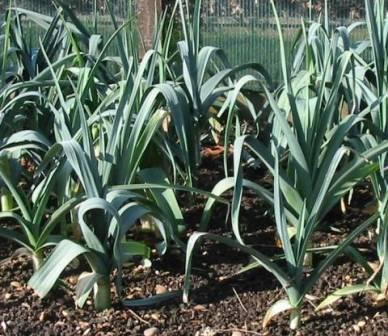
Today I cut up the leeks, cooked some chicken breasts, carrots, celery, peas and corn (none of these ours), and cooked the leeks in salt water for five minutes.  After shredding the chicken, a roux thickened the broth with the vegetables.  The shredded chicken went in the pie crust, then the leeks (our own), and after that the thickened broth and vegetables.

A rolled out pie crust for a top to the pies and they went in the oven.  4 chicken/leek pot pies, frozen now, treats we can have when we get back from South America along with raspberry pie.

Had an aha about our garden while cutting up the leeks.  We’re not feeding ourselves in any significant way with our garden, though we do eat several meals a year with our own produce and fruit.  What we can grow, and the leeks, garlic, heirloom tomatoes and heirloom potatoes are good examples, are specialty vegetables that, even if we wanted them, probably wouldn’t be available and would certainly not be available fresh from the garden.

We preserve tomatoes, store potatoes and onions, garlic and honey.  Kate makes currant jam and wild grape jelly.  We have raspberry pies frozen and now the chicken/leek pot pies.  We also freeze chard and spinach.  Our garden supplements our diet in ways that would not be possible without it.

It also gives us a joint project, a place we can work together, while keeping us in touch with the Great Wheel and the ways of the vegetative world.  We get a lot from our garden.

A Carnegie Library

Fall                                                   Waxing Autumn Moon

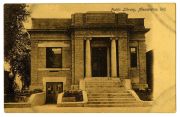
Reading.  Alexandria, Indiana had a Carnegie library, one of those brick and limestone buildings sprinkled throughout American small towns, so ubiquitous we give them little thought.  Like the water tower they’ve always been there.

Ours had a long flight of steps that went up to the solemn, curved stacks of the adult library, a place visited by kids only when they needed something up there, a rare occurrence.  The library also had a concrete ramp with a slight curve that led down, below ground where the children’s books were.

In the spring and early summer the concrete had a musty scent, cement and soil, a comforting, familiar smell that greeted me often as I made regular trips down the ramp.  The library had summer reading programs complete with prizes and stickers and I loved them.  Prizes for reading!  A thing of wonder to this boy bookworm.

The hours I spent down there, reading or finding books, fed a now lifelong habit and a love of books, not rare editions or signed first editions, but of books themselves, purveyors of wonder and mystery.

My favorite book was the Silver Llama, a story of a young boy and his llama, somewhere in the Andes.  I remember its silver cover, the rounded spine that always felt smooth against my thumb.  Even after I quit reading it, I would visit it from time to time, just to fell the spine and see the dull shine of its silver.

Libraries are still among my favorite places on earth, temples to generosity, human creativity and self education.

The Final Harvest

Fall                                                Waxing Autumn Moon

Going out today to collect the rest of the rest of the harvest.  A few potato plants I missed the first time around remain.  Leeks, those Musselberg Giants.  Some carrots, some chard.  Beans.  Rain has appeared in the forecast for the first time in weeks.  A good thing, but it reduces the clear days for harvesting and mulching.

When I get those leeks inside, chicken and leek pot pies come next.  I’ll use carrots and maybe a potato or two.

Still no news from Saudi Arabia.  The weather has cooled down in Riyadh, only 93 today.

Been pushing to finish the fourth book of Game of Thrones, but will have to give up on ending it before the cruise.  Too many words, not enough hours.  I’ll have to finish it in a deck chair. Darn.

Draco

Fall                                                 Waxing Autumn Moon

I might have been a little hard on Kevan.  Or, maybe not.  Bankers, can’t live with’em, can’t live without’em.

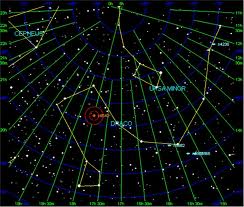
These last few nights the sky has been glorious.  Draco has his head pointed down at the northern horizon, his tail flicking up high toward the east and toward the celestial pole.  Cassiopeia hangs above his head, her distended W a signature of the northern night.

Gertie, the Denver dog, escaped, twice today.  She headbutted Pam and snapped at some kids.  She’s not a safe dog with folks who are not in her head as family.  We’ve got to keep her in the yard.  The window washers left the grapeyard vine gate slightly open and that was enough for our Gert.  She wriggled through and was on her own.  Fortunately, she stayed in the yard.

We’re going to leave our dogs with Armstrong Kennels for forty days.  That’s the longest we will have ever been away from them.  It feels strange, but we’ve boarded dogs at Armstrong’s over the last 17 years and always had good experiences.  The dogs become part of their family while we’re gone and are glad to see us when we get back.